Modern Zen: Styling Chinese Antique Furniture in Modern Homes
Modern Zen: Styling Chinese Antique Furniture in Modern Homes
Introduction
Modern Zen interiors and Chinese Antique Furniture share a quiet philosophy: beauty emerges from simplicity, balance, and thoughtful craftsmanship. In an age of sleek surfaces and minimalist architecture, homeowners are increasingly seeking interiors with depth, character, and a sense of permanence.
A carefully chosen antique cabinet, a weathered scholar's table, or an elegantly proportioned Chinese chair can transform a contemporary room from visually attractive into emotionally engaging. Rather than competing with modern design, Chinese antiques often enhance it, introducing warmth, texture, and cultural richness that contemporary furnishings alone rarely achieve.
Across Bangkok's luxury condominiums, pool villas, and boutique hospitality spaces, designers are rediscovering the remarkable ability of antique furniture to create calm, sophisticated environments that feel both timeless and deeply personal.
The Shared Philosophy Between Modern Zen and Classical Chinese Design
Simplicity Rooted in Purpose
One of the reasons Chinese antiques integrate so naturally into modern homes is that both design traditions value restraint over excess.
Furniture from the Ming Dynasty is widely admired for its refined proportions, clean lines, and absence of unnecessary ornamentation. Rather than relying on elaborate decoration, Ming craftsmen emphasized elegant silhouettes, balanced geometry, and exceptional woodworking.
This design approach aligns beautifully with modern Zen interiors, where every object serves a purpose and contributes to an atmosphere of calm.
The result is a living environment that feels intentional rather than crowded, sophisticated rather than extravagant.
Balance Through Proportion
Traditional Chinese furniture was carefully designed around human scale and spatial harmony. Cabinets, tables, and chairs were created to complement architecture rather than dominate it.
Historical Chinese courtyard residences often featured thoughtfully arranged furnishings that encouraged visual balance and ease of movement. The same principle remains relevant today, particularly in open-plan homes where furniture must create structure without disrupting flow.
A single antique cabinet can anchor a room while preserving the sense of openness that defines contemporary design.
Choosing the Right Chinese Antique Furniture for Contemporary Interiors
Statement Cabinets That Ground a Space
An Antique Cabinet often serves as the ideal introduction to Chinese antiques.
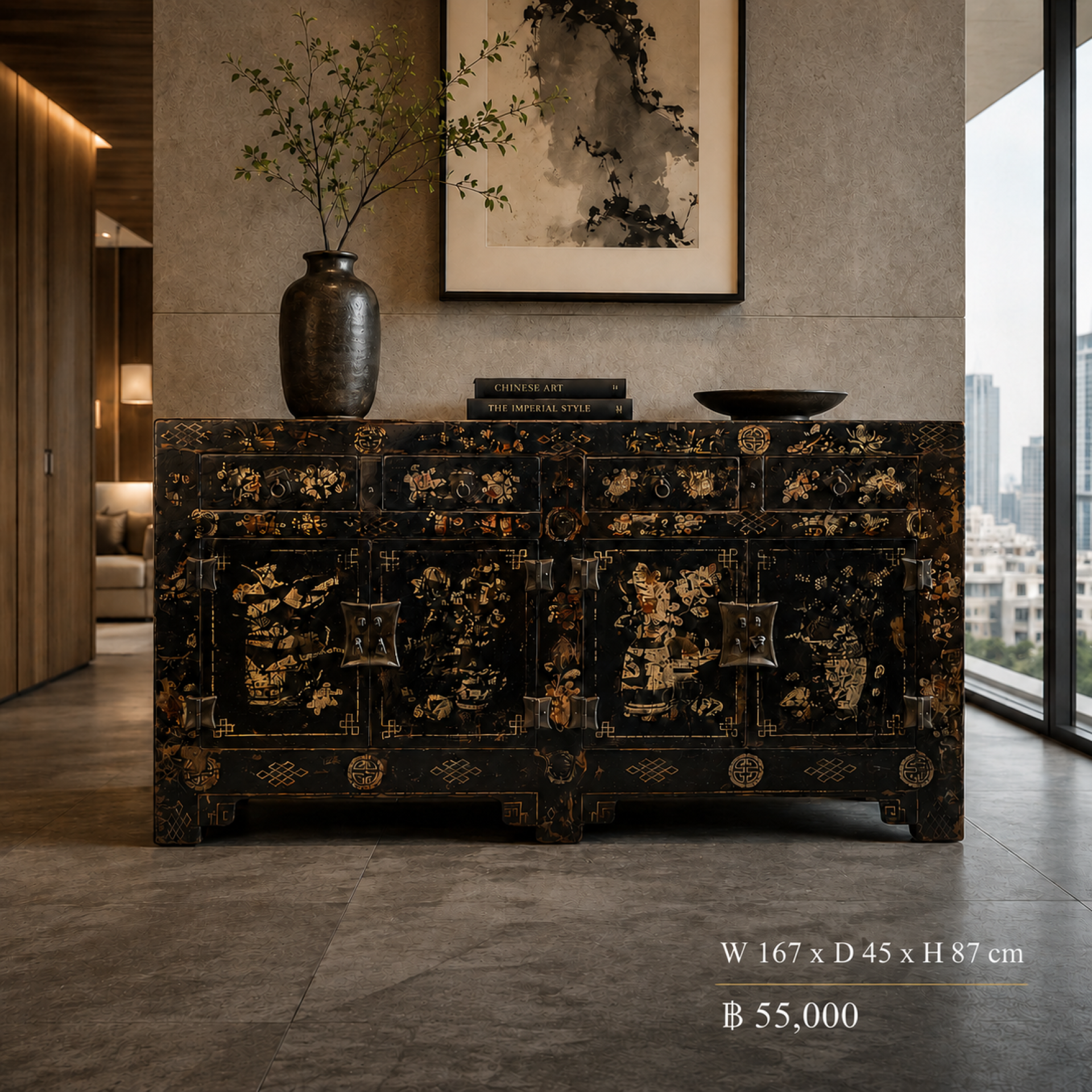
Placed against a clean architectural backdrop, a cabinet instantly becomes a focal point. The rich patina developed over decades contrasts beautifully with modern materials such as stone, polished concrete, glass, and marble.
In a luxury Bangkok condominium, a tall Shanxi cabinet positioned beside floor-to-ceiling windows creates visual depth while maintaining a minimalist aesthetic.
The key is restraint. One exceptional piece typically creates greater impact than multiple competing antiques.
Scholar-Inspired Pieces for Modern Living
Traditional scholar furniture offers remarkable versatility for modern homes.
Scholar cabinets, writing tables, and console pieces were originally designed for study, reflection, and intellectual pursuits. Today, they transition effortlessly into contemporary home offices, reading corners, and elegant entrance halls.
Their understated forms complement modern interiors while introducing a layer of cultural history that feels authentic rather than decorative.
The Quiet Elegance of Antique Chairs
Instead of creating a fully matched furniture suite, many designers use Antique Chairs as accent pieces.
A pair of Chinese armchairs can add sculptural interest to a living room, while a single antique chair can become a statement object within a bedroom or study.
Combined with contemporary textiles and modern lighting, antique seating creates an appealing dialogue between old and new.
Natural Materials That Create Lasting Calm
The Beauty of Historic Woods
The enduring appeal of Chinese antique furniture is closely connected to the materials used by traditional craftsmen.
Among the most celebrated are:
Huanghuali wood, prized for its intricate grain patterns and warm tones.
Elm wood, valued for its strength, versatility, and natural character.
Zitan wood, historically associated with highly refined furniture making.
These woods possess a depth and richness that synthetic materials struggle to replicate. Their natural variations bring warmth to interiors dominated by glass, metal, and stone.
Craftsmanship Beyond Decoration
One of the most remarkable achievements of traditional Chinese woodworking is mortise-and-tenon joinery.
This sophisticated construction technique connects wooden components without relying on nails or screws. Developed over centuries, it allowed furniture makers to create durable pieces that balanced strength with elegance.
Many surviving antiques continue to demonstrate the effectiveness of these methods today, offering a compelling reminder that true craftsmanship transcends trends.
The Soft Depth of Traditional Lacquer
Another hallmark of classical Chinese furniture is traditional lacquer craftsmanship.
Rather than appearing glossy or excessive, aged lacquer often develops subtle variations in tone and texture that enhance visual depth. These nuanced surfaces work beautifully alongside contemporary architectural materials.
A lacquered cabinet against a concrete wall, for example, creates a sophisticated contrast between handcrafted artistry and modern minimalism.
Styling Chinese Antiques in Modern Bangkok Homes
Luxury Condominiums
Contemporary condominiums often feature clean lines, neutral palettes, and expansive glazing.
Chinese antique furniture introduces warmth and individuality into these spaces. A single cabinet or console table can soften the precision of modern architecture while preserving an uncluttered atmosphere.
Natural wood tones pair especially well with marble flooring and understated contemporary furnishings.
Contemporary Pool Villas
Pool villas offer opportunities to blend indoor comfort with outdoor tranquility.
Antique sideboards and consoles complement tropical landscaping, creating seamless transitions between interior and exterior environments. Their organic materials resonate naturally with greenery, stone, and water features.
The result feels relaxed, sophisticated, and deeply connected to its surroundings.
Boutique Hospitality Spaces
Many boutique hotels and luxury hospitality projects embrace antique furniture to establish a distinctive sense of place.
Chinese doors, partitions, and cabinets introduce authenticity and visual storytelling while maintaining contemporary comfort standards.
Guests may not consciously identify every historical detail, but they instinctively respond to the atmosphere created by handcrafted furnishings and natural materials.
The Importance of Negative Space
Modern Zen styling depends as much on what is absent as what is present.
Leaving space around antique furniture allows each piece to breathe visually. Rather than filling every corner, designers often showcase antiques as carefully curated focal points.
This approach highlights craftsmanship while reinforcing the calm atmosphere central to Zen-inspired interiors.
Building a Home That Feels Collected Rather Than Decorated
The most memorable interiors rarely emerge from purchasing an entire room at once.
Instead, they evolve gradually through thoughtful selections that reflect personal taste and meaningful experiences. Chinese antique furniture supports this philosophy exceptionally well because each piece carries its own unique character, proportions, and craftsmanship.
Whether it is a scholar cabinet, an elmwood console, or an antique chair, these furnishings introduce a sense of continuity that remains relevant as design trends change.
Unlike many contemporary pieces designed around short-lived fashions, traditional Chinese furniture was created with longevity in mind. Its enduring appeal lies not simply in age but in the quality of materials, craftsmanship, and design principles that continue to resonate centuries later.
Conclusion
Modern Zen interiors thrive on balance, simplicity, and authenticity. Chinese antique furniture naturally complements these values, offering warmth, texture, and cultural depth without disrupting the clean aesthetic of contemporary homes.
From the refined elegance of Ming furniture proportions to the enduring strength of mortise-and-tenon joinery, these pieces embody centuries of craftsmanship while remaining remarkably relevant to modern living.
Whether furnishing a luxury condominium, a tropical villa, or a boutique hospitality space, thoughtfully selected antiques create interiors that feel calm, sophisticated, and genuinely timeless.
Since 1990, Chinese House has specialized in Chinese antique furniture, masterfully crafted reproductions, and professional restoration expertise in Bangkok, helping homeowners and designers discover pieces that bring lasting character to modern interiors.
FAQ
Can Chinese antique furniture work in minimalist homes?
Yes. Many Chinese antiques, particularly furniture influenced by Ming Dynasty design, feature clean lines and restrained forms that integrate beautifully into minimalist interiors.
What wood is commonly found in Chinese antique furniture?
Historically significant examples include huanghuali wood, elm wood, and zitan wood, each valued for its beauty, durability, and distinctive grain patterns.
How do I prevent a room from feeling overly traditional?
Use antiques selectively. One cabinet, console table, or pair of chairs can create strong visual impact while maintaining a contemporary atmosphere.