The Neo-Minimalist Master Suite: Elevating Spaces with Antique Cabinets
379 Views
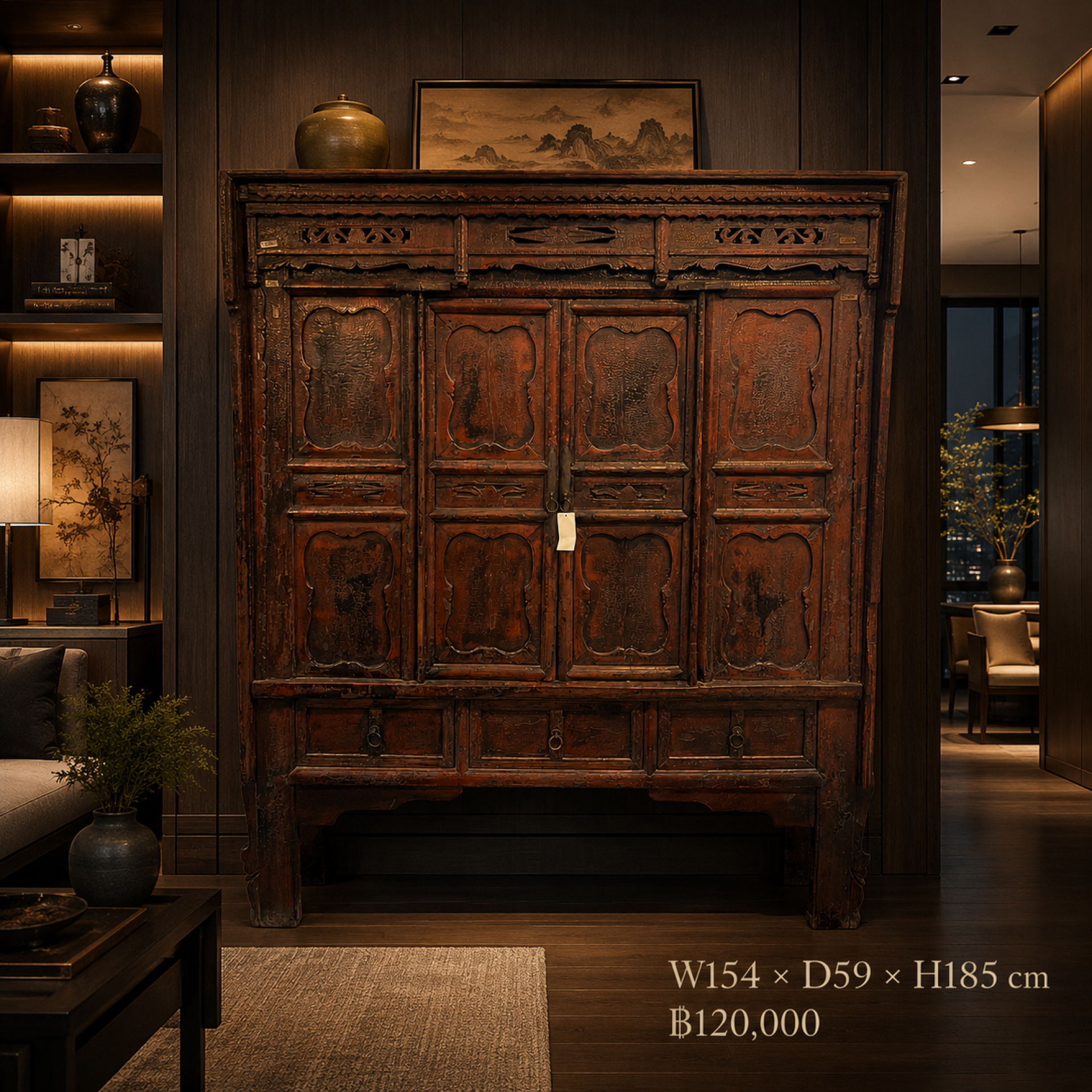
The Ming Dynasty Roots of Modern Minimalism
Long before the Bauhaus movement championed the ethos of "form follows function," Chinese artisans had already perfected the art of unadorned elegance. Ming Dynasty (1368–1644) furniture design principles heavily influenced modern minimalism, prioritizing clean, sweeping lines, perfect proportions, and a profound respect for the natural beauty of the wood over superficial ornamentation.
When you place a piece of Vintage Furniture from this lineage next to a low-profile modern bed, the conversation between the eras is seamless. The ancient craftsmen achieved structural integrity through brilliant engineering rather than excess material. This historical restraint resonates deeply with the affluent homeowner today who seeks to build an environment of purposeful serenity. The minimalist aesthetic is not about having less; it is about ensuring that what you do have is of unparalleled quality and provenance.
The Silent Strength of Sunmao Joinery
The structural genius behind this Antique Furniture lies hidden within the wood itself. Authentic Chinese pieces rely entirely on sunmao—an intricate system of mortise-and-tenon joinery that requires absolutely no nails, screws, or synthetic glues. This technique, refined over millennia, allows the wood to naturally expand and contract with the shifting humidity of its environment.
A well-crafted Antique Cabinet built with sunmao is essentially a three-dimensional puzzle, held together by exact mathematical tension and the mastery of the carpenter's hand. In a neo-minimalist suite, where every object is under close scrutiny, the flawless, uninterrupted exterior surfaces created by this concealed joinery offer a visual purity that mass-produced contemporary pieces simply cannot replicate. It is a quiet testament to enduring strength, making Chinese Vintage Furniture not just a decorative choice, but an investment in architectural history.
The Expressive Canvas of Northern Elm and Walnut
In the context of an understated bedroom, texture becomes paramount. Traditional Chinese bedside cabinets—often referred to historically as chugui or small square storage chests—from the Qing Dynasty (1644–1911) frequently utilized Northern Elm (Jumu) or Walnut (Hetaomu). These specific woods were chosen not just for their resilience, but for their dynamic, expressive grain patterns.
Jumu, in particular, is celebrated for its "pagoda" or "mountain peak" grain. When finished with natural, hand-rubbed raw lacquer (qi) derived from the sap of the Toxicodendron vernicifluum tree—a painstaking process taking months to cure—the wood develops a luminous, deep-honey patina. Placed as a pair of bedside tables, the swirling, organic lines of an Elm Vintage Cabinet provide a crucial, warming counterpoint to the rigid, geometric planes of modern interior architecture. It grounds the room, offering a tactile connection to nature and history right where you begin and end your day.
Curating the Space: Beyond the Bedside
While the bedside table is the intimate anchor of the room, the neo-minimalist suite often demands a secondary focal point to balance the space. Asian Furniture offers incredibly versatile silhouettes for this purpose. A slender, high-waisted console table placed beneath a contemporary abstract painting, or a finely carved Antique Partition used to softly divide a dressing area from the main sleeping quarters, can elevate the entire floor plan.
The goal is to select pieces that breathe. The negative space around the furniture is just as important as the furniture itself. By allowing an exquisite piece of Antique Furniture Thailand to stand alone, uncrowded by trivial décor, you honor its craftsmanship and allow its inherent gravitas to dictate the mood of the room.
Chinese House: Your Curation Partner
Finding pieces with the correct proportions, authentic patina, and verified joinery requires a trusted partner. Since 1990, Chinese House has been the premier destination for Antique Furniture Bangkok. Located in the vibrant heart of Chatuchak, Bangkok, our gallery specializes in sourcing, restoring, and presenting museum-quality Chinese Antique Furniture and masterfully crafted reproductions. Whether you are an interior designer seeking the perfect focal point or a homeowner building a legacy collection, Chinese House offers an unrivaled selection of cabinets, bedside cabinets, and partitions to anchor your neo-minimalist sanctuary. Visit us to experience the weight of history and the touch of true craftsmanship.
Long before the Bauhaus movement championed the ethos of "form follows function," Chinese artisans had already perfected the art of unadorned elegance. Ming Dynasty (1368–1644) furniture design principles heavily influenced modern minimalism, prioritizing clean, sweeping lines, perfect proportions, and a profound respect for the natural beauty of the wood over superficial ornamentation.
When you place a piece of Vintage Furniture from this lineage next to a low-profile modern bed, the conversation between the eras is seamless. The ancient craftsmen achieved structural integrity through brilliant engineering rather than excess material. This historical restraint resonates deeply with the affluent homeowner today who seeks to build an environment of purposeful serenity. The minimalist aesthetic is not about having less; it is about ensuring that what you do have is of unparalleled quality and provenance.
The Silent Strength of Sunmao Joinery
The structural genius behind this Antique Furniture lies hidden within the wood itself. Authentic Chinese pieces rely entirely on sunmao—an intricate system of mortise-and-tenon joinery that requires absolutely no nails, screws, or synthetic glues. This technique, refined over millennia, allows the wood to naturally expand and contract with the shifting humidity of its environment.
A well-crafted Antique Cabinet built with sunmao is essentially a three-dimensional puzzle, held together by exact mathematical tension and the mastery of the carpenter's hand. In a neo-minimalist suite, where every object is under close scrutiny, the flawless, uninterrupted exterior surfaces created by this concealed joinery offer a visual purity that mass-produced contemporary pieces simply cannot replicate. It is a quiet testament to enduring strength, making Chinese Vintage Furniture not just a decorative choice, but an investment in architectural history.
The Expressive Canvas of Northern Elm and Walnut
In the context of an understated bedroom, texture becomes paramount. Traditional Chinese bedside cabinets—often referred to historically as chugui or small square storage chests—from the Qing Dynasty (1644–1911) frequently utilized Northern Elm (Jumu) or Walnut (Hetaomu). These specific woods were chosen not just for their resilience, but for their dynamic, expressive grain patterns.
Jumu, in particular, is celebrated for its "pagoda" or "mountain peak" grain. When finished with natural, hand-rubbed raw lacquer (qi) derived from the sap of the Toxicodendron vernicifluum tree—a painstaking process taking months to cure—the wood develops a luminous, deep-honey patina. Placed as a pair of bedside tables, the swirling, organic lines of an Elm Vintage Cabinet provide a crucial, warming counterpoint to the rigid, geometric planes of modern interior architecture. It grounds the room, offering a tactile connection to nature and history right where you begin and end your day.
Curating the Space: Beyond the Bedside
While the bedside table is the intimate anchor of the room, the neo-minimalist suite often demands a secondary focal point to balance the space. Asian Furniture offers incredibly versatile silhouettes for this purpose. A slender, high-waisted console table placed beneath a contemporary abstract painting, or a finely carved Antique Partition used to softly divide a dressing area from the main sleeping quarters, can elevate the entire floor plan.
The goal is to select pieces that breathe. The negative space around the furniture is just as important as the furniture itself. By allowing an exquisite piece of Antique Furniture Thailand to stand alone, uncrowded by trivial décor, you honor its craftsmanship and allow its inherent gravitas to dictate the mood of the room.
Chinese House: Your Curation Partner
Finding pieces with the correct proportions, authentic patina, and verified joinery requires a trusted partner. Since 1990, Chinese House has been the premier destination for Antique Furniture Bangkok. Located in the vibrant heart of Chatuchak, Bangkok, our gallery specializes in sourcing, restoring, and presenting museum-quality Chinese Antique Furniture and masterfully crafted reproductions. Whether you are an interior designer seeking the perfect focal point or a homeowner building a legacy collection, Chinese House offers an unrivaled selection of cabinets, bedside cabinets, and partitions to anchor your neo-minimalist sanctuary. Visit us to experience the weight of history and the touch of true craftsmanship.
Related Content
A Chinese antique cabinet has the remarkable ability to transform a room with depth, character, and quiet sophistication. More than a practical storage piece, it carries generations of craftsmanship that modern furniture rarely replicates. Whether you're furnishing a luxury condominium in Bangkok, a spacious pool villa, or a boutique hospitality space, selecting the right cabinet is about finding harmony between history, proportion, and your personal style.
This guide explores what truly matters when choosing Chinese antique furniture, helping you invest in a piece that complements your home for decades to come.
Tropical architecture celebrates openness. Expansive windows, natural ventilation, soft daylight, and a strong connection to nature define many of Thailand's most beautiful homes. Chinese antique furniture introduces a compelling counterbalance to these airy environments.
The minimalist aesthetic has dominated luxury interior design for years, promising a serene, uncluttered lifestyle. However, many homeowners unknowingly fall into a common trap. In an attempt to warm up a sterile, "empty" modern room, they begin slowly accumulating small, trendy decor items.
