Why One Exceptional Antique Piece Can Transform an Entire Room

It may be a cabinet standing quietly against a wall, a long console defining an entrance, a screen shaping an open space, or a beautifully proportioned table anchoring a room. Its influence does not come simply from being old or decorative. It comes from the way a distinctive piece creates a point of reference for everything around it.
In a well-considered interior, luxury is rarely about how many remarkable objects can be placed into one room. It is often about knowing which one deserves to command attention.
The Power of One Exceptional Piece
A room can be beautifully furnished and still feel anonymous.
Contemporary interiors, particularly large Bangkok residences and luxury condominiums, often begin with excellent architecture: generous windows, natural stone, carefully considered lighting and beautifully made contemporary furniture. Yet without a distinctive focal point, the room can sometimes feel visually complete without feeling personal.
This is where one exceptional antique can make a difference.
Rather than competing with the architecture, a strong piece gives the eye somewhere to settle. It establishes a visual centre and allows the rest of the room to relate to it.
The effect can be surprisingly subtle. A Chinese antique cabinet does not need to dominate a living room to define it. A console does not need elaborate decoration to make an entrance memorable. Sometimes the most powerful element is simply the presence of something with enough character to make everything around it feel intentional.
That is the difference between furnishing a room and curating one.
Why a Signature Piece Changes How a Room Is Perceived
Creating a Visual Anchor
Every successful interior has relationships between scale, proportion, colour and visual weight.
A particularly distinctive piece can act as an anchor within those relationships. Its silhouette may establish the rhythm of a wall. Its darker wood may create contrast against pale stone. A carved or textured surface may introduce a tactile quality that smooth contemporary materials lack.
The eye naturally notices these differences.
This is particularly effective when the surrounding interior is restrained. Against a quiet architectural background, the character of one antique piece becomes easier to appreciate because there are fewer competing signals.
The furniture does not have to be the largest object in the room. It simply needs to possess enough visual presence to establish its role.
Giving the Interior a Sense of Identity
A signature piece also says something about the person who chose it.
This is one reason exceptional furniture can feel more luxurious than an interior filled with expensive but interchangeable objects. The distinction is not necessarily financial. It is personal.
A carefully chosen Chinese antique suggests that the owner has looked beyond convenience and immediate fashion. There is an element of selection, curiosity and appreciation involved.
The result is an interior that feels more individual.
For homeowners, this can be especially meaningful. A residence should feel like an expression of the people who live there, rather than a showroom assembled from unrelated pieces.
Luxury Through Restraint
Perceived luxury often depends on editing.
When every wall contains a statement object and every surface competes for attention, individual pieces lose some of their impact. A quieter room can give one exceptional object considerably more presence.
This is why a single antique may sometimes contribute more to the character of an interior than several lesser decorative pieces.
The surrounding furniture becomes supporting architecture.
The lighting frames it. The wall gives it space. The materials around it create contrast. Even the empty area beside it becomes part of the composition.
Luxury, in this sense, is not about adding more. It is about deciding what matters.
How Antique Furniture Changes the Character of Modern Spaces
Contrast Creates Depth
Chinese antique furniture can be particularly compelling in contemporary interiors because of contrast.
A restrained stone floor can make the warmth of timber more noticeable. Contemporary upholstery can provide a calm background for an older form. Glass, metal and architectural concrete can make traditional craftsmanship feel unexpectedly relevant.
The objective is not to recreate a historical Chinese room.
It is to allow two different design languages to speak to one another.
This approach works especially well in modern Bangkok homes, where architecture may be distinctly contemporary while the owner wants the interior to feel warmer, more layered and less predictable.
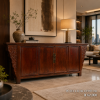
A single antique cabinet placed within such an environment can create precisely that tension.
The room remains contemporary. The furniture simply gives it another dimension.
Surface, Craftsmanship and Character
The appeal of antique furniture also lies in the details that reveal how an object was made.
Traditional Chinese furniture has a long history of sophisticated woodworking. Museum collections document furniture from the Ming and Qing periods, including examples in huanghuali and zitan, while surviving pieces demonstrate the importance of proportion, construction and material.
Mortise-and-tenon construction is one particularly important example. Traditional Chinese wood architecture and furniture share related construction principles, and mortise-and-tenon joints allowed wooden components to accommodate changes in temperature and humidity. The Metropolitan Museum of Art has noted the close relationship between Chinese architecture and furniture in both material and construction.
Surface treatment can tell another story. Chinese lacquer traditions produced highly developed decorative surfaces, and lacquered furniture and screens became significant objects of international exchange from the seventeenth century onward. The Victoria and Albert Museum documents, for example, the export of Chinese lacquered screens and furniture and the development of distinctive incised lacquer techniques.
These historical details matter because they help explain why a piece can feel substantial even when its decoration is restrained.
The beauty may be in the joinery, the balance of the frame, the relationship between solid and open areas, the surface texture or the way light moves across the finish.
An exceptional piece rewards closer looking.
From Furniture to Architectural Relationship
The strongest antique furniture does not exist separately from its surroundings.
A tall cabinet changes the proportion of a wall. A console can mark the transition between spaces. A screen can interrupt a long sightline and create a more intimate zone. A substantial table can establish the centre of a conversation area.
In each case, the furniture is performing an architectural role.
This is particularly important in open-plan homes. When dining, living and entrance areas share one continuous space, a carefully selected Chinese antique can help create visual punctuation without requiring additional walls.
The piece becomes part of the architecture.
Choosing the Right Exceptional Piece for the Room
Start With Proportion, Not Decoration
The first question should rarely be, “What style do I like?”
A more useful question is, “What does this room need?”
A large wall may require a piece with enough horizontal presence to balance it. A narrow entrance may benefit from a console with a lighter visual footprint. A tall ceiling may accommodate a substantial cabinet without making the room feel crowded.
Dimensions matter because furniture is experienced in three dimensions.
A beautiful object in the wrong proportion can make a room feel awkward. The right object can make the same room feel remarkably settled.
This is why measuring the available wall, circulation area, door openings and surrounding furniture should come before making a final decision.
Let the Room Determine the Role
Different furniture types naturally create different kinds of impact.
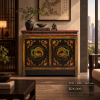
A Chinese Antique Cabinet can become a strong vertical anchor, particularly when placed against a generous wall.
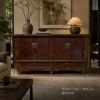
A console can define an entrance or frame a transition between rooms.
A screen can create separation without completely closing a space.
A table can become the centre of everyday life rather than simply a decorative focal point.
The important question is not simply whether a piece is exceptional.
It is whether its exceptional qualities are appropriate to the room.
One Strong Piece Is Often Enough
There is a temptation, particularly when decorating a large home, to continue adding pieces once one has been found.
But a room does not necessarily become more sophisticated as more antiques are introduced.
Sometimes the opposite happens.
One exceptional cabinet surrounded by contemporary furniture can feel deliberate. Several unrelated antiques can make the interior feel like a collection without a clear hierarchy.
This is why the idea of one signature piece is so useful.
It gives the room a centre without forcing every other element to compete with it.
Styling One Antique Piece Without Making the Room Feel Themed
Build Around the Piece, Not Around a Historical Theme
A sophisticated interior does not need to become a recreation of another era.
A Chinese antique can sit comfortably beside contemporary sofas, modern lighting, artwork and architectural materials. The goal is not historical imitation. It is balance.
Allow the antique to retain its identity while keeping the wider room current.
This creates a more natural relationship between heritage and contemporary living.
Use Materials and Colour to Create Continuity
The surrounding interior can quietly acknowledge the antique without copying it.
A timber tone can appear again in flooring or occasional furniture. A colour found within a lacquered surface might be echoed through textiles. Stone, linen, leather or metal can provide contrast while maintaining a restrained palette.
The repetition should be subtle.
The antique should remain recognisable as the distinctive element rather than becoming one piece in a coordinated theme.
Negative space is equally important.
Leaving breathing room around an exceptional cabinet or console allows its proportions and craftsmanship to be seen. The empty wall is not wasted space. It is part of the composition.
Bangkok Homes: From Luxury Condos to Pool Villas
This approach is especially relevant to contemporary homes in Bangkok and throughout Thailand.
A high-rise residence may have expansive glazing, polished stone and a deliberately minimal architectural language. A pool villa may have generous circulation, natural materials and a strong connection between indoor and outdoor spaces.
In both settings, a Chinese antique can introduce a sense of warmth and cultural depth without overwhelming the architecture.
In a penthouse, one substantial cabinet might create a focal point against a long wall.
In an entrance hall, a console can give an otherwise transitional space a distinct identity.
In a villa, a screen can help define zones within an open living area while preserving visual connection.
The furniture becomes part of how the home is experienced.
The Art of Curating a Room Around One Exceptional Antique
From Object to Meaning
The most interesting change happens when the furniture stops being viewed simply as an object.
First comes the object itself: its form, material, surface and craftsmanship.
Then comes meaning: why it attracts attention and what it contributes to the personality of the home.
Then fit: whether its proportions, function and visual character belong in the intended space.
Then value: not simply monetary value, but the value created by giving a room greater coherence, individuality and depth.
Finally comes ownership.
The piece becomes something that belongs to the story of the home.
This is why exceptional furniture can remain relevant even as other elements of an interior change. Sofas may be replaced. Walls may be repainted. Lighting may evolve. Yet a distinctive antique can continue to provide a point of continuity.
When One Piece Becomes the Room's Signature
The strongest interiors are not necessarily those that contain the most remarkable furniture.
They are often the ones where every important object has a reason to be there.
One exceptional Chinese antique can become that reason.
It can determine where the eye travels. It can influence the surrounding palette. It can give contemporary materials greater warmth. It can create contrast within an otherwise restrained room. Most importantly, it can make the interior feel chosen rather than assembled.
That is the real power of a signature piece.
It does not simply decorate the room.
It changes the way the room is understood.
A Final Thought on Curating With Intention
There is something quietly confident about choosing one exceptional piece and allowing it to breathe.
Rather than filling every corner, the room is given space to develop around a single point of character. The architecture remains visible. Contemporary furniture retains its relevance. The antique has room to speak.
For homeowners, this can be a more personal approach to luxury.
For designers and architects, it can offer a way to introduce cultural depth without compromising a contemporary architectural language.
And for collectors, it reflects a familiar principle: sometimes the most meaningful interiors begin with one piece worth building around.
Chinese House brings together Chinese antique and reproduction furniture for interiors where craftsmanship, proportion and character matter. For those considering an exceptional piece for a Bangkok residence, villa, hospitality project or contemporary home, the showroom offers an opportunity to experience how furniture changes when it is considered in relation to space—not simply as an individual object.
FAQ
Can one antique piece really change the appearance of a room?
Yes. A distinctive piece can establish a focal point, influence visual balance and introduce contrast in materials, colour and form. Its effect depends heavily on proportion and placement rather than simply its age or decoration.
What type of Chinese antique furniture works well as a signature piece?
Cabinets, console tables, screens and substantial tables can all serve as focal points. The appropriate choice depends on the room's scale, architecture, circulation and existing furniture.
Should a modern home contain several antique pieces?
Not necessarily. One carefully selected piece can often create greater visual clarity than several unrelated antiques. The objective is to create a coherent relationship between the furniture and the architecture.
Related Contents