Philosophy & Aesthetics of Chinese Antique Furniture in Luxury Homes
3079 Views
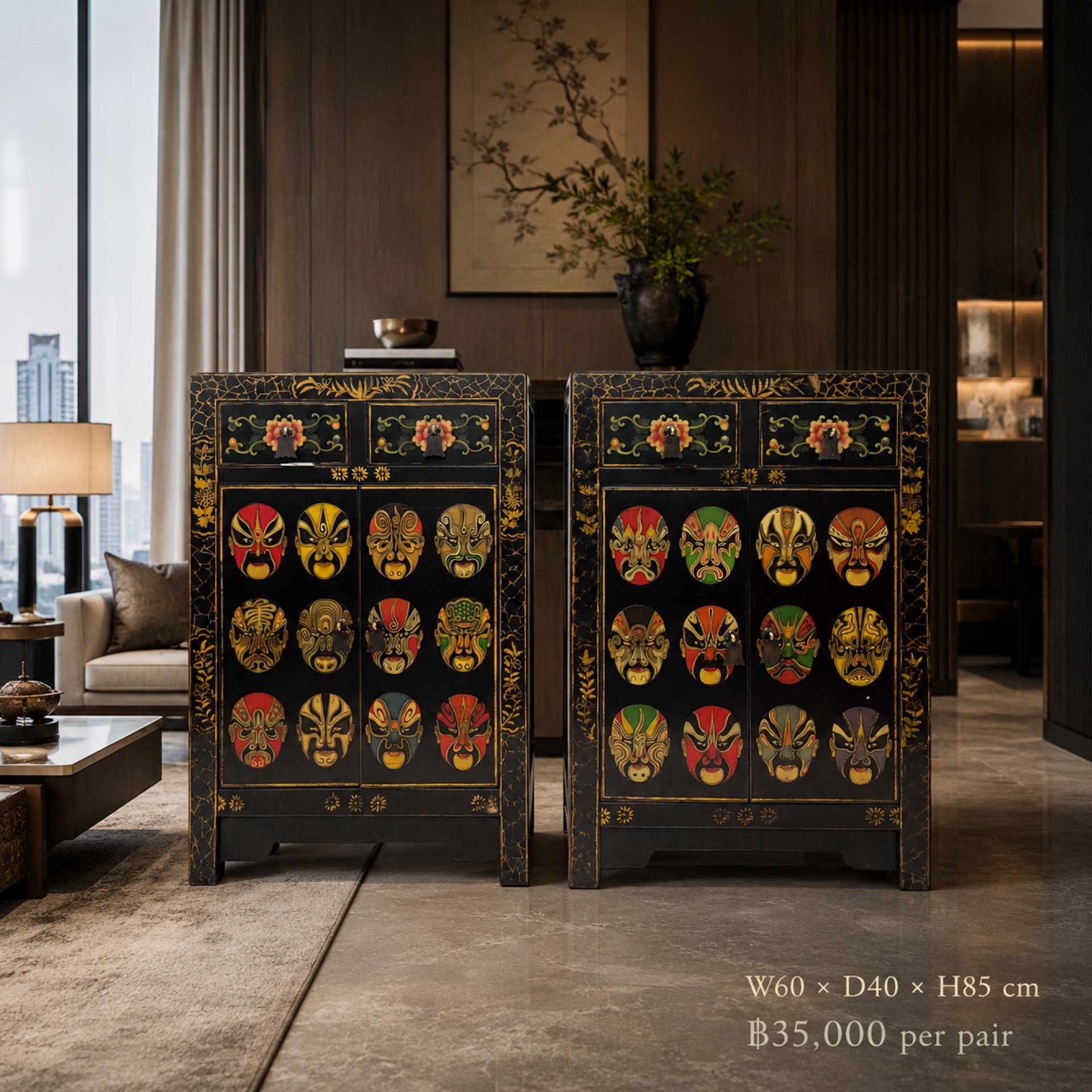
Philosophy & Aesthetics of Chinese Antique Furniture in Luxury Homes
Introduction
Chinese Antique Furniture possesses a rare ability to transform a home beyond its physical function. More than decorative objects, these pieces embody centuries of craftsmanship, cultural philosophy, and refined living. In today's luxury residences—from Bangkok penthouses and riverside condominiums to expansive pool villas—Chinese antique furniture introduces a sense of permanence and authenticity that contemporary furnishings often struggle to achieve.
The appeal lies not merely in age, but in the ideas embedded within every cabinet, chair, and console table. Classical Chinese furniture was designed with extraordinary attention to balance, proportion, and purpose, creating forms that remain remarkably relevant in modern luxury interiors.
Furniture as a Reflection of Philosophy
Unlike furniture traditions that emphasize ornament alone, classical Chinese furniture evolved from philosophical ideals rooted in harmony, order, and thoughtful living. Every element served a purpose, and beauty emerged from proportion rather than excess.
This philosophy can be seen throughout traditional Chinese courtyard homes, where architecture and furnishings worked together to create visual balance. Furniture was never intended to dominate a room. Instead, it contributed to a calm and cohesive environment that supported daily life.
This restrained approach resonates strongly with contemporary luxury homeowners. In a world saturated with trends and constant change, the quiet confidence of Chinese antique furniture offers something more enduring.
The Art of Simplicity
One of the most admired qualities of Chinese antique furniture is its sophisticated simplicity.
During the Ming Dynasty, furniture makers developed forms celebrated for their elegant proportions and minimal decoration. The beauty of a Ming-style cabinet or scholar's table often lies in its silhouette rather than elaborate embellishment.
Historical records and surviving examples demonstrate how craftsmen carefully refined dimensions to create visual harmony. Subtle curves, balanced proportions, and clean lines became hallmarks of classical Chinese design.
Today, these same qualities make Chinese antique furniture particularly suitable for luxury condominiums and modern residences where architectural simplicity is highly valued.
Craftsmanship Built to Last Generations
Perhaps the most remarkable aspect of traditional Chinese furniture is the extraordinary craftsmanship behind its construction.
For centuries, master craftsmen employed mortise-and-tenon joinery, a sophisticated woodworking system that connects components without nails or screws. This method allowed furniture to remain structurally stable while accommodating natural wood movement over time.
Many antique cabinets and tables that survive today continue to demonstrate the effectiveness of this construction technique.
The choice of materials was equally important.
Huanghuali Wood
Highly prized during the late Ming Dynasty, Huanghuali wood became renowned for its beautiful grain patterns, warm coloration, and exceptional durability. Pieces crafted from Huanghuali remain among the most admired examples of classical Chinese furniture design.
Zitan Wood
Zitan wood was historically associated with imperial workshops and elite commissions. Its dense structure and deep coloration made it one of the most prestigious materials in traditional Chinese craftsmanship.
Elm Wood
Elm wood played an important role throughout northern China and became widely used for furniture intended for everyday life. Its strength and character continue to make antique elm furniture highly desirable in contemporary interiors.
These materials were selected not for temporary fashion but for longevity, allowing furniture to mature gracefully across generations.
Ming and Qing Dynasty Aesthetics
Understanding the visual differences between the Ming and Qing periods helps explain the richness of Chinese furniture traditions.
Ming Dynasty Refinement
Furniture from the Ming Dynasty is celebrated for its elegant restraint. Designs emphasized purity of form, exceptional craftsmanship, and harmonious proportions.
Scholar cabinets, writing tables, and seating from this period often display remarkable simplicity while maintaining extraordinary visual sophistication.
This aesthetic aligns naturally with modern luxury interiors where quality and proportion take precedence over decoration.
Qing Dynasty Grandeur
During the Qing Dynasty, furniture design became more elaborate. Rich carvings, decorative motifs, and sophisticated lacquer techniques introduced greater visual drama.
Traditional lacquer craftsmanship flourished during this era, producing surfaces with exceptional depth and refinement.
In contemporary homes, carefully selected Qing pieces can serve as striking focal points while complementing modern architectural settings.
Creating Contemporary Luxury Interiors with Chinese Antiques
The success of Chinese antique furniture in modern interiors often comes from contrast.
A centuries-old cabinet positioned against minimalist walls creates visual tension that immediately captures attention. A vintage partition can define space within an open-plan condominium while introducing warmth and texture.
Interior designers frequently combine antique wood furniture with:
Natural stone surfaces
Contemporary lighting
Glass architecture
Neutral textiles
Modern art collections
This combination allows historical craftsmanship to stand out without overwhelming the space.
In Bangkok luxury residences, antique cabinets often anchor living rooms, while console tables and decorative sideboards add character to entrance halls and private lounges.
Boutique hospitality projects increasingly embrace Chinese antique furniture for similar reasons. Guests respond to spaces that feel curated, authentic, and memorable rather than uniformly contemporary.
Beauty That Becomes More Meaningful Over Time
The most enduring luxury interiors are rarely built around trends. Instead, they are composed gradually through thoughtful acquisitions that carry personal meaning and cultural depth.
Chinese antique furniture offers exactly this opportunity.
Every cabinet, partition, chair, or table reflects generations of accumulated craftsmanship and design knowledge. These objects connect modern homes to centuries of artistic tradition while remaining remarkably functional for contemporary life.
At Chinese House, established in Bangkok in 1990, this appreciation for heritage continues through a carefully curated collection of Chinese antique furniture, fine reproductions, and professional restoration expertise. The result is furniture that enriches interiors not simply through appearance, but through the stories, philosophy, and craftsmanship embedded within every piece.
Conclusion
The philosophy behind Chinese antique furniture extends far beyond aesthetics. It is rooted in balance, craftsmanship, restraint, and respect for materials. These principles have allowed classical Chinese furniture to remain relevant across centuries and cultures.
Whether placed within a luxury penthouse, a contemporary villa, or a boutique hospitality space, Chinese antique furniture introduces depth, character, and a sense of permanence that few design elements can match.
For homeowners and designers seeking interiors with genuine substance, the enduring wisdom of Chinese craftsmanship remains an inspiring foundation.
FAQ
Why is Chinese antique furniture popular in luxury homes?
Chinese antique furniture combines exceptional craftsmanship, historical significance, and timeless design. Its ability to complement both traditional and contemporary interiors makes it highly desirable in luxury residences.
What is mortise-and-tenon joinery?
Mortise-and-tenon joinery is a traditional woodworking technique that connects pieces of wood without nails or screws. It has been used in Chinese furniture making for centuries and contributes to the durability of antique furniture.
Can Chinese antique furniture work in modern interiors?
Yes. Chinese antique furniture often creates beautiful contrast within modern homes. Antique cabinets, partitions, and console tables can become focal points that add warmth, texture, and cultural depth to contemporary spaces.
Introduction
Chinese Antique Furniture possesses a rare ability to transform a home beyond its physical function. More than decorative objects, these pieces embody centuries of craftsmanship, cultural philosophy, and refined living. In today's luxury residences—from Bangkok penthouses and riverside condominiums to expansive pool villas—Chinese antique furniture introduces a sense of permanence and authenticity that contemporary furnishings often struggle to achieve.
The appeal lies not merely in age, but in the ideas embedded within every cabinet, chair, and console table. Classical Chinese furniture was designed with extraordinary attention to balance, proportion, and purpose, creating forms that remain remarkably relevant in modern luxury interiors.
Furniture as a Reflection of Philosophy
Unlike furniture traditions that emphasize ornament alone, classical Chinese furniture evolved from philosophical ideals rooted in harmony, order, and thoughtful living. Every element served a purpose, and beauty emerged from proportion rather than excess.
This philosophy can be seen throughout traditional Chinese courtyard homes, where architecture and furnishings worked together to create visual balance. Furniture was never intended to dominate a room. Instead, it contributed to a calm and cohesive environment that supported daily life.
This restrained approach resonates strongly with contemporary luxury homeowners. In a world saturated with trends and constant change, the quiet confidence of Chinese antique furniture offers something more enduring.
The Art of Simplicity
One of the most admired qualities of Chinese antique furniture is its sophisticated simplicity.
During the Ming Dynasty, furniture makers developed forms celebrated for their elegant proportions and minimal decoration. The beauty of a Ming-style cabinet or scholar's table often lies in its silhouette rather than elaborate embellishment.
Historical records and surviving examples demonstrate how craftsmen carefully refined dimensions to create visual harmony. Subtle curves, balanced proportions, and clean lines became hallmarks of classical Chinese design.
Today, these same qualities make Chinese antique furniture particularly suitable for luxury condominiums and modern residences where architectural simplicity is highly valued.
Craftsmanship Built to Last Generations
Perhaps the most remarkable aspect of traditional Chinese furniture is the extraordinary craftsmanship behind its construction.
For centuries, master craftsmen employed mortise-and-tenon joinery, a sophisticated woodworking system that connects components without nails or screws. This method allowed furniture to remain structurally stable while accommodating natural wood movement over time.
Many antique cabinets and tables that survive today continue to demonstrate the effectiveness of this construction technique.
The choice of materials was equally important.
Huanghuali Wood
Highly prized during the late Ming Dynasty, Huanghuali wood became renowned for its beautiful grain patterns, warm coloration, and exceptional durability. Pieces crafted from Huanghuali remain among the most admired examples of classical Chinese furniture design.
Zitan Wood
Zitan wood was historically associated with imperial workshops and elite commissions. Its dense structure and deep coloration made it one of the most prestigious materials in traditional Chinese craftsmanship.
Elm Wood
Elm wood played an important role throughout northern China and became widely used for furniture intended for everyday life. Its strength and character continue to make antique elm furniture highly desirable in contemporary interiors.
These materials were selected not for temporary fashion but for longevity, allowing furniture to mature gracefully across generations.
Ming and Qing Dynasty Aesthetics
Understanding the visual differences between the Ming and Qing periods helps explain the richness of Chinese furniture traditions.
Ming Dynasty Refinement
Furniture from the Ming Dynasty is celebrated for its elegant restraint. Designs emphasized purity of form, exceptional craftsmanship, and harmonious proportions.
Scholar cabinets, writing tables, and seating from this period often display remarkable simplicity while maintaining extraordinary visual sophistication.
This aesthetic aligns naturally with modern luxury interiors where quality and proportion take precedence over decoration.
Qing Dynasty Grandeur
During the Qing Dynasty, furniture design became more elaborate. Rich carvings, decorative motifs, and sophisticated lacquer techniques introduced greater visual drama.
Traditional lacquer craftsmanship flourished during this era, producing surfaces with exceptional depth and refinement.
In contemporary homes, carefully selected Qing pieces can serve as striking focal points while complementing modern architectural settings.
Creating Contemporary Luxury Interiors with Chinese Antiques
The success of Chinese antique furniture in modern interiors often comes from contrast.
A centuries-old cabinet positioned against minimalist walls creates visual tension that immediately captures attention. A vintage partition can define space within an open-plan condominium while introducing warmth and texture.
Interior designers frequently combine antique wood furniture with:
Natural stone surfaces
Contemporary lighting
Glass architecture
Neutral textiles
Modern art collections
This combination allows historical craftsmanship to stand out without overwhelming the space.
In Bangkok luxury residences, antique cabinets often anchor living rooms, while console tables and decorative sideboards add character to entrance halls and private lounges.
Boutique hospitality projects increasingly embrace Chinese antique furniture for similar reasons. Guests respond to spaces that feel curated, authentic, and memorable rather than uniformly contemporary.
Beauty That Becomes More Meaningful Over Time
The most enduring luxury interiors are rarely built around trends. Instead, they are composed gradually through thoughtful acquisitions that carry personal meaning and cultural depth.
Chinese antique furniture offers exactly this opportunity.
Every cabinet, partition, chair, or table reflects generations of accumulated craftsmanship and design knowledge. These objects connect modern homes to centuries of artistic tradition while remaining remarkably functional for contemporary life.
At Chinese House, established in Bangkok in 1990, this appreciation for heritage continues through a carefully curated collection of Chinese antique furniture, fine reproductions, and professional restoration expertise. The result is furniture that enriches interiors not simply through appearance, but through the stories, philosophy, and craftsmanship embedded within every piece.
Conclusion
The philosophy behind Chinese antique furniture extends far beyond aesthetics. It is rooted in balance, craftsmanship, restraint, and respect for materials. These principles have allowed classical Chinese furniture to remain relevant across centuries and cultures.
Whether placed within a luxury penthouse, a contemporary villa, or a boutique hospitality space, Chinese antique furniture introduces depth, character, and a sense of permanence that few design elements can match.
For homeowners and designers seeking interiors with genuine substance, the enduring wisdom of Chinese craftsmanship remains an inspiring foundation.
FAQ
Why is Chinese antique furniture popular in luxury homes?
Chinese antique furniture combines exceptional craftsmanship, historical significance, and timeless design. Its ability to complement both traditional and contemporary interiors makes it highly desirable in luxury residences.
What is mortise-and-tenon joinery?
Mortise-and-tenon joinery is a traditional woodworking technique that connects pieces of wood without nails or screws. It has been used in Chinese furniture making for centuries and contributes to the durability of antique furniture.
Can Chinese antique furniture work in modern interiors?
Yes. Chinese antique furniture often creates beautiful contrast within modern homes. Antique cabinets, partitions, and console tables can become focal points that add warmth, texture, and cultural depth to contemporary spaces.
Related Content
A hospitality interior is experienced through more than architecture alone. The reception desk, lighting, materials, artwork and furniture all contribute to how a space feels and functions. For designers working on hotels, restaurants, private clubs and boutique properties, furniture can provide character without requiring the entire interior to follow a particular historical style.
Searching for the perfect historical statement piece can often feel like navigating an endless labyrinth. You desire dynastic elegance, profound cultural depth, and flawless structural integrity, but the pursuit itself can be exhausting.
The world of interior design is experiencing a magnificent renaissance, with Chinese Antique Furniture currently taking center stage in the most luxurious homes across the globe. Today’s affluent homeowners and elite designers are moving away from mass-produced modernism, favoring the deep, grounding resonance of historical heritage pieces.
Welcome to Chinese House, your definitive authority on dynastic elegance. If you are curating a highly sophisticated space, staying ahead of the design curve is essential. Let's explore the hottest styling trends dominating the market right now, and discover why these timeless assets are in higher demand than ever before.
