How Chinese Antique Furniture Adds Character to Minimalist Interiors
823 Views
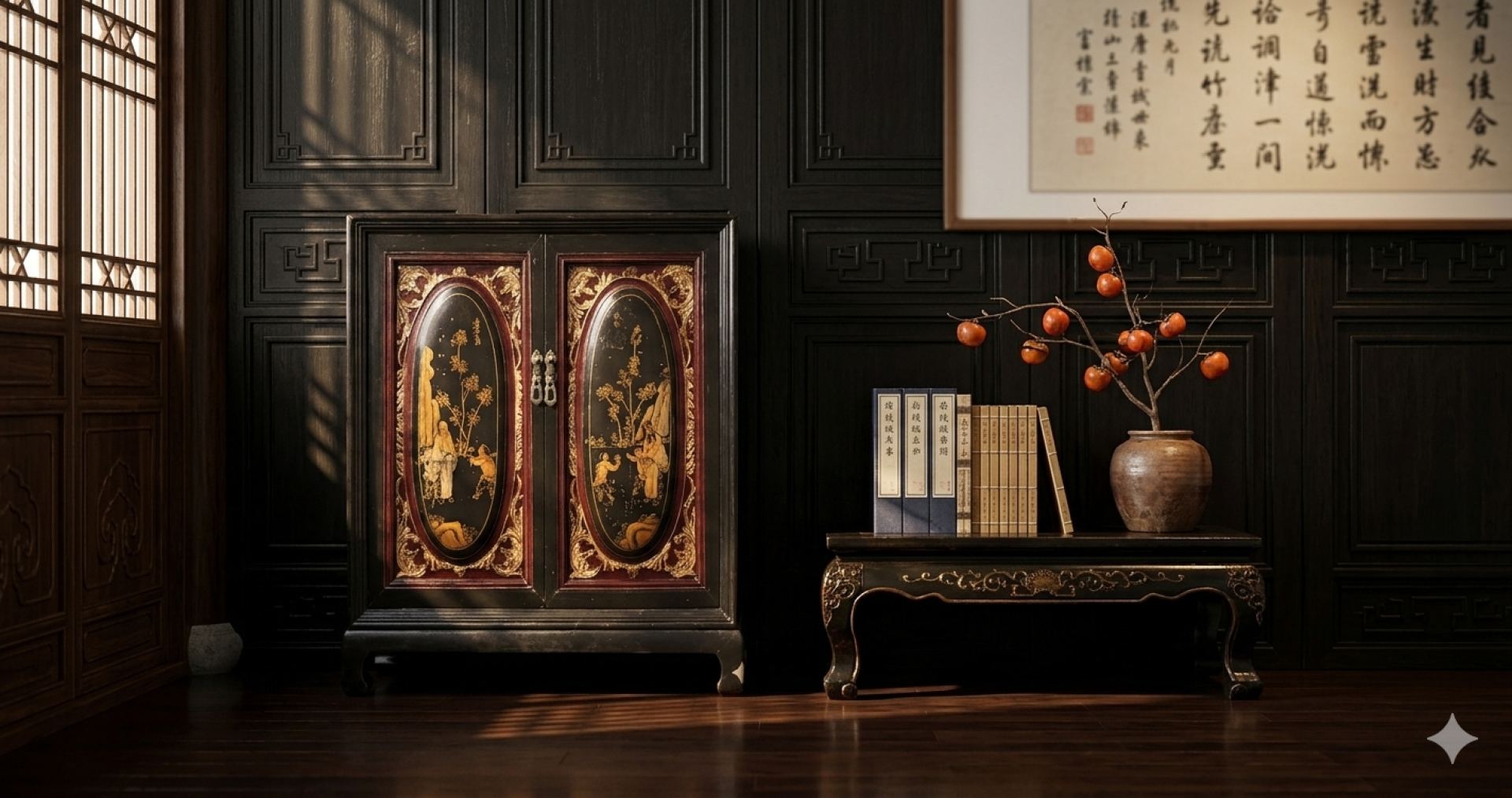
The appeal is not about filling an uncluttered room with decoration. It is about introducing one object with enough presence, texture and visual history to make the surrounding simplicity feel intentional. In a restrained Bangkok residence, a Chinese antique cabinet against a pale wall can become the detail that gives the entire room its identity.
Minimalism provides the space. Chinese antique furniture provides the accent of personality.
Why Minimalist Interiors Benefit from Character
Minimalism is sometimes mistaken for the absence of objects. In sophisticated interiors, however, restraint is usually more deliberate. The room may contain fewer pieces, but every piece matters more.
This is where Chinese antique furniture can work particularly well.
A cabinet, sideboard, console table or screen does not need elaborate surroundings to attract attention. Its proportions, joinery, surface, hardware and patina can provide visual interest without requiring a collection of decorative accessories.
The result is a room that feels considered rather than decorated.
The difference between minimalism and emptiness
An empty room can feel unfinished. A minimalist room feels complete because the space has been edited carefully.
The distinction often comes down to visual hierarchy.
Instead of placing several small decorative objects across a room, one substantial piece can establish a focal point. The eye has something specific to notice, while the surrounding negative space allows that object to remain visually clear.
Chinese antique furniture is particularly suited to this approach because many pieces possess a strong architectural quality. A tall cabinet can emphasise verticality. A long sideboard can reinforce the horizontal lines of a room. A console table can create a deliberate pause along an otherwise quiet wall.
Character through form, surface and proportion
Character does not have to mean ornament.
It can come from the geometry of a cabinet door, the irregularities of an aged surface, the relationship between solid wood and open space, or the way traditional construction creates subtle changes in shadow.
Traditional Chinese furniture is also associated with construction techniques such as mortise-and-tenon joinery, in which wooden components are fitted together without relying solely on exposed modern fasteners. Traditional Chinese lacquer craftsmanship provides another source of visual depth, with lacquered surfaces capable of creating colour, sheen and tactile variation.
These qualities are especially noticeable in a minimalist environment because there is less competing visual information.
Let the Furniture Become the Room’s Visual Anchor
A minimalist interior benefits from furniture that has a clear reason to be there.
Rather than asking, “What else can I add to this room?”, a more useful question is, “Which one piece deserves attention?”
A Chinese antique cabinet can answer that question immediately.
Choosing one strong piece instead of many decorative objects
A single substantial object often creates greater visual impact than a collection of small accessories.
Imagine a contemporary living room with limestone flooring, pale walls, soft upholstery and restrained lighting. A Chinese antique sideboard placed against one wall introduces warmth and visual texture without disrupting the architectural calm.
There is no need to surround it with numerous ornaments.
A ceramic vessel, a carefully selected artwork or a single branch may be enough.
The furniture remains the principal character.
Cabinets, sideboards and console tables as architectural punctuation
Different furniture forms create different relationships with architecture.
A Chinese Antique Cabinet can provide vertical emphasis and storage while giving a wall a stronger visual centre.
A Chinese Antique & Reproduction Sideboard can establish a horizontal line beneath artwork, architectural lighting or a large mirror.
A Chinese Antique & Reproduction Console Table can work particularly well in entrance halls, corridors and living spaces where a shallower piece is more appropriate.
A screen can play another role entirely. A Chinese Antique & Reproduction Screen can define a zone without creating the visual weight of a permanent wall.
The important principle is proportion.
The furniture should feel as though it belongs to the scale of the architecture rather than being placed there simply because there was an empty space.
The Beauty of Contrast: Chinese Antique Furniture Against Modern Simplicity
Some of the most compelling interiors are built around contrast.
A highly contemporary room does not necessarily need contemporary furniture at every point. In fact, introducing a piece with a different visual language can create depth.
Chinese antique furniture can provide that contrast naturally.
Aged surfaces against clean architectural lines
Smooth stone, glass, plaster and contemporary upholstery create controlled surfaces.
An antique wooden cabinet introduces something less uniform.
The surface may reveal changes in colour, grain, texture or finish that become more apparent beside modern materials. These differences create visual tension without requiring bold colour or elaborate decoration.
The effect can be subtle.
A contemporary Bangkok penthouse with large expanses of glass, for example, can feel considerably warmer when a carefully positioned Chinese antique cabinet interrupts the clean geometry.
The antique piece does not need to dominate the room.
Its difference is enough.
Traditional craftsmanship within contemporary spaces
Chinese furniture has a long tradition of craftsmanship centred on proportion, construction and material.
The Ming and Qing periods are particularly important reference points in the history of Chinese furniture design, although the exact age and historical period of any individual antique should always be established from reliable information rather than inferred from appearance.
For an interior, however, historical authenticity is not the only reason these forms remain compelling.
Their visual language can coexist with contemporary architecture because strong proportions do not belong exclusively to one period.
A traditional cabinet can therefore sit comfortably beside modern lighting, contemporary art and minimalist upholstery.
Warm wood tones against restrained palettes
Minimalist interiors often use quiet palettes: ivory, stone, charcoal, natural timber, muted grey and warm neutrals.
Against these colours, the surface of Chinese antique furniture can become an important tonal element.
The warmth of timber can soften a predominantly mineral interior. Darker furniture can create definition against pale walls. A more restrained surface can reinforce a natural, understated palette.
The objective is not contrast for its own sake.
It is balance.
How to Style Chinese Antique Furniture Without Losing Minimalism
The easiest way to compromise a minimalist interior is to treat an interesting piece of furniture as an invitation to add more.
Instead, let the furniture breathe.
Keep the surrounding space deliberately quiet
Negative space is part of the composition.
If a Chinese antique cabinet is the focal point, allow sufficient visual breathing room around it. Avoid filling every adjacent surface with objects.
The wall, floor and surrounding furniture should support the main piece rather than compete with it.
This approach is particularly effective in luxury condominiums and villas where architecture itself may already provide strong visual elements.
Pair antique furniture with modern lighting and materials
One of the simplest ways to make an antique piece feel at home in a contemporary interior is to surround it with contemporary elements.
Consider a traditional cabinet beneath discreet architectural lighting, or a Chinese antique console against a clean plaster wall.
The contrast creates a dialogue between periods.
Modern materials such as stone, glass and metal can make the texture of an antique wooden surface more noticeable. Conversely, the antique furniture can prevent a highly contemporary room from feeling excessively clinical.
Use accessories selectively
Accessories should support the furniture rather than explain it.
A minimalist arrangement might use one artwork, one vessel or one sculptural object. The exact choice matters less than the discipline of leaving enough space around it.
The furniture should remain visually legible.
This is especially important with pieces that already feature distinctive carving, hardware or surface treatment.
Create visual balance around a statement piece
Balance does not necessarily mean symmetry.
A large cabinet on one side of a room may be balanced by a floor lamp, artwork or architectural feature elsewhere. A console can balance the visual weight of an entrance without requiring another piece of furniture opposite it.
Think in terms of mass, height, colour and negative space.
The result should feel composed rather than perfectly matched.
Choosing the Right Chinese Antique Piece for a Minimalist Home
The best starting point is usually function.
A beautiful object becomes much more convincing when it also performs a useful role within the room.
Start with function, then consider character
A cabinet may provide storage in a dining room or living space.
A sideboard can organise a long wall while creating a surface for carefully selected objects.
A console table can establish an entrance or provide a refined transition between spaces.
A screen can separate areas while maintaining a sense of openness.
Once the practical requirement is clear, consider which form, scale and surface best suit the architecture.
This prevents the furniture from feeling like an isolated decorative purchase.
Cabinet, Sideboard, Console Table or Screen?
The choice should respond to the room.
For a narrow entrance, a console may offer the right depth and proportion.
For a larger living or dining area, a sideboard can provide stronger horizontal presence.
A cabinet may be more appropriate where vertical storage or a taller focal point is required.
A screen can be considered when the objective is spatial definition rather than storage.
Chinese House's current furniture categories provide distinct options across these applications, including Chinese Antique Cabinets, Chinese Antique Tall Cabinets, Chinese Antique & Reproduction Sideboards, Chinese Antique & Reproduction Console Tables and Chinese Antique & Reproduction Screens.
Look for proportion, craftsmanship and observable character
When historical information is not available, the furniture can still be assessed through what is visible.
Look at the relationship between height and width.
Observe the construction, surface, hardware, carving and finish.
Consider how the piece interacts with natural light.
Notice whether its visual weight complements the architecture or overwhelms it.
These details often matter more to the success of an interior than simply choosing an object because it is recognisably Chinese.
Antique furniture as part of a broader interior composition
A successful minimalist interior rarely revolves around furniture alone.
Architecture, lighting, flooring, artwork, textiles and views all contribute to the atmosphere.
The Chinese antique piece should therefore be considered as part of the whole composition.
In a Bangkok villa, it might connect a contemporary interior to warmer natural materials. In a high-rise residence, it might provide contrast against glass and stone. In a boutique hospitality setting, it can help establish a sense of place without turning the room into a themed environment.
The furniture becomes part of the architecture's visual vocabulary.
Creating a Home That Feels Personal, Not Overdecorated
Minimalism can create an unusually strong setting for personal expression.
When there are fewer objects in a room, the objects that remain carry greater meaning.
This is why a Chinese antique piece can be so effective.
It introduces individuality without requiring visual excess.
Why restraint can make individual pieces more meaningful
A room filled with decorative objects asks the eye to process many competing details.
A room with one carefully chosen cabinet asks the eye to slow down.
The surface becomes easier to appreciate. The proportions become more noticeable. Small construction details can become part of the experience.
This is one of the quiet pleasures of restrained interiors.
Chinese antique furniture as an expression of personal taste
Furniture can communicate something about the person who chooses it.
A minimalist home does not have to look anonymous.
A Chinese antique cabinet beside contemporary artwork can suggest an appreciation for both tradition and modern architecture. A carefully selected sideboard can introduce warmth into an otherwise neutral palette. A screen can reflect an interest in spatial rhythm and proportion.
None of this requires the room to become overtly traditional.
The strongest interiors often allow different periods to coexist naturally.
Building an interior around fewer, more distinctive objects
The goal is not to collect visual statements.
It is to create relationships between them.
One Chinese antique piece may be enough to change the atmosphere of an entire room. From there, modern furniture, architectural lighting and restrained accessories can remain intentionally quiet.
This is where minimalism becomes more than a decorating style.
It becomes a way of editing.
The fewer objects a room contains, the more carefully each one should be chosen.
For homeowners, designers and architects in Bangkok, Chinese antique furniture offers a way to introduce warmth, texture and individuality into contemporary residences without sacrificing the clarity of minimalist architecture.
Chinese House, established in Bangkok in 1990, presents Chinese antique and reproduction furniture for interiors where craftsmanship, proportion and character matter. For those considering a piece for a residence, hospitality project or design scheme, the showroom offers an opportunity to experience the furniture at full scale and consider how its presence changes the surrounding space.
In a minimalist interior, character does not need to arrive loudly.
Sometimes one remarkable piece, surrounded by enough space to be appreciated, is all a room needs.
FAQ Section
Can Chinese antique furniture work in a modern minimalist interior?
Yes. The contrast between traditional furniture forms and contemporary architecture can create visual depth. The key is to control the number of decorative elements and give the furniture sufficient space around it.
What Chinese antique furniture works well in minimalist homes?
Cabinets, tall cabinets, sideboards, console tables and screens can all work effectively, depending on the room's scale and function. The most important considerations are proportion, visual weight, function and how the piece relates to the surrounding architecture.
How do I style Chinese antique furniture without making a room look traditional?
Keep the surrounding architecture and furnishings restrained. Pair the furniture with contemporary lighting, modern materials, neutral colours and selective accessories. The contrast between old and new can allow the antique piece to feel intentional rather than themed.
Minimalism provides the space. Chinese antique furniture provides the accent of personality.
Why Minimalist Interiors Benefit from Character
Minimalism is sometimes mistaken for the absence of objects. In sophisticated interiors, however, restraint is usually more deliberate. The room may contain fewer pieces, but every piece matters more.
This is where Chinese antique furniture can work particularly well.
A cabinet, sideboard, console table or screen does not need elaborate surroundings to attract attention. Its proportions, joinery, surface, hardware and patina can provide visual interest without requiring a collection of decorative accessories.
The result is a room that feels considered rather than decorated.
The difference between minimalism and emptiness
An empty room can feel unfinished. A minimalist room feels complete because the space has been edited carefully.
The distinction often comes down to visual hierarchy.
Instead of placing several small decorative objects across a room, one substantial piece can establish a focal point. The eye has something specific to notice, while the surrounding negative space allows that object to remain visually clear.
Chinese antique furniture is particularly suited to this approach because many pieces possess a strong architectural quality. A tall cabinet can emphasise verticality. A long sideboard can reinforce the horizontal lines of a room. A console table can create a deliberate pause along an otherwise quiet wall.
Character through form, surface and proportion
Character does not have to mean ornament.
It can come from the geometry of a cabinet door, the irregularities of an aged surface, the relationship between solid wood and open space, or the way traditional construction creates subtle changes in shadow.
Traditional Chinese furniture is also associated with construction techniques such as mortise-and-tenon joinery, in which wooden components are fitted together without relying solely on exposed modern fasteners. Traditional Chinese lacquer craftsmanship provides another source of visual depth, with lacquered surfaces capable of creating colour, sheen and tactile variation.
These qualities are especially noticeable in a minimalist environment because there is less competing visual information.
Let the Furniture Become the Room’s Visual Anchor
A minimalist interior benefits from furniture that has a clear reason to be there.
Rather than asking, “What else can I add to this room?”, a more useful question is, “Which one piece deserves attention?”
A Chinese antique cabinet can answer that question immediately.
Choosing one strong piece instead of many decorative objects
A single substantial object often creates greater visual impact than a collection of small accessories.
Imagine a contemporary living room with limestone flooring, pale walls, soft upholstery and restrained lighting. A Chinese antique sideboard placed against one wall introduces warmth and visual texture without disrupting the architectural calm.
There is no need to surround it with numerous ornaments.
A ceramic vessel, a carefully selected artwork or a single branch may be enough.
The furniture remains the principal character.
Cabinets, sideboards and console tables as architectural punctuation
Different furniture forms create different relationships with architecture.
A Chinese Antique Cabinet can provide vertical emphasis and storage while giving a wall a stronger visual centre.
A Chinese Antique & Reproduction Sideboard can establish a horizontal line beneath artwork, architectural lighting or a large mirror.
A Chinese Antique & Reproduction Console Table can work particularly well in entrance halls, corridors and living spaces where a shallower piece is more appropriate.
A screen can play another role entirely. A Chinese Antique & Reproduction Screen can define a zone without creating the visual weight of a permanent wall.
The important principle is proportion.
The furniture should feel as though it belongs to the scale of the architecture rather than being placed there simply because there was an empty space.
The Beauty of Contrast: Chinese Antique Furniture Against Modern Simplicity
Some of the most compelling interiors are built around contrast.
A highly contemporary room does not necessarily need contemporary furniture at every point. In fact, introducing a piece with a different visual language can create depth.
Chinese antique furniture can provide that contrast naturally.
Aged surfaces against clean architectural lines
Smooth stone, glass, plaster and contemporary upholstery create controlled surfaces.
An antique wooden cabinet introduces something less uniform.
The surface may reveal changes in colour, grain, texture or finish that become more apparent beside modern materials. These differences create visual tension without requiring bold colour or elaborate decoration.
The effect can be subtle.
A contemporary Bangkok penthouse with large expanses of glass, for example, can feel considerably warmer when a carefully positioned Chinese antique cabinet interrupts the clean geometry.
The antique piece does not need to dominate the room.
Its difference is enough.
Traditional craftsmanship within contemporary spaces
Chinese furniture has a long tradition of craftsmanship centred on proportion, construction and material.
The Ming and Qing periods are particularly important reference points in the history of Chinese furniture design, although the exact age and historical period of any individual antique should always be established from reliable information rather than inferred from appearance.
For an interior, however, historical authenticity is not the only reason these forms remain compelling.
Their visual language can coexist with contemporary architecture because strong proportions do not belong exclusively to one period.
A traditional cabinet can therefore sit comfortably beside modern lighting, contemporary art and minimalist upholstery.
Warm wood tones against restrained palettes
Minimalist interiors often use quiet palettes: ivory, stone, charcoal, natural timber, muted grey and warm neutrals.
Against these colours, the surface of Chinese antique furniture can become an important tonal element.
The warmth of timber can soften a predominantly mineral interior. Darker furniture can create definition against pale walls. A more restrained surface can reinforce a natural, understated palette.
The objective is not contrast for its own sake.
It is balance.
How to Style Chinese Antique Furniture Without Losing Minimalism
The easiest way to compromise a minimalist interior is to treat an interesting piece of furniture as an invitation to add more.
Instead, let the furniture breathe.
Keep the surrounding space deliberately quiet
Negative space is part of the composition.
If a Chinese antique cabinet is the focal point, allow sufficient visual breathing room around it. Avoid filling every adjacent surface with objects.
The wall, floor and surrounding furniture should support the main piece rather than compete with it.
This approach is particularly effective in luxury condominiums and villas where architecture itself may already provide strong visual elements.
Pair antique furniture with modern lighting and materials
One of the simplest ways to make an antique piece feel at home in a contemporary interior is to surround it with contemporary elements.
Consider a traditional cabinet beneath discreet architectural lighting, or a Chinese antique console against a clean plaster wall.
The contrast creates a dialogue between periods.
Modern materials such as stone, glass and metal can make the texture of an antique wooden surface more noticeable. Conversely, the antique furniture can prevent a highly contemporary room from feeling excessively clinical.
Use accessories selectively
Accessories should support the furniture rather than explain it.
A minimalist arrangement might use one artwork, one vessel or one sculptural object. The exact choice matters less than the discipline of leaving enough space around it.
The furniture should remain visually legible.
This is especially important with pieces that already feature distinctive carving, hardware or surface treatment.
Create visual balance around a statement piece
Balance does not necessarily mean symmetry.
A large cabinet on one side of a room may be balanced by a floor lamp, artwork or architectural feature elsewhere. A console can balance the visual weight of an entrance without requiring another piece of furniture opposite it.
Think in terms of mass, height, colour and negative space.
The result should feel composed rather than perfectly matched.
Choosing the Right Chinese Antique Piece for a Minimalist Home
The best starting point is usually function.
A beautiful object becomes much more convincing when it also performs a useful role within the room.
Start with function, then consider character
A cabinet may provide storage in a dining room or living space.
A sideboard can organise a long wall while creating a surface for carefully selected objects.
A console table can establish an entrance or provide a refined transition between spaces.
A screen can separate areas while maintaining a sense of openness.
Once the practical requirement is clear, consider which form, scale and surface best suit the architecture.
This prevents the furniture from feeling like an isolated decorative purchase.
Cabinet, Sideboard, Console Table or Screen?
The choice should respond to the room.
For a narrow entrance, a console may offer the right depth and proportion.
For a larger living or dining area, a sideboard can provide stronger horizontal presence.
A cabinet may be more appropriate where vertical storage or a taller focal point is required.
A screen can be considered when the objective is spatial definition rather than storage.
Chinese House's current furniture categories provide distinct options across these applications, including Chinese Antique Cabinets, Chinese Antique Tall Cabinets, Chinese Antique & Reproduction Sideboards, Chinese Antique & Reproduction Console Tables and Chinese Antique & Reproduction Screens.
Look for proportion, craftsmanship and observable character
When historical information is not available, the furniture can still be assessed through what is visible.
Look at the relationship between height and width.
Observe the construction, surface, hardware, carving and finish.
Consider how the piece interacts with natural light.
Notice whether its visual weight complements the architecture or overwhelms it.
These details often matter more to the success of an interior than simply choosing an object because it is recognisably Chinese.
Antique furniture as part of a broader interior composition
A successful minimalist interior rarely revolves around furniture alone.
Architecture, lighting, flooring, artwork, textiles and views all contribute to the atmosphere.
The Chinese antique piece should therefore be considered as part of the whole composition.
In a Bangkok villa, it might connect a contemporary interior to warmer natural materials. In a high-rise residence, it might provide contrast against glass and stone. In a boutique hospitality setting, it can help establish a sense of place without turning the room into a themed environment.
The furniture becomes part of the architecture's visual vocabulary.
Creating a Home That Feels Personal, Not Overdecorated
Minimalism can create an unusually strong setting for personal expression.
When there are fewer objects in a room, the objects that remain carry greater meaning.
This is why a Chinese antique piece can be so effective.
It introduces individuality without requiring visual excess.
Why restraint can make individual pieces more meaningful
A room filled with decorative objects asks the eye to process many competing details.
A room with one carefully chosen cabinet asks the eye to slow down.
The surface becomes easier to appreciate. The proportions become more noticeable. Small construction details can become part of the experience.
This is one of the quiet pleasures of restrained interiors.
Chinese antique furniture as an expression of personal taste
Furniture can communicate something about the person who chooses it.
A minimalist home does not have to look anonymous.
A Chinese antique cabinet beside contemporary artwork can suggest an appreciation for both tradition and modern architecture. A carefully selected sideboard can introduce warmth into an otherwise neutral palette. A screen can reflect an interest in spatial rhythm and proportion.
None of this requires the room to become overtly traditional.
The strongest interiors often allow different periods to coexist naturally.
Building an interior around fewer, more distinctive objects
The goal is not to collect visual statements.
It is to create relationships between them.
One Chinese antique piece may be enough to change the atmosphere of an entire room. From there, modern furniture, architectural lighting and restrained accessories can remain intentionally quiet.
This is where minimalism becomes more than a decorating style.
It becomes a way of editing.
The fewer objects a room contains, the more carefully each one should be chosen.
For homeowners, designers and architects in Bangkok, Chinese antique furniture offers a way to introduce warmth, texture and individuality into contemporary residences without sacrificing the clarity of minimalist architecture.
Chinese House, established in Bangkok in 1990, presents Chinese antique and reproduction furniture for interiors where craftsmanship, proportion and character matter. For those considering a piece for a residence, hospitality project or design scheme, the showroom offers an opportunity to experience the furniture at full scale and consider how its presence changes the surrounding space.
In a minimalist interior, character does not need to arrive loudly.
Sometimes one remarkable piece, surrounded by enough space to be appreciated, is all a room needs.
FAQ Section
Can Chinese antique furniture work in a modern minimalist interior?
Yes. The contrast between traditional furniture forms and contemporary architecture can create visual depth. The key is to control the number of decorative elements and give the furniture sufficient space around it.
What Chinese antique furniture works well in minimalist homes?
Cabinets, tall cabinets, sideboards, console tables and screens can all work effectively, depending on the room's scale and function. The most important considerations are proportion, visual weight, function and how the piece relates to the surrounding architecture.
How do I style Chinese antique furniture without making a room look traditional?
Keep the surrounding architecture and furnishings restrained. Pair the furniture with contemporary lighting, modern materials, neutral colours and selective accessories. The contrast between old and new can allow the antique piece to feel intentional rather than themed.
Related Content
Quiet luxury interiors are rarely defined by how much they contain. They are defined by what they choose to leave unsaid. Chinese antique furniture brings that same sense of restraint into a room through proportion, material, craftsmanship and character.
A single Chinese antique cabinet, console table or screen can give a contemporary interior a sense of depth without turning it into a themed space. Its presence is quieter than decoration, yet often more memorable.
Stepping across the threshold of your home should feel like an immediate exhale—a warm, curated embrace anchored by the exquisite presence of Chinese Antique Furniture. Ask yourself: does your house truly welcome you, or does it merely open the door and let you in? The difference lies entirely in the energy and atmosphere you cultivate in those critical first few steps.
Bangkok has rapidly evolved into a premier global hub for luxury interior design, making the quest to discover authentic Chinese Antique Furniture an exhilarating journey for expatriates and affluent homeowners.
