Chinese Antique Furniture in Bangkok Hospitality Design

Chinese Antique Furniture can be considered as one element within this broader composition. A cabinet may provide useful storage, a console table may anchor an entrance, while a screen can help define a transition between spaces. The value lies in how the individual piece relates to the architecture around it.
For hospitality projects in Bangkok and Thailand, this means looking beyond the furniture itself. Function, proportion, circulation, materials, lighting and environmental conditions all need to be considered before a piece is specified.
Where Chinese Antique Furniture Can Work
Lobby and Reception Areas
The entrance is often one of the most carefully considered spaces in a hospitality project. It establishes the visual language before a guest reaches the main rooms.
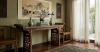
A Chinese Antique & Reproduction Console Table can work against a wall, beside an entrance or within a waiting area where its proportions allow sufficient circulation. Cabinets can provide storage while contributing a stronger vertical element to the composition.
The objective is not to fill the lobby with antique furniture. One carefully positioned piece can have greater architectural clarity than several competing objects.
Guest Rooms and Suites
Guest rooms require a particularly careful balance between character and practicality. Furniture needs to coexist with beds, seating, luggage areas, lighting and circulation.
Chinese Antique & Reproduction Bedside Cabinets can be considered where their dimensions and configuration suit the room. Cabinets may also work as storage or display pieces in larger suites, while a small console can provide a defined surface within an entrance or dressing area.
Scale is especially important here. A substantial piece may work comfortably within a generous suite but become restrictive in a compact room.
Restaurants and Private Dining Rooms
Dining environments create opportunities for furniture to serve both functional and visual purposes.
Chinese Antique & Reproduction Sideboards can provide useful storage or serving surfaces, while Chinese Antique Tables & Chairs may be considered where their proportions and construction suit the intended dining arrangement.
In private dining rooms, a cabinet, screen or sideboard can also establish a visual focal point without requiring extensive decorative treatment across every wall.
Lounges and Transitional Spaces
Hospitality interiors contain many spaces between major destinations: corridors, waiting areas, lounges and small transition zones.
These areas can benefit from furniture that provides visual punctuation without obstructing movement. Screens can help define zones, while console tables and selected cabinets can occupy otherwise underused architectural edges.
The key consideration is always the relationship between furniture and movement through the space.
Choose Furniture According to Function
Furniture selection becomes more useful when the starting point is the requirement of the space rather than the appearance of a particular object.
Cabinets for Storage and Display
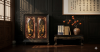
Cabinets can combine practical storage with a strong vertical presence. In hospitality environments, they may be appropriate for guest-facing display, concealed storage or supporting functions within lounges, suites and dining areas.
The relevant question is not simply whether a cabinet looks appropriate. Designers should consider what it needs to hold, how often it will be accessed and whether its doors and surrounding space can be used comfortably.
Explore the Chinese Antique Cabinets and Chinese Reproduction Cabinets categories when comparing these applications.
Sideboards for Dining and Service Areas
A sideboard can provide a useful connection between furniture and hospitality operations. Depending on the project, it may support dining service, storage or display.
Its length and depth should be considered alongside the dining table, circulation routes and surrounding architectural elements.
The Chinese Antique & Reproduction Sideboards category provides a useful starting point for this type of application.
Console Tables for Entrances and Lobbies
Console tables are particularly useful where a project requires a narrow piece of furniture rather than a deeper storage unit.
They can sit against a wall in a lobby, entrance or lounge, providing a surface for carefully selected objects while helping to establish the scale of the space.
The Chinese Antique & Reproduction Console Tables category can be considered when planning these areas.
Screens for Spatial Separation
Screens offer a different function because they can influence the perception of space without becoming a permanent architectural wall.
A Chinese Antique & Reproduction Screen may help distinguish a lounge from a circulation route, separate a dining area from an entrance or create a more defined visual backdrop.
The surrounding space matters. A screen requires enough visual and physical breathing room to remain legible rather than becoming another obstacle within a crowded interior.
Tables & Chairs
Tables and chairs should be considered primarily through proportion, comfort and intended use.
In a hospitality environment, dimensions need to work with the number of users, circulation around the furniture and the operational requirements of the space. Decorative character comes after these basic requirements have been established.
Proportion, Circulation and Contemporary Architecture
Start With the Architecture
Furniture should be considered in relation to the room rather than selected independently.
Ceiling height, wall dimensions, doorways, columns, windows and built-in elements all influence how a piece will read within the space. A cabinet that feels appropriately scaled in a large lobby may appear visually heavy in a narrower corridor.
The same principle applies to depth. A piece can have an appropriate width and height but still interfere with movement if its depth is overlooked.
Allow Space Around the Furniture
Hospitality interiors have different circulation requirements from private residences. Guests, staff and service equipment may all need to move through the same environment.
Before specifying a piece, consider:
Guest circulation
Service routes
Door swings
Access to adjacent furniture
Cleaning and maintenance access
Emergency and accessibility requirements
Delivery and installation routes
These practical considerations should be resolved before visual styling.
For a more detailed approach to measurement, see Why Size Matters: Measuring Before Buying Antique Furniture.
Working With Contemporary Materials
Chinese antique furniture does not require an entirely traditional interior.
A cabinet with a richly worked surface can sit against stone. A console can provide contrast beside glass and metal. Timber architectural elements can create a material conversation without matching the furniture exactly.
Contemporary lighting can also change how a traditional form is perceived. Controlled illumination may highlight surface texture, joinery or decorative details while keeping the overall environment restrained.
Neutral architectural finishes can provide another approach. Rather than competing with the furniture, they can give a distinctive piece enough visual space to remain the focus.
The aim is not to make contemporary architecture appear historically styled. It is to allow furniture from a different design tradition to participate naturally within the composition.
Designing for Bangkok's Tropical Environment
Hospitality furniture in Thailand also needs to be considered in relation to the local environment.
Humidity and Airflow
Bangkok's climate makes environmental conditions relevant to furniture planning. Areas with limited airflow or persistent moisture require particular attention.
Furniture should not automatically be placed in the most humid or poorly ventilated part of a property simply because the location appears visually convenient.
Air circulation, room conditions and the surrounding environment should be considered as part of the specification process.
Sunlight and Condensation
Direct sunlight can affect furniture surfaces over time, while windows and exterior doors may create areas where temperature and condensation need to be considered.
Placement should therefore take account of:
Strong direct sunlight
Proximity to windows
Exterior doors
Air-conditioning outlets
Areas vulnerable to condensation
Changes in environmental conditions
These considerations are particularly important when furniture is being installed in a hospitality environment where pieces may remain in the same position for long periods.
Maintenance and Care
A hospitality project generally has different maintenance requirements from a private home. Furniture may experience more frequent contact, cleaning and movement.
Care procedures should therefore be considered before installation rather than after problems appear.
For more detailed guidance, see Caring for Antique Furniture in a Tropical Climate.
Antique or Reproduction for Hospitality Projects?
Antique and Reproduction furniture should be treated as distinct classifications.
Antique refers to an authentic antique piece where that classification is supported by appropriate information.
Reproduction refers to newly made furniture based on traditional or classical Chinese designs.
For a hospitality project, the choice should relate to the project's design objectives, functional requirements, budget, maintenance considerations and desired character.
There is no need for the entire project to use one classification exclusively. The important point is that each piece should be correctly identified and specified.
For a fuller explanation of the distinction, see Antique vs Reproduction Furniture: Understanding the Difference.
A Practical Framework for Designers and Architects
When considering Chinese antique furniture for a hospitality project, a useful specification checklist can help prevent visual decisions from becoming disconnected from practical requirements.
1. Intended Function
What does the furniture need to do?
Is it for storage, display, serving, seating, spatial separation or simply architectural emphasis?
2. Dimensions
Measure the available space and compare it with the furniture's width, depth and height.
Do not consider the furniture in isolation. Include the surrounding clearance required for people, doors and adjacent objects.
3. Circulation
Map how guests and staff move around the piece.
A visually successful location is not successful if it creates an obstruction.
4. Visual Weight
Consider how much attention the furniture will command relative to the architecture.
A strongly detailed cabinet may require a quieter wall or surrounding composition, while a simpler piece may work comfortably within a more visually active environment.
5. Material Relationships
Look at the relationship between the furniture and the project's stone, timber, glass, metal, fabrics and finishes.
Matching every material is rarely necessary. Contrast can be useful when it remains controlled.
6. Lighting
Consider both natural and artificial light.
Lighting should support the furniture's presence without creating glare, excessive heat or unnecessary exposure to direct sunlight.
7. Maintenance
Consider cleaning, access, environmental conditions and the level of daily use expected within the property.
8. Installation and Access
Check doorways, lifts, corridors, staircases and final installation locations before selecting a large or difficult-to-move piece.
This is particularly important in completed hotels, condominiums and other properties where access can be restricted.
9. Antique or Reproduction Classification
Confirm whether the selected piece is Antique or Reproduction and ensure the terminology used in project documentation, specifications and client communication remains accurate.
Designing the Relationship, Not Just Selecting the Object
The most considered hospitality interiors are rarely built around isolated furniture selections. Each object needs to have a relationship with the architecture around it.
A Chinese antique cabinet may provide vertical balance within a large room. A sideboard may connect a dining area with its service requirements. A screen may define a transition without constructing another wall. A console may give an entrance a clearer visual endpoint.
These applications depend on context.
For designers and architects, the process is therefore less about decorating a hotel or restaurant with Chinese furniture and more about deciding where a particular form, material and function can contribute to the overall composition.
Working With Chinese House
For designers, architects and hospitality professionals, selecting furniture often involves questions that extend beyond appearance: dimensions, function, classification, environmental conditions, placement and relationship with the surrounding architecture.
Chinese House provides a resource for exploring Chinese Antique Furniture and Reproduction pieces in the context of residential and hospitality interiors.
For a project in Bangkok or elsewhere in Thailand, the showroom can be considered as part of the research and selection process when individual pieces need to be assessed in relation to a specific interior.
FAQ
Can Chinese antique furniture be used in modern hotels and restaurants?
Yes. The furniture does not need to dictate the entire interior style. Cabinets, sideboards, console tables, screens and tables can be selected according to function and positioned within contemporary architectural environments using proportion, material contrast and controlled visual composition.
What should designers consider before specifying Chinese antique furniture?
The main considerations include intended function, dimensions, circulation, visual weight, material relationships, lighting, maintenance, environmental conditions and installation access. The Antique or Reproduction classification should also be clearly established.
Is Reproduction furniture suitable for hospitality projects?
Reproduction furniture can be considered where newly made pieces based on traditional or classical Chinese designs suit the project's requirements. It should be identified accurately as Reproduction rather than described as Antique or Vintage.
Related Contents
Our Chinese Antique & Reproduction Screens
Why Chinese Antique Furniture Works Across Different Interior Styles