How Chinese Antique Furniture Can Make a Modern Home More Personal
234 Views

Why Modern Homes Sometimes Need Something Unexpected
Modern interior design often begins with restraint.
Neutral walls, natural stone, timber flooring, contemporary sofas, and carefully controlled lighting create a sophisticated foundation. These elements are excellent at creating harmony, but too much uniformity can remove the visual details that make a home memorable.
This is where an antique piece becomes valuable.
A Chinese cabinet with an irregular grain, aged surface, or distinctive silhouette can introduce a point of difference without disrupting the architecture. An antique altar table can provide a strong horizontal line beneath artwork or become an elegant console in an entrance hall.
The furniture becomes part of the home's personality.
Instead of every object looking newly selected at the same time, the room begins to feel collected.
That distinction is important in luxury interiors.
Personal style rarely comes from purchasing an entire room from one collection. It develops through the relationship between pieces that have different origins, materials, ages, and visual qualities.
Let History Meet Contemporary Design
Chinese antique furniture has a long design tradition that can sit surprisingly comfortably within contemporary interiors.
Furniture from the Ming Dynasty (1368–1644), for example, is widely associated with refined proportions, structural clarity, and sophisticated hardwood construction. Pieces made during this period can appear remarkably restrained when placed beside modern architecture.
Traditional construction also contributes to their character.
Mortise-and-tenon joinery is an important feature of traditional Chinese woodworking, connecting structural components without relying on the visual presence of modern fasteners. Traditional Chinese furniture also developed through the use of different woods and surface treatments, including elm, huanghuali, zitan, and lacquer in appropriate historical contexts.
These details are not simply historical curiosities.
They are part of what makes an antique piece visually interesting today.
A contemporary sofa may be deliberately simple. A Chinese antique cabinet can provide the complexity through its wood grain, joinery, proportions, and surface.
The room becomes balanced through contrast.
Decorating Around a Chinese Antique Cabinet
An antique cabinet is one of the most versatile ways to introduce Chinese character into a modern home.
The key is to consider the cabinet as a piece of furniture first and a historical object second.
Modern Luxury
Imagine a warm travertine floor, a contemporary cream sofa, soft architectural lighting, and a Chinese antique cabinet in naturally aged timber.
The cabinet does not need matching Chinese chairs or traditional accessories.
Instead, the modern materials create a quiet background against which the cabinet becomes the focal point.
Stone provides coolness.
Timber provides warmth.
Contemporary upholstery provides softness.
The antique cabinet provides character.
This combination can work particularly well in Bangkok luxury condos and penthouses, where contemporary architecture often benefits from the warmth of natural wood.
Minimalist and Zen Interiors
A quieter interior can make an antique cabinet even more powerful.
Pair it with natural timber, linen, soft neutral walls, and restrained decoration. Avoid filling the top of the cabinet with numerous objects.
Give it space.
The simplicity of the surroundings allows the cabinet's proportions and surface to become the visual interest.
This approach works because the furniture does not have to compete with the room.
It simply belongs there.
Eclectic Contemporary Interiors
For homeowners with a more expressive style, a Chinese antique cabinet can become part of a much broader composition.
Consider contemporary artwork, European-inspired seating, vintage lighting, modern ceramics, and Chinese furniture within the same room.
The styles do not need to match.
They need to relate.
A repeated timber tone can connect the furniture. A shared neutral palette can create continuity. Similar proportions can prevent visually unrelated objects from feeling chaotic.
The result is eclectic without becoming cluttered.
Giving an Antique Altar Table a Contemporary Role
An antique altar table can be particularly interesting because of its strong proportions.
Historically associated with traditional Chinese interiors and ceremonial settings, these tables can have an architectural presence that translates well into contemporary homes.
Today, depending on the piece and the homeowner's needs, an altar table may function visually as a console, display table, entryway feature, or furniture accent.
The important point is to respect the character of the original piece rather than trying to make it look like something it is not.
A long altar table against a quiet wall can support a large contemporary artwork.
In an entrance, it can create a deliberate arrival moment.
In a dining or living space, its horizontal proportions can balance taller furniture such as cabinets or architectural elements.
Its historical identity remains visible, while its role within the room becomes contemporary.
That is adaptation rather than imitation.
The Furniture Should Remain the Furniture
One common mistake when decorating with antique furniture is over-styling it.
A beautiful cabinet can quickly disappear beneath decorative objects. An altar table can lose its architectural quality when covered with too many accessories.
Instead, consider what the furniture already contributes.
Its wood may provide enough colour.
Its silhouette may provide enough visual interest.
Its age may provide enough texture.
A small ceramic object, a contemporary lamp, or a single artwork may be all that is needed.
Luxury often comes from knowing when to stop.
How Different Styles Can Feel Like They Belong Together
Mixing furniture styles becomes easier when you stop trying to make every object match.
Instead, create connections.
Colour
Repeat a tone found in the antique furniture elsewhere in the room.
Warm timber might appear again through flooring, a side table, or an artwork frame.
Materials
Wood can relate naturally to stone, linen, leather, metal, and glass.
A Chinese antique cabinet beside contemporary stone does not need another antique object between them to create a relationship.
Proportion
This is often more important than colour.
A substantial cabinet needs furniture around it with enough visual weight. A delicate antique table may disappear beside oversized contemporary furniture.
The scale of every major piece should be considered together.
Negative Space
Leave room around distinctive furniture.
A cabinet positioned against an uncluttered wall can feel significantly more luxurious than the same cabinet surrounded by numerous objects.
Space allows the eye to understand the piece.
The principle is simple:
Contrast without conflict.
The antique should stand out, while the surrounding interior gives it somewhere to belong.
Making Chinese Antique Furniture Feel Current
Following every interior trend is not the same as creating a contemporary home.
Trends change quickly. Personal taste usually changes more slowly.
Chinese antique furniture can work with current interiors precisely because it does not depend on a single trend. Natural materials, restrained palettes, craftsmanship, and individuality can continue to work as surrounding décor evolves.
A cabinet that works with today's contemporary sofa can still work when that sofa is eventually replaced.
An altar table can move from an entrance to a living room.
A chair can move from a bedroom to a reading corner.
The furniture remains useful because its identity does not depend on the complete room around it.
This is particularly appealing for homeowners who want their interiors to feel personal rather than overly coordinated.
Design Around Your Personality, Not a Showroom
The best starting point is often the piece that you genuinely respond to.
Perhaps you prefer dark timber and sculptural forms.
Perhaps you are drawn to lighter aged wood.
Perhaps you like the contrast between traditional furniture and minimalist architecture.
There is no requirement for the entire home to follow one style.
A Chinese antique cabinet can sit inside a contemporary luxury interior. An altar table can work alongside modern artwork. A traditional chair can introduce character into an otherwise minimalist bedroom.
Your home does not have to explain its style in one sentence.
It simply needs to feel like yours.
For homeowners in Bangkok, this can be especially useful when working with apartments, penthouses, villas, or hospitality-inspired interiors where contemporary architecture provides a strong foundation but may benefit from something more individual.
Antique or Reproduction? Personal Style Can Use Both
Personalisation does not necessarily mean choosing only antique pieces.
Chinese House specializes in both Chinese antique furniture and masterfully crafted reproductions, providing two different ways to introduce Chinese design into a contemporary interior.
An antique can bring age, character, and an existing history.
A reproduction can offer a more controlled approach when particular dimensions, forms, or stylistic requirements are important.
The right choice depends on the room and the homeowner's priorities.
What matters is that the furniture contributes something meaningful to the overall composition.
Why the Right Piece Can Change the Feeling of a Room
A room can be technically beautiful and still lack personality.
The solution is not necessarily more decoration.
Sometimes it is one piece with enough character to change the relationship between everything around it.
A Chinese antique cabinet can warm a minimalist room.
An altar table can give a long empty wall purpose.
A traditional chair can soften a highly architectural space.
The furniture becomes a bridge between the clean language of contemporary design and the more tactile, human qualities of traditional craftsmanship.
That is where Chinese antique furniture becomes particularly compelling.
It does not ask a modern home to become something else.
It gives the home another layer.
Choosing Furniture That Belongs to Your Home
Chinese House has specialized in Chinese antique furniture and masterfully crafted reproductions since 1990. Based in Bangkok, the business also offers professional restoration expertise and a collection spanning antique cabinets, sideboards, partitions, Chinese doors, console tables, beds, chairs, and decorative wooden furniture.
For a homeowner, choosing a piece should begin with the existing interior.
Look at the architecture.
Consider the natural light.
Study the materials already present.
Think about how the furniture will actually be used.
Then ask the most important question:
Does this piece feel like something I would want to live with?
If the answer is yes, the rest of the room can often follow naturally.
A modern home does not need to become a Chinese-style home to benefit from Chinese antique furniture.
One thoughtfully chosen cabinet, altar table, console, or chair may be enough to make the space feel warmer, more layered, and unmistakably personal.
Frequently Asked Questions
Can Chinese antique furniture work in a modern home?
Yes. Chinese antique furniture can work particularly well with contemporary architecture when it is balanced with modern materials, appropriate scale, restrained decoration, and sufficient negative space.
How do you decorate a modern room with a Chinese antique cabinet?
Treat the cabinet as the focal point rather than surrounding it with matching traditional furniture. Contemporary stone, linen, artwork, lighting, and neutral upholstery can create contrast while allowing the cabinet's craftsmanship and character to remain visible.
How can I mix Chinese antique furniture with contemporary furniture?
Focus on relationships rather than matching styles. Connect different pieces through colour, material, proportion, and scale. One or two antique pieces can provide character while contemporary furniture keeps the overall room feeling current.
Modern interior design often begins with restraint.
Neutral walls, natural stone, timber flooring, contemporary sofas, and carefully controlled lighting create a sophisticated foundation. These elements are excellent at creating harmony, but too much uniformity can remove the visual details that make a home memorable.
This is where an antique piece becomes valuable.
A Chinese cabinet with an irregular grain, aged surface, or distinctive silhouette can introduce a point of difference without disrupting the architecture. An antique altar table can provide a strong horizontal line beneath artwork or become an elegant console in an entrance hall.
The furniture becomes part of the home's personality.
Instead of every object looking newly selected at the same time, the room begins to feel collected.
That distinction is important in luxury interiors.
Personal style rarely comes from purchasing an entire room from one collection. It develops through the relationship between pieces that have different origins, materials, ages, and visual qualities.
Let History Meet Contemporary Design
Chinese antique furniture has a long design tradition that can sit surprisingly comfortably within contemporary interiors.
Furniture from the Ming Dynasty (1368–1644), for example, is widely associated with refined proportions, structural clarity, and sophisticated hardwood construction. Pieces made during this period can appear remarkably restrained when placed beside modern architecture.
Traditional construction also contributes to their character.
Mortise-and-tenon joinery is an important feature of traditional Chinese woodworking, connecting structural components without relying on the visual presence of modern fasteners. Traditional Chinese furniture also developed through the use of different woods and surface treatments, including elm, huanghuali, zitan, and lacquer in appropriate historical contexts.
These details are not simply historical curiosities.
They are part of what makes an antique piece visually interesting today.
A contemporary sofa may be deliberately simple. A Chinese antique cabinet can provide the complexity through its wood grain, joinery, proportions, and surface.
The room becomes balanced through contrast.
Decorating Around a Chinese Antique Cabinet
An antique cabinet is one of the most versatile ways to introduce Chinese character into a modern home.
The key is to consider the cabinet as a piece of furniture first and a historical object second.
Modern Luxury
Imagine a warm travertine floor, a contemporary cream sofa, soft architectural lighting, and a Chinese antique cabinet in naturally aged timber.
The cabinet does not need matching Chinese chairs or traditional accessories.
Instead, the modern materials create a quiet background against which the cabinet becomes the focal point.
Stone provides coolness.
Timber provides warmth.
Contemporary upholstery provides softness.
The antique cabinet provides character.
This combination can work particularly well in Bangkok luxury condos and penthouses, where contemporary architecture often benefits from the warmth of natural wood.
Minimalist and Zen Interiors
A quieter interior can make an antique cabinet even more powerful.
Pair it with natural timber, linen, soft neutral walls, and restrained decoration. Avoid filling the top of the cabinet with numerous objects.
Give it space.
The simplicity of the surroundings allows the cabinet's proportions and surface to become the visual interest.
This approach works because the furniture does not have to compete with the room.
It simply belongs there.
Eclectic Contemporary Interiors
For homeowners with a more expressive style, a Chinese antique cabinet can become part of a much broader composition.
Consider contemporary artwork, European-inspired seating, vintage lighting, modern ceramics, and Chinese furniture within the same room.
The styles do not need to match.
They need to relate.
A repeated timber tone can connect the furniture. A shared neutral palette can create continuity. Similar proportions can prevent visually unrelated objects from feeling chaotic.
The result is eclectic without becoming cluttered.
Giving an Antique Altar Table a Contemporary Role
An antique altar table can be particularly interesting because of its strong proportions.
Historically associated with traditional Chinese interiors and ceremonial settings, these tables can have an architectural presence that translates well into contemporary homes.
Today, depending on the piece and the homeowner's needs, an altar table may function visually as a console, display table, entryway feature, or furniture accent.
The important point is to respect the character of the original piece rather than trying to make it look like something it is not.
A long altar table against a quiet wall can support a large contemporary artwork.
In an entrance, it can create a deliberate arrival moment.
In a dining or living space, its horizontal proportions can balance taller furniture such as cabinets or architectural elements.
Its historical identity remains visible, while its role within the room becomes contemporary.
That is adaptation rather than imitation.
The Furniture Should Remain the Furniture
One common mistake when decorating with antique furniture is over-styling it.
A beautiful cabinet can quickly disappear beneath decorative objects. An altar table can lose its architectural quality when covered with too many accessories.
Instead, consider what the furniture already contributes.
Its wood may provide enough colour.
Its silhouette may provide enough visual interest.
Its age may provide enough texture.
A small ceramic object, a contemporary lamp, or a single artwork may be all that is needed.
Luxury often comes from knowing when to stop.
How Different Styles Can Feel Like They Belong Together
Mixing furniture styles becomes easier when you stop trying to make every object match.
Instead, create connections.
Colour
Repeat a tone found in the antique furniture elsewhere in the room.
Warm timber might appear again through flooring, a side table, or an artwork frame.
Materials
Wood can relate naturally to stone, linen, leather, metal, and glass.
A Chinese antique cabinet beside contemporary stone does not need another antique object between them to create a relationship.
Proportion
This is often more important than colour.
A substantial cabinet needs furniture around it with enough visual weight. A delicate antique table may disappear beside oversized contemporary furniture.
The scale of every major piece should be considered together.
Negative Space
Leave room around distinctive furniture.
A cabinet positioned against an uncluttered wall can feel significantly more luxurious than the same cabinet surrounded by numerous objects.
Space allows the eye to understand the piece.
The principle is simple:
Contrast without conflict.
The antique should stand out, while the surrounding interior gives it somewhere to belong.
Making Chinese Antique Furniture Feel Current
Following every interior trend is not the same as creating a contemporary home.
Trends change quickly. Personal taste usually changes more slowly.
Chinese antique furniture can work with current interiors precisely because it does not depend on a single trend. Natural materials, restrained palettes, craftsmanship, and individuality can continue to work as surrounding décor evolves.
A cabinet that works with today's contemporary sofa can still work when that sofa is eventually replaced.
An altar table can move from an entrance to a living room.
A chair can move from a bedroom to a reading corner.
The furniture remains useful because its identity does not depend on the complete room around it.
This is particularly appealing for homeowners who want their interiors to feel personal rather than overly coordinated.
Design Around Your Personality, Not a Showroom
The best starting point is often the piece that you genuinely respond to.
Perhaps you prefer dark timber and sculptural forms.
Perhaps you are drawn to lighter aged wood.
Perhaps you like the contrast between traditional furniture and minimalist architecture.
There is no requirement for the entire home to follow one style.
A Chinese antique cabinet can sit inside a contemporary luxury interior. An altar table can work alongside modern artwork. A traditional chair can introduce character into an otherwise minimalist bedroom.
Your home does not have to explain its style in one sentence.
It simply needs to feel like yours.
For homeowners in Bangkok, this can be especially useful when working with apartments, penthouses, villas, or hospitality-inspired interiors where contemporary architecture provides a strong foundation but may benefit from something more individual.
Antique or Reproduction? Personal Style Can Use Both
Personalisation does not necessarily mean choosing only antique pieces.
Chinese House specializes in both Chinese antique furniture and masterfully crafted reproductions, providing two different ways to introduce Chinese design into a contemporary interior.
An antique can bring age, character, and an existing history.
A reproduction can offer a more controlled approach when particular dimensions, forms, or stylistic requirements are important.
The right choice depends on the room and the homeowner's priorities.
What matters is that the furniture contributes something meaningful to the overall composition.
Why the Right Piece Can Change the Feeling of a Room
A room can be technically beautiful and still lack personality.
The solution is not necessarily more decoration.
Sometimes it is one piece with enough character to change the relationship between everything around it.
A Chinese antique cabinet can warm a minimalist room.
An altar table can give a long empty wall purpose.
A traditional chair can soften a highly architectural space.
The furniture becomes a bridge between the clean language of contemporary design and the more tactile, human qualities of traditional craftsmanship.
That is where Chinese antique furniture becomes particularly compelling.
It does not ask a modern home to become something else.
It gives the home another layer.
Choosing Furniture That Belongs to Your Home
Chinese House has specialized in Chinese antique furniture and masterfully crafted reproductions since 1990. Based in Bangkok, the business also offers professional restoration expertise and a collection spanning antique cabinets, sideboards, partitions, Chinese doors, console tables, beds, chairs, and decorative wooden furniture.
For a homeowner, choosing a piece should begin with the existing interior.
Look at the architecture.
Consider the natural light.
Study the materials already present.
Think about how the furniture will actually be used.
Then ask the most important question:
Does this piece feel like something I would want to live with?
If the answer is yes, the rest of the room can often follow naturally.
A modern home does not need to become a Chinese-style home to benefit from Chinese antique furniture.
One thoughtfully chosen cabinet, altar table, console, or chair may be enough to make the space feel warmer, more layered, and unmistakably personal.
Frequently Asked Questions
Can Chinese antique furniture work in a modern home?
Yes. Chinese antique furniture can work particularly well with contemporary architecture when it is balanced with modern materials, appropriate scale, restrained decoration, and sufficient negative space.
How do you decorate a modern room with a Chinese antique cabinet?
Treat the cabinet as the focal point rather than surrounding it with matching traditional furniture. Contemporary stone, linen, artwork, lighting, and neutral upholstery can create contrast while allowing the cabinet's craftsmanship and character to remain visible.
How can I mix Chinese antique furniture with contemporary furniture?
Focus on relationships rather than matching styles. Connect different pieces through colour, material, proportion, and scale. One or two antique pieces can provide character while contemporary furniture keeps the overall room feeling current.
Related Content
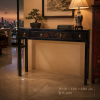
A luxury home does not need more furniture. It needs one piece that gives the room a sense of identity.
The most memorable interiors are rarely defined by how many beautiful objects they contain. Instead, they often have a clear visual centre: an exceptional cabinet, an elegant sideboard, a distinctive console table, a Chinese screen, or a beautifully proportioned table that quietly holds the room together.
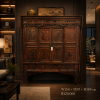
A Chinese Antique Cabinet does not need to look untouched to feel complete. Its character may live in the quiet variation of its surface, the evidence of handwork, the movement of its timber, and the small marks accumulated through use. Restoration, when approached with restraint, is less about making an antique cabinet appear new and more about helping its existing qualities remain visible, stable and useful.
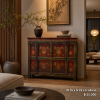
The story of Chinese antique furniture begins long before the furniture forms we recognize today. During the Tang Dynasty (618–907), elevated seating and tables gradually replaced floor-based living arrangements, setting the foundation for the furniture traditions that would flourish in later centuries.
