Caring for Chinese Antique Furniture: A Practical Guide
Why Chinese Antique Furniture Needs Thoughtful Care
Preservation Begins with Understanding the Furniture
Antique furniture should not be treated exactly like a modern mass-produced piece.
Traditional Chinese furniture can incorporate wooden joinery, carved details, lacquered surfaces, metal fittings and other decorative elements. Some traditional pieces were constructed using mortise-and-tenon joinery, in which components are fitted together rather than relying entirely on modern metal fasteners.
Wood is also a naturally responsive material. Changes in moisture can cause it to expand or contract. For this reason, the surrounding environment is an important part of caring for an antique.
The surface deserves similar consideration. Aged finishes, variations in colour and the accumulated character of the wood can be part of what makes a piece visually compelling. Cleaning should therefore remove unwanted dust and dirt without unnecessarily disturbing the existing surface.
The Goal Is Stability, Not Perfection
Preservation is not the same as making furniture look uniformly new.
Small variations, surface irregularities and evidence of age can contribute to the character of Chinese antique furniture. Aggressive sanding, stripping or refinishing can change that character permanently.
A better approach is to maintain a stable environment and intervene only when there is a genuine reason to do so.
Choosing the Right Place for Chinese Antique Furniture
Protect Furniture from Direct Sunlight
One of the simplest ways to protect an antique is to consider where sunlight falls during the day.
Strong, prolonged exposure through large windows or glass doors can gradually affect wood, lacquer and other finishes. In a Bangkok residence, where bright sunlight can be intense, this is particularly relevant for furniture positioned close to west-facing windows, balconies or areas with extended afternoon exposure.
This does not mean hiding an antique in a dark room.
Instead, consider curtains, blinds or sheer window treatments where appropriate, and position particularly sensitive pieces away from prolonged direct rays.
Keep Furniture Away from Excessive Heat and Moisture
Extreme environmental conditions can place unnecessary stress on wooden furniture.
Avoid positioning an antique directly against a source of heat or in a location where condensation, persistent dampness or water exposure is likely. Air-conditioning can also create a very different microenvironment immediately around a piece when cold air is directed continuously at it.
The principle is consistency.
A comfortable, stable interior is generally more appropriate than repeatedly exposing furniture to sharp environmental changes.
Consider the Relationship Between Furniture and Architecture
Placement is also an aesthetic decision.
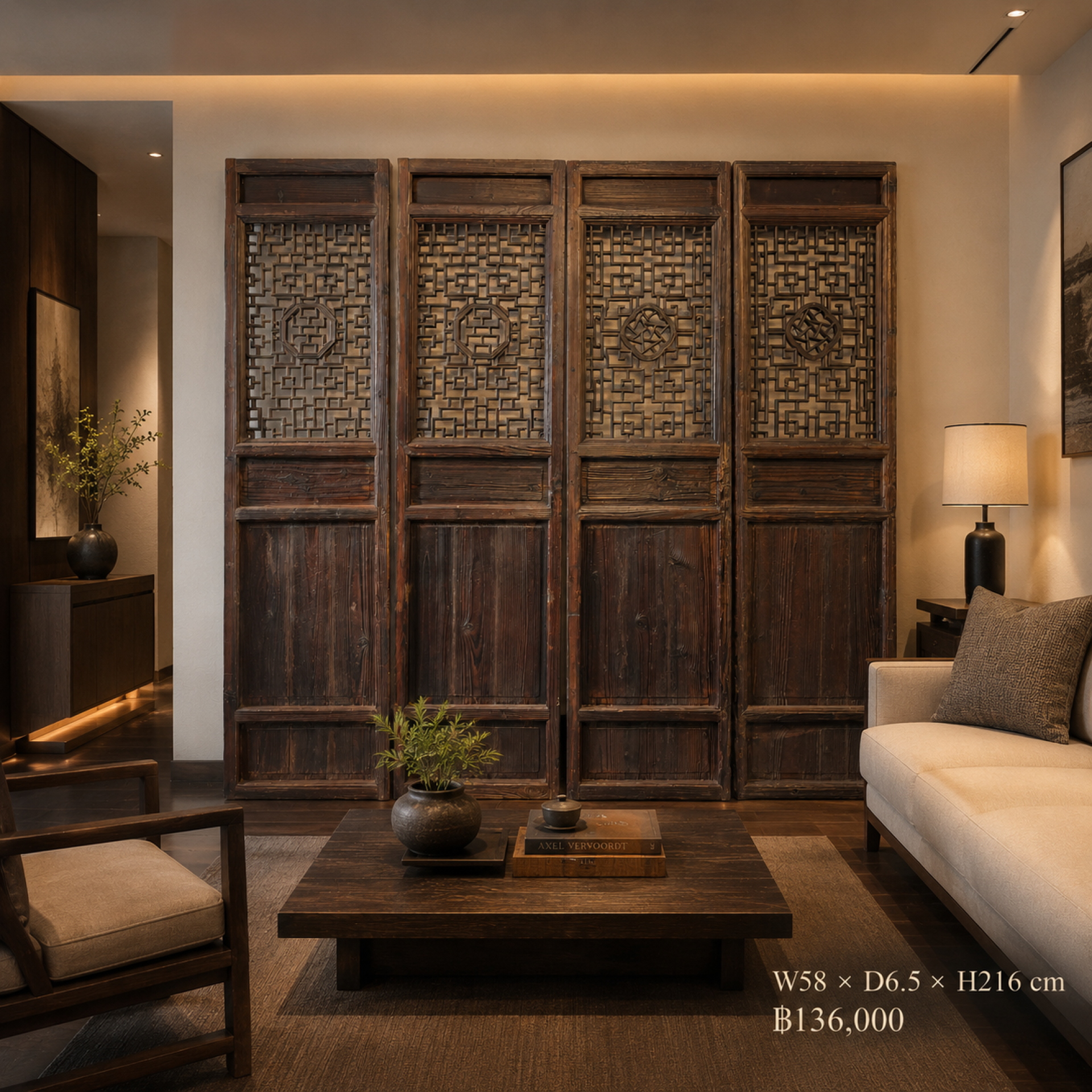
A Chinese antique cabinet should have enough visual and physical space around it to open its doors or drawers comfortably. A sideboard needs sufficient clearance for circulation. A Chinese screen should have room to function architecturally rather than being squeezed between other objects.
In a Bangkok condominium, penthouse or villa, this can be especially important. Contemporary interiors often have generous open spaces, large glazing and strong architectural lines. The antique should sit comfortably within that composition.
Rather than filling every available corner, allow the furniture to establish its own presence.
Managing the Indoor Environment
Humidity and Temperature
Wood responds to its surrounding environment.
This is one reason stable indoor conditions matter when caring for Chinese antique furniture. The concern is not simply whether a room is warm or humid on a particular day, but whether the furniture is repeatedly exposed to significant changes.
Thailand's climate makes this worth considering. Indoor air-conditioning, seasonal weather and changes between conditioned and unconditioned spaces can create different environmental conditions around furniture.
For valuable or particularly sensitive pieces, owners may benefit from paying attention to the room's overall environment rather than focusing only on the furniture itself.
Ventilation Without Exposure
Good ventilation can contribute to a comfortable interior, but ventilation should not mean exposing furniture continuously to harsh outdoor conditions.
Avoid placing important pieces where they receive persistent rain, outdoor moisture or strong direct sunlight through open doors and windows.
The ideal setting is one in which the furniture forms part of a calm, controlled interior environment.
Seasonal and Long-Term Observation
Regular observation is one of the most useful forms of maintenance.
When cleaning or using an antique, take a moment to notice whether anything has changed. Doors and drawers should be observed for unusual movement. Joints, surfaces and decorative elements should be checked periodically.
A small change noticed early is easier to address than significant deterioration discovered much later.
This is particularly relevant for furniture that is actively used rather than displayed purely as a decorative object.
Cleaning Chinese Antique Furniture Safely
A Gentle Cleaning Routine
For routine care, gentle dust removal is usually the sensible starting point.
Use a soft, clean cloth or another suitable non-abrasive material and work carefully around carved details, corners, hardware and delicate surfaces. The purpose is to remove dust without creating friction that could gradually affect the finish.
Avoid treating every surface as though it requires polishing.
Some antique surfaces are valued precisely because they retain their natural variation and accumulated character.
What to Avoid
Water and cleaning chemicals deserve particular caution.
Do not assume that a household multipurpose cleaner, furniture polish or abrasive product is appropriate for an antique surface. Excess moisture can enter joints or affect vulnerable finishes, while harsh chemicals may alter the appearance of an aged surface.
Avoid excessive rubbing, abrasive sponges and aggressive polishing.
If you are uncertain about a particular finish, restraint is usually safer than experimentation.
When Cleaning Should Stop
There are times when cleaning becomes a preservation question rather than a housekeeping task.
If a surface appears unusually fragile, flaking, unstable or unfamiliar, avoid trying to correct it yourself. The same applies when a finish appears damaged or a decorative element is loose.
In these situations, professional assessment may be more appropriate than repeated cleaning.
Everyday Use, Maintenance and Preservation
Using Antique Furniture Without Damaging It
Antique furniture can be lived with.
A cabinet can hold carefully selected objects. A sideboard can function within a dining or living space. A bedside cabinet can remain part of a bedroom rather than becoming a piece that is never touched.
The key is thoughtful use.
Avoid placing excessive weight on furniture that was not designed for it. Open doors and drawers gently rather than pulling abruptly. Protect surfaces from spills and prolonged exposure to moisture.
Small habits become meaningful over time.
Moving and Handling Antique Furniture
Moving is one of the moments when antique furniture is most vulnerable.
Whenever possible, avoid dragging a piece across the floor. Plan the route before moving it and consider doorways, staircases, lifts and tight corners. Smaller removable components should be secured appropriately, while larger pieces may require more than one person.
For substantial or particularly delicate furniture, professional movers familiar with valuable furniture can reduce unnecessary risk.
The principle is simple: move carefully, support the furniture properly and avoid placing stress on individual components.
When Professional Assessment Is Appropriate
Not every change requires restoration.
However, structural instability, damaged joints, significant movement, loose decorative elements or deterioration of a surface can justify professional attention.
Traditional furniture construction can be highly sophisticated, and intervention should respect the way the piece was originally made.
Preservation is often about doing less, but doing the right thing at the right time.
Caring for an Antique as Part of the Interior
Let the Furniture Age Gracefully
One of the pleasures of owning Chinese antique furniture is its ability to retain character over time.
The objective does not need to be a perfectly uniform appearance. Differences in tone, texture and surface can give a piece visual depth that complements a carefully considered interior.
This is particularly effective when the surrounding architecture is restrained.
Against contemporary stone, timber, plaster, glass or neutral upholstery, an antique cabinet or console can introduce warmth and visual history without requiring the entire room to become traditionally styled.
Build a Stable, Considered Interior Around It
Good furniture care begins before the piece is even positioned.
Think about sunlight, circulation, humidity, access and everyday use when deciding where an antique belongs. Then consider how its proportions relate to the architecture around it.
A Chinese screen, for example, can define a transition between spaces while maintaining visual openness. A cabinet can create a focal point against a quiet wall. A sideboard can provide useful storage while adding depth to an otherwise contemporary room.
In Bangkok's luxury residences, villas and hospitality interiors, this dialogue between traditional furniture and contemporary architecture can be particularly effective.
The furniture does not need to dominate the room.
It simply needs enough space to be appreciated.
A Practical Long-Term Care Checklist
For everyday ownership, the essential principles can be kept simple:
Keep valuable pieces away from prolonged direct sunlight.
Avoid persistent dampness and direct exposure to water.
Maintain a stable, comfortable indoor environment.
Dust gently with non-abrasive materials.
Avoid harsh chemicals and unnecessary polishing.
Do not drag furniture when moving it.
Use doors, drawers and surfaces with care.
Observe changes in joints, surfaces and moving components.
Seek professional advice when structural or finish problems appear.
Preserve character rather than attempting to make an antique look uniformly new.
These habits require little effort, but together they create a much better environment for long-term ownership.
FAQ
How should Chinese antique furniture be cleaned?
Begin with gentle dust removal using a soft, clean material. Avoid excessive water, abrasive products, harsh chemicals and aggressive polishing. If the surface appears fragile or damaged, professional assessment is preferable to experimentation.
Is humidity a concern for Chinese antique furniture in Thailand?
Yes. Wood naturally responds to changes in moisture, so maintaining a reasonably stable indoor environment is an important part of long-term care. Avoid persistent dampness and large environmental fluctuations where possible.
Can Chinese antique furniture be used in a modern interior?
Absolutely. Careful placement can allow antique cabinets, sideboards, consoles and screens to work naturally alongside contemporary architecture. The key is to consider proportion, sunlight, circulation, environmental conditions and the furniture's intended use.
Conclusion
The best care for Chinese antique furniture is often quiet and consistent.
Protect it from unnecessary exposure. Keep its environment stable. Clean it gently. Handle it thoughtfully. And when intervention becomes necessary, preserve the character of the piece rather than changing it simply for the sake of perfection.
For a Chinese antique in a Bangkok home, these principles allow furniture to do what it does best: become part of the architecture, the daily rhythm and the character of the room.
At Chinese House, established in Bangkok since 1990, the appreciation of Chinese antique and reproduction furniture begins with understanding how individual pieces relate to their surroundings. For homeowners, designers and collectors considering a piece for a residence or interior project, visiting the showroom can be an opportunity to examine proportion, surface, craftsmanship and character in person.