How to Choose a Chinese Antique Screen
0 Views
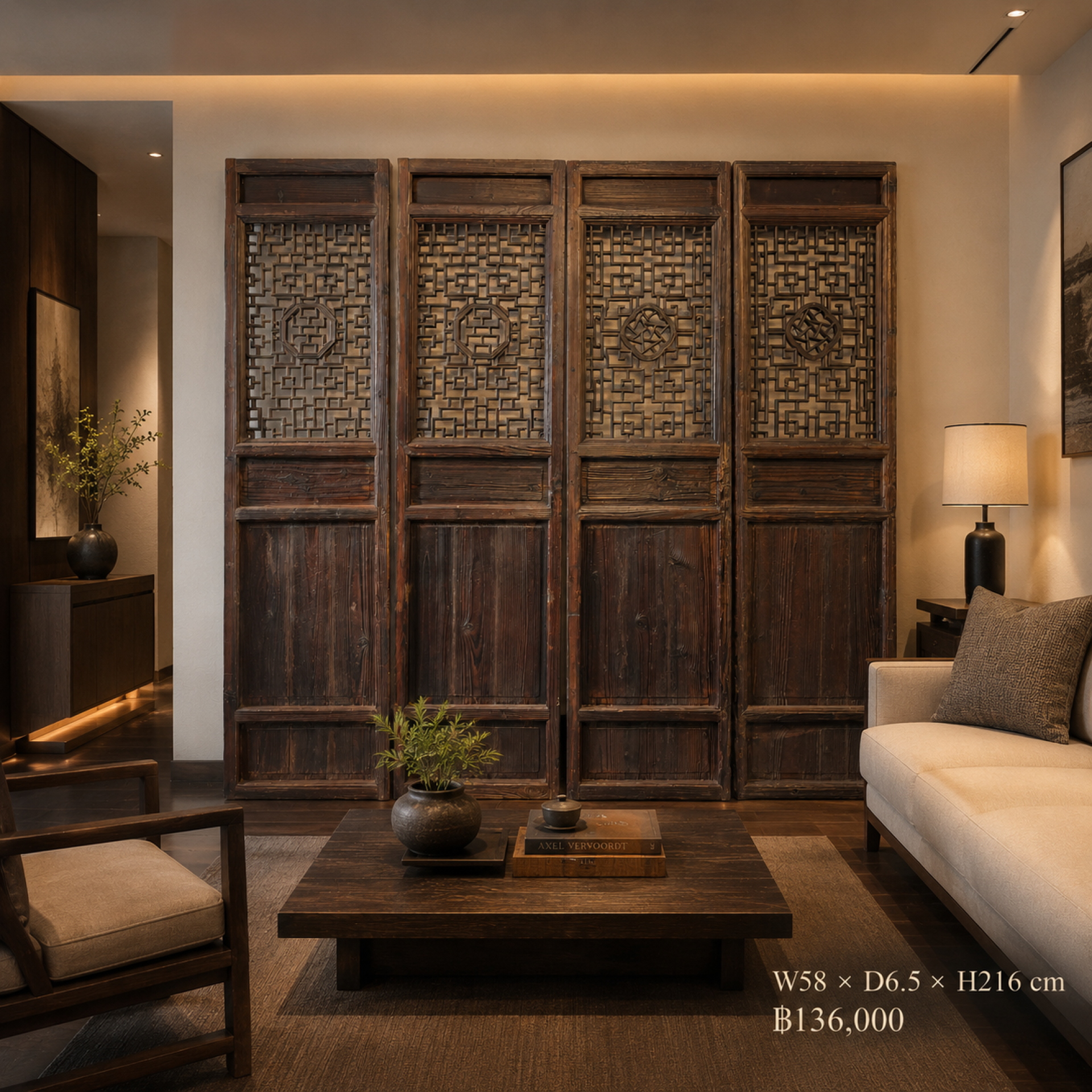
Begin with the Role the Screen Will Play
Before considering carving, colour or decorative detail, decide what you want the screen to do.
A screen can separate two areas without creating the visual heaviness of a solid wall. In an open-plan residence, it can gently distinguish an entrance from a living room, create a sense of privacy beside a dining area or give a bedroom greater definition. In a larger villa, it can help establish layers within an expansive interior.
But a Chinese antique screen does not have to function primarily as a divider.
Some pieces work beautifully as architectural accents, positioned against a wall, behind a console table or within a carefully composed living area. Others have enough visual presence to become a focal point in their own right.
The most successful choice begins with this question: what role should the screen play within the room?
Screen as a Room Divider
When used between spaces, proportion becomes particularly important. The screen should define the boundary without making the room feel obstructed.
Consider the direction of movement through the space. A screen positioned near an entrance, for example, can create a more gradual transition into a living area. In a dining room, it can provide separation while maintaining an open visual connection.
Screen as an Architectural Accent
A screen can also behave almost like a piece of architecture.
Placed thoughtfully, it creates a vertical plane that gives structure to an otherwise open wall or large room. This approach works especially well in contemporary Bangkok residences where generous floor plans, glass surfaces and restrained architectural materials can benefit from a piece with greater texture and visual depth.
Screen as a Decorative Focal Point
If the screen is primarily decorative, the surrounding furniture becomes part of the composition.
A screen behind a console table, beside a seating arrangement or against a neutral wall can provide a strong visual anchor. In this setting, the choice should be guided by the character of the individual piece and how comfortably it relates to the existing interior.
Look at Proportion Before Decoration
It is easy to be drawn immediately to an intricate carving or distinctive surface. Yet proportion often determines whether a screen actually works in a room.
A piece that looks impressive in a showroom can feel too dominant in a compact condominium. Conversely, a small screen may lose its presence in a large villa with high ceilings and generous circulation.
Match the Screen to the Scale of the Room
Start with the room rather than the furniture.
Look at ceiling height, floor area, nearby furniture and the amount of open space around the proposed position. A screen should have enough visual authority to hold its place within the composition, but it should not make the surrounding furniture feel crowded.
For Bangkok luxury condominiums and penthouses, this can be particularly important. Open-plan interiors often rely on carefully controlled proportions. A screen can provide definition, but only when its scale supports the architecture.
Consider Height, Width and Visual Weight
Two screens with similar dimensions can create very different impressions.
A tall, narrow form draws the eye upward and can reinforce a sense of verticality. A wider screen establishes a stronger horizontal presence and may feel more architectural.
Visual weight also comes from the density of the design, the structure of the frame and the amount of open versus decorated surface.
This is why dimensions should be considered together with form. Measurements tell you whether a piece will physically fit. Proportion tells you whether it will visually belong.
Leave Enough Breathing Space Around the Screen
Avoid treating a screen as an object that simply needs to be placed somewhere.
Give it room to be seen.
Negative space around the piece allows its silhouette, surface and craftsmanship to register clearly. When a screen is surrounded by too many decorative objects, its character can become diluted.
In refined interiors, restraint often makes the strongest impression.
Examine the Form and Craftsmanship
Once proportion has been considered, look more closely at the screen itself.
The appeal of a Chinese Antique Screen often lies in details that become more interesting the longer you look: the relationship between frame and panel, the rhythm of the construction, the texture of the surface and the way decorative elements are integrated into the overall form.
Frame Construction and Overall Structure
Begin with the overall construction.
Look at how the frame relates to the panels and whether the proportions feel coherent. The structure should have a sense of visual order rather than appearing as a collection of unrelated decorative elements.
Traditional Chinese furniture is particularly associated with an appreciation for proportion, joinery and structural clarity. Where construction details are visible, they can provide useful insight into the craftsmanship of a piece.
However, appearance alone should not be used to assign a specific dynasty, age, origin or provenance.
Panels, Carving and Surface Details
Next, examine the panels.
Depending on the individual piece, the surface may feature carving, painted decoration, restrained ornament or a simpler material expression. Pay attention to how these details interact with the frame.
A highly decorative screen may suit an interior with a quieter architectural background. A more restrained screen can work beautifully within an already layered interior.
The important question is not whether a screen has more decoration, but whether its decoration contributes to the character of the space.
Hardware, Finish and Signs of Craftsmanship
Small details can also influence how a screen feels.
Look closely at hardware, edges, joints, surface finish and the transition between different structural elements. These details are often more revealing aesthetically than a general impression from a distance.
For collectors and design-conscious homeowners, close observation is part of the pleasure of selecting furniture. A screen should reward attention.
Consider How the Screen Relates to Your Interior
A Chinese antique screen does not require an entirely traditional room.
In fact, one of its most interesting uses is within a contemporary interior where the contrast between old and new creates visual tension.
Chinese Antique Screens in Contemporary Interiors
A restrained modern room can give an antique screen considerable presence.
Against stone, plaster, timber or neutral upholstery, the screen becomes a concentrated point of texture and craftsmanship. Its traditional visual language can provide warmth within an otherwise minimal setting.
This approach can be particularly effective in contemporary Bangkok residences, where clean architectural lines and modern materials create a strong background for furniture with greater visual history and character.
Pairing a Screen with Wood, Stone and Neutral Interiors
Think about material relationships.
A wooden screen can sit naturally alongside timber furniture, while also creating contrast against stone flooring or polished architectural surfaces. Neutral walls can allow decorative details to become more visible without competing for attention.
The aim is not to match every material exactly.
A sophisticated interior often comes from controlled contrast: refined contemporary architecture with traditional furniture, smooth surfaces against textured ones, or a quiet colour palette punctuated by a more distinctive object.
Using a Screen to Create Visual Layers
Screens are particularly useful for creating depth.
Placed behind furniture, they can form a backdrop. Positioned between areas, they can introduce a foreground layer without completely closing the space. Used against a wall, they can transform an otherwise empty vertical surface.
This layering is one reason screens remain so useful to interior designers and architects. Their function is spatial as much as decorative.
Choose According to Function and Personal Taste
After considering scale, craftsmanship and interior context, the final decision should become more personal.
The right screen is not necessarily the most elaborate one. It is the one whose proportions, character and visual language make sense for the room and for the person living with it.
Privacy and Spatial Separation
If function is the priority, consider where privacy is actually needed.
A screen can create a softer boundary between living and dining areas, provide visual separation near an entrance or establish a more intimate corner within a larger room.
Because it does not necessarily close a space completely, it can preserve openness while giving the room greater definition.
Decorative Character and Visual Presence
If the primary purpose is decorative, focus on what attracts your eye.
Perhaps it is the frame. Perhaps the surface. Perhaps the balance of the panels or the way the piece sits vertically within the room.
Give yourself time to look at the screen from different distances. A piece that feels compelling up close should also work as part of the wider room.
Choosing Between Subtle and Elaborate Designs
There is no universal answer between a restrained screen and a highly decorative one.
A quieter screen may be ideal when the room already contains strong furniture, artwork or architectural features. A more elaborate screen may become the central visual element in an otherwise restrained setting.
Think of the room as a composition.
Every significant piece should have a reason for being there.
Create a Considered Interior with a Chinese Antique Screen
Choosing a Chinese Antique Screen is ultimately an exercise in proportion, observation and curation.
The strongest interiors rarely depend on filling every corner. Instead, they give distinctive furniture enough space to establish its own presence.
A screen can become part of that approach. It can guide movement through a room, soften an open-plan layout, introduce texture against contemporary architecture or simply provide a compelling vertical element within a carefully composed interior.
A Screen as Part of a Larger Furniture Composition
Consider the screen alongside the furniture already in the room.
A console table, cabinet, sideboard, seating arrangement or carefully selected home decor can either support its presence or compete with it. Think about height, material, colour and visual density as a group rather than making each decision separately.
The objective is balance rather than uniformity.
When to Let the Screen Stand Alone
Sometimes the best styling decision is to leave the screen relatively untouched.
A particularly expressive piece may need little beside it. A generous amount of surrounding space can make the furniture feel more architectural and allow its details to become the focus.
This is especially effective in larger residences, where a single carefully positioned screen can define an entire section of the interior.
Choosing a Piece for Long-Term Interior Relevance
Trends can be useful sources of inspiration, but they are not always the best guide for significant furniture.
A well-chosen antique screen should relate to the architecture, the owner's taste and the way the home is actually lived in. Its value within an interior comes from the combination of craftsmanship, proportion, character and suitability to the space.
For homeowners, collectors, architects and interior designers in Thailand, the selection process is therefore less about finding a decorative object and more about finding the right piece for a particular environment.
At Chinese House, the collection of Chinese Antique & Reproduction Screens offers an opportunity to consider these qualities in person. In a showroom setting, proportion, surface, structure and spatial presence can be understood far more naturally than through measurements alone.
A Chinese antique screen can be quiet or expressive, functional or purely decorative. What matters is how thoughtfully it is chosen—and how naturally it becomes part of the architecture around it.
FAQ Section:
What should I consider first when choosing a Chinese antique screen?
Start with the screen's intended role, available space and overall proportion. Consider whether it will divide a room, provide privacy, create a backdrop or function primarily as a decorative focal point.
Can a Chinese antique screen work in a modern interior?
Yes. A Chinese antique screen can create a sophisticated contrast against contemporary architecture, particularly when paired with restrained materials, neutral colours and carefully selected furniture.
How do I know whether a screen will suit my room?
Consider its dimensions, visual weight, surrounding furniture and available negative space. Ideally, assess the screen in relation to the actual room so you can understand how its scale, surface and vertical presence interact with the architecture.
Before considering carving, colour or decorative detail, decide what you want the screen to do.
A screen can separate two areas without creating the visual heaviness of a solid wall. In an open-plan residence, it can gently distinguish an entrance from a living room, create a sense of privacy beside a dining area or give a bedroom greater definition. In a larger villa, it can help establish layers within an expansive interior.
But a Chinese antique screen does not have to function primarily as a divider.
Some pieces work beautifully as architectural accents, positioned against a wall, behind a console table or within a carefully composed living area. Others have enough visual presence to become a focal point in their own right.
The most successful choice begins with this question: what role should the screen play within the room?
Screen as a Room Divider
When used between spaces, proportion becomes particularly important. The screen should define the boundary without making the room feel obstructed.
Consider the direction of movement through the space. A screen positioned near an entrance, for example, can create a more gradual transition into a living area. In a dining room, it can provide separation while maintaining an open visual connection.
Screen as an Architectural Accent
A screen can also behave almost like a piece of architecture.
Placed thoughtfully, it creates a vertical plane that gives structure to an otherwise open wall or large room. This approach works especially well in contemporary Bangkok residences where generous floor plans, glass surfaces and restrained architectural materials can benefit from a piece with greater texture and visual depth.
Screen as a Decorative Focal Point
If the screen is primarily decorative, the surrounding furniture becomes part of the composition.
A screen behind a console table, beside a seating arrangement or against a neutral wall can provide a strong visual anchor. In this setting, the choice should be guided by the character of the individual piece and how comfortably it relates to the existing interior.
Look at Proportion Before Decoration
It is easy to be drawn immediately to an intricate carving or distinctive surface. Yet proportion often determines whether a screen actually works in a room.
A piece that looks impressive in a showroom can feel too dominant in a compact condominium. Conversely, a small screen may lose its presence in a large villa with high ceilings and generous circulation.
Match the Screen to the Scale of the Room
Start with the room rather than the furniture.
Look at ceiling height, floor area, nearby furniture and the amount of open space around the proposed position. A screen should have enough visual authority to hold its place within the composition, but it should not make the surrounding furniture feel crowded.
For Bangkok luxury condominiums and penthouses, this can be particularly important. Open-plan interiors often rely on carefully controlled proportions. A screen can provide definition, but only when its scale supports the architecture.
Consider Height, Width and Visual Weight
Two screens with similar dimensions can create very different impressions.
A tall, narrow form draws the eye upward and can reinforce a sense of verticality. A wider screen establishes a stronger horizontal presence and may feel more architectural.
Visual weight also comes from the density of the design, the structure of the frame and the amount of open versus decorated surface.
This is why dimensions should be considered together with form. Measurements tell you whether a piece will physically fit. Proportion tells you whether it will visually belong.
Leave Enough Breathing Space Around the Screen
Avoid treating a screen as an object that simply needs to be placed somewhere.
Give it room to be seen.
Negative space around the piece allows its silhouette, surface and craftsmanship to register clearly. When a screen is surrounded by too many decorative objects, its character can become diluted.
In refined interiors, restraint often makes the strongest impression.
Examine the Form and Craftsmanship
Once proportion has been considered, look more closely at the screen itself.
The appeal of a Chinese Antique Screen often lies in details that become more interesting the longer you look: the relationship between frame and panel, the rhythm of the construction, the texture of the surface and the way decorative elements are integrated into the overall form.
Frame Construction and Overall Structure
Begin with the overall construction.
Look at how the frame relates to the panels and whether the proportions feel coherent. The structure should have a sense of visual order rather than appearing as a collection of unrelated decorative elements.
Traditional Chinese furniture is particularly associated with an appreciation for proportion, joinery and structural clarity. Where construction details are visible, they can provide useful insight into the craftsmanship of a piece.
However, appearance alone should not be used to assign a specific dynasty, age, origin or provenance.
Panels, Carving and Surface Details
Next, examine the panels.
Depending on the individual piece, the surface may feature carving, painted decoration, restrained ornament or a simpler material expression. Pay attention to how these details interact with the frame.
A highly decorative screen may suit an interior with a quieter architectural background. A more restrained screen can work beautifully within an already layered interior.
The important question is not whether a screen has more decoration, but whether its decoration contributes to the character of the space.
Hardware, Finish and Signs of Craftsmanship
Small details can also influence how a screen feels.
Look closely at hardware, edges, joints, surface finish and the transition between different structural elements. These details are often more revealing aesthetically than a general impression from a distance.
For collectors and design-conscious homeowners, close observation is part of the pleasure of selecting furniture. A screen should reward attention.
Consider How the Screen Relates to Your Interior
A Chinese antique screen does not require an entirely traditional room.
In fact, one of its most interesting uses is within a contemporary interior where the contrast between old and new creates visual tension.
Chinese Antique Screens in Contemporary Interiors
A restrained modern room can give an antique screen considerable presence.
Against stone, plaster, timber or neutral upholstery, the screen becomes a concentrated point of texture and craftsmanship. Its traditional visual language can provide warmth within an otherwise minimal setting.
This approach can be particularly effective in contemporary Bangkok residences, where clean architectural lines and modern materials create a strong background for furniture with greater visual history and character.
Pairing a Screen with Wood, Stone and Neutral Interiors
Think about material relationships.
A wooden screen can sit naturally alongside timber furniture, while also creating contrast against stone flooring or polished architectural surfaces. Neutral walls can allow decorative details to become more visible without competing for attention.
The aim is not to match every material exactly.
A sophisticated interior often comes from controlled contrast: refined contemporary architecture with traditional furniture, smooth surfaces against textured ones, or a quiet colour palette punctuated by a more distinctive object.
Using a Screen to Create Visual Layers
Screens are particularly useful for creating depth.
Placed behind furniture, they can form a backdrop. Positioned between areas, they can introduce a foreground layer without completely closing the space. Used against a wall, they can transform an otherwise empty vertical surface.
This layering is one reason screens remain so useful to interior designers and architects. Their function is spatial as much as decorative.
Choose According to Function and Personal Taste
After considering scale, craftsmanship and interior context, the final decision should become more personal.
The right screen is not necessarily the most elaborate one. It is the one whose proportions, character and visual language make sense for the room and for the person living with it.
Privacy and Spatial Separation
If function is the priority, consider where privacy is actually needed.
A screen can create a softer boundary between living and dining areas, provide visual separation near an entrance or establish a more intimate corner within a larger room.
Because it does not necessarily close a space completely, it can preserve openness while giving the room greater definition.
Decorative Character and Visual Presence
If the primary purpose is decorative, focus on what attracts your eye.
Perhaps it is the frame. Perhaps the surface. Perhaps the balance of the panels or the way the piece sits vertically within the room.
Give yourself time to look at the screen from different distances. A piece that feels compelling up close should also work as part of the wider room.
Choosing Between Subtle and Elaborate Designs
There is no universal answer between a restrained screen and a highly decorative one.
A quieter screen may be ideal when the room already contains strong furniture, artwork or architectural features. A more elaborate screen may become the central visual element in an otherwise restrained setting.
Think of the room as a composition.
Every significant piece should have a reason for being there.
Create a Considered Interior with a Chinese Antique Screen
Choosing a Chinese Antique Screen is ultimately an exercise in proportion, observation and curation.
The strongest interiors rarely depend on filling every corner. Instead, they give distinctive furniture enough space to establish its own presence.
A screen can become part of that approach. It can guide movement through a room, soften an open-plan layout, introduce texture against contemporary architecture or simply provide a compelling vertical element within a carefully composed interior.
A Screen as Part of a Larger Furniture Composition
Consider the screen alongside the furniture already in the room.
A console table, cabinet, sideboard, seating arrangement or carefully selected home decor can either support its presence or compete with it. Think about height, material, colour and visual density as a group rather than making each decision separately.
The objective is balance rather than uniformity.
When to Let the Screen Stand Alone
Sometimes the best styling decision is to leave the screen relatively untouched.
A particularly expressive piece may need little beside it. A generous amount of surrounding space can make the furniture feel more architectural and allow its details to become the focus.
This is especially effective in larger residences, where a single carefully positioned screen can define an entire section of the interior.
Choosing a Piece for Long-Term Interior Relevance
Trends can be useful sources of inspiration, but they are not always the best guide for significant furniture.
A well-chosen antique screen should relate to the architecture, the owner's taste and the way the home is actually lived in. Its value within an interior comes from the combination of craftsmanship, proportion, character and suitability to the space.
For homeowners, collectors, architects and interior designers in Thailand, the selection process is therefore less about finding a decorative object and more about finding the right piece for a particular environment.
At Chinese House, the collection of Chinese Antique & Reproduction Screens offers an opportunity to consider these qualities in person. In a showroom setting, proportion, surface, structure and spatial presence can be understood far more naturally than through measurements alone.
A Chinese antique screen can be quiet or expressive, functional or purely decorative. What matters is how thoughtfully it is chosen—and how naturally it becomes part of the architecture around it.
FAQ Section:
What should I consider first when choosing a Chinese antique screen?
Start with the screen's intended role, available space and overall proportion. Consider whether it will divide a room, provide privacy, create a backdrop or function primarily as a decorative focal point.
Can a Chinese antique screen work in a modern interior?
Yes. A Chinese antique screen can create a sophisticated contrast against contemporary architecture, particularly when paired with restrained materials, neutral colours and carefully selected furniture.
How do I know whether a screen will suit my room?
Consider its dimensions, visual weight, surrounding furniture and available negative space. Ideally, assess the screen in relation to the actual room so you can understand how its scale, surface and vertical presence interact with the architecture.
Related Content
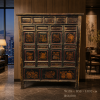
Tropical architecture celebrates openness. Expansive windows, natural ventilation, soft daylight, and a strong connection to nature define many of Thailand's most beautiful homes. Chinese antique furniture introduces a compelling counterbalance to these airy environments.
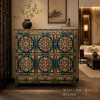
Chinese antique furniture can make a modern home feel personal.
A contemporary interior may have beautiful stone, carefully designed lighting, tailored upholstery, and clean architectural lines. Yet without something distinctive, it can sometimes feel as though it belongs to a showroom rather than to the people who live there.
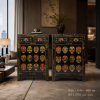
Chinese Antique Furniture possesses a rare ability to transform a home beyond its physical function. More than decorative objects, these pieces embody centuries of craftsmanship, cultural philosophy, and refined living. In today's luxury residences—from Bangkok penthouses and riverside condominiums to expansive pool villas—Chinese antique furniture introduces a sense of permanence and authenticity that contemporary furnishings often struggle to achieve.
