Restoring the Character of a Chinese Antique Cabinet
1092 Views
What Gives a Chinese Antique Cabinet Its Character?
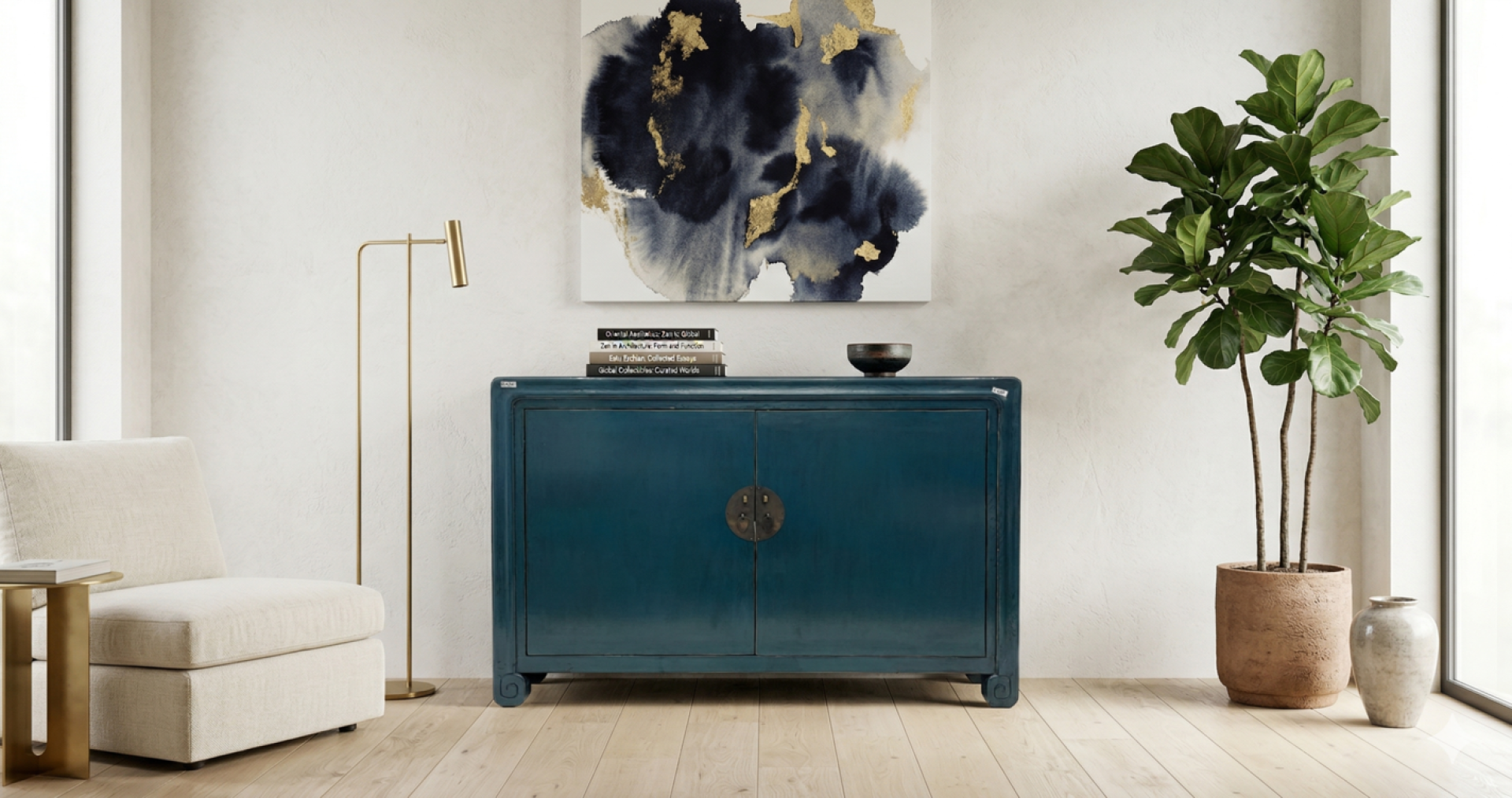
A Chinese antique cabinet is rarely defined by a single feature. Its presence comes from the relationship between proportion, construction, surface, hardware and the traces accumulated over time.
The surface may show subtle variations in tone. Hardware may have softened through years of use. Timber can develop a depth of colour that feels different from a freshly finished piece. Even small irregularities can contribute to the cabinet's visual identity.
This is why restoring an antique cabinet is not simply a matter of making it look cleaner or newer.
The more considered approach is to understand what already gives the piece its presence, then restore what is necessary without removing the qualities that make it distinctive.
For a refined interior, that distinction matters. A cabinet with character can feel collected and personal. A cabinet that has been over-restored can lose much of the visual depth that first made it compelling.
Begin With the Cabinet as It Is
Before any restoration work begins, the cabinet deserves to be observed carefully.
Look at its overall proportions first. Then consider the doors, drawers, joints, hardware, surface and finish. Which elements appear structurally sound? Which require attention? Which imperfections are simply part of the cabinet's existing character?
This initial assessment helps separate preservation from unnecessary alteration.
For an antique piece, restoration should respond to the furniture itself rather than follow a predetermined formula. One cabinet may require attention to its structure or moving parts. Another may benefit from little more than careful cleaning and maintenance.
The objective is not uniformity.
It is to retain the individuality of the piece while allowing it to function naturally within its intended setting.
Preserving Surface, Texture and Patina
The surface is often one of the most visually important aspects of a Chinese Antique Cabinet.
Years of handling, exposure and use can create variations in colour and texture that give furniture a quieter sense of depth. These characteristics can become particularly beautiful when placed against contemporary architecture, where the contrast between aged furniture and clean surroundings is immediately apparent.
That does not mean every mark should automatically be preserved.
There is an important difference between character and deterioration. Dirt, unstable finishes, structural problems or damaged hardware may require attention. But removing every variation from the surface can produce a result that feels disconnected from the cabinet's existing identity.
A thoughtful restoration therefore asks a simple question: what needs to be repaired, and what deserves to remain?
That restraint is especially relevant in sophisticated interiors. The appeal of an antique cabinet often comes from its ability to introduce texture and history without overwhelming the room.
Restoring Function Without Losing Character
An antique cabinet still needs to work as furniture.
Doors should open properly. Drawers should function. Hardware should be secure. Structural elements should be stable enough for appropriate everyday use.
Restoring these practical qualities can make an older cabinet far more relevant to contemporary living.
Yet function should not dictate unnecessary changes to the original form.
The proportions of the cabinet, the relationship between its doors and frame, and the visual balance of its construction are fundamental to its identity. Altering these simply to make the piece conform to modern mass-produced furniture can diminish what makes it distinctive.
Instead, restoration can focus on making the existing design usable within today's spaces.
This approach works particularly well in Bangkok residences, where a Chinese antique cabinet can sit comfortably within a modern condominium, private villa or more traditional interior. The contrast creates interest without requiring the entire room to follow one historical style.
Bringing a Restored Cabinet Into a Contemporary Interior
A restored Chinese antique cabinet does not need an elaborate setting.
In fact, restraint can make the furniture more powerful.
Against a quiet architectural wall, the cabinet can become a focal point through its proportions, surface and craftsmanship. Contemporary lighting can draw attention to its texture. Modern seating, stone, glass or neutral architectural finishes can provide contrast without competing with the furniture.
The surrounding space should give the cabinet room to breathe.
This is particularly important when styling a larger Chinese Antique Cabinet. Its scale should relate naturally to the wall and surrounding furniture rather than being treated as an isolated decorative object.
In a refined Bangkok home, the most convincing result may be a room where the cabinet is the only strongly traditional element. Elsewhere, the architecture and furnishings can remain contemporary.
That contrast creates a more personal interior.
Rather than recreating a historical room, the aim is to create a home in which different periods, materials and forms can exist comfortably together.
When Restoration Becomes Part of the Cabinet's Story
The most successful restoration is often the one that feels least obvious.
You notice the cabinet first: its silhouette, surface, hardware and presence in the room. Only then do you begin to appreciate the careful attention that allows those qualities to remain intact.
This is where restoration becomes more than repair.
It becomes an exercise in editing — removing what interferes with the furniture while protecting what gives it character.
For collectors, homeowners and interior designers, this way of thinking can change how an antique cabinet is selected and placed. The question is not simply whether a piece looks beautiful when viewed alone.
It is whether its character can contribute something meaningful to the architecture around it.
A well-chosen Chinese Antique Cabinet can introduce warmth into a minimalist room, depth into a contemporary residence and a sense of individuality into a carefully designed space.
At Chinese House, the selection of Chinese antique furniture is approached with this relationship between furniture and interior in mind. For those furnishing a Bangkok residence, villa or hospitality setting, the showroom offers an opportunity to experience the scale, surface and character of individual pieces in person.
The right cabinet does not need to dominate a room.
It simply needs to belong there.
FAQ
How should a Chinese antique cabinet be restored?
Restoration should begin with an assessment of the cabinet's structure, surface, hardware and function. Necessary repairs can be addressed while preserving distinctive characteristics that contribute to the furniture's existing character.
Should the original surface of an antique cabinet always be refinished?
No. The appropriate treatment depends on the condition of the individual piece. Surface variation and signs of use may contribute to its character, while genuine deterioration may require professional attention.
How can a Chinese antique cabinet work in a modern Bangkok interior?
Use the cabinet as a contrasting architectural element. Pairing its traditional form and textured surface with contemporary walls, lighting and furnishings can create a sophisticated, collected atmosphere without making the entire room historically themed.
A Chinese antique cabinet is rarely defined by a single feature. Its presence comes from the relationship between proportion, construction, surface, hardware and the traces accumulated over time.
The surface may show subtle variations in tone. Hardware may have softened through years of use. Timber can develop a depth of colour that feels different from a freshly finished piece. Even small irregularities can contribute to the cabinet's visual identity.
This is why restoring an antique cabinet is not simply a matter of making it look cleaner or newer.
The more considered approach is to understand what already gives the piece its presence, then restore what is necessary without removing the qualities that make it distinctive.
For a refined interior, that distinction matters. A cabinet with character can feel collected and personal. A cabinet that has been over-restored can lose much of the visual depth that first made it compelling.
Begin With the Cabinet as It Is
Before any restoration work begins, the cabinet deserves to be observed carefully.
Look at its overall proportions first. Then consider the doors, drawers, joints, hardware, surface and finish. Which elements appear structurally sound? Which require attention? Which imperfections are simply part of the cabinet's existing character?
This initial assessment helps separate preservation from unnecessary alteration.
For an antique piece, restoration should respond to the furniture itself rather than follow a predetermined formula. One cabinet may require attention to its structure or moving parts. Another may benefit from little more than careful cleaning and maintenance.
The objective is not uniformity.
It is to retain the individuality of the piece while allowing it to function naturally within its intended setting.
Preserving Surface, Texture and Patina
The surface is often one of the most visually important aspects of a Chinese Antique Cabinet.
Years of handling, exposure and use can create variations in colour and texture that give furniture a quieter sense of depth. These characteristics can become particularly beautiful when placed against contemporary architecture, where the contrast between aged furniture and clean surroundings is immediately apparent.
That does not mean every mark should automatically be preserved.
There is an important difference between character and deterioration. Dirt, unstable finishes, structural problems or damaged hardware may require attention. But removing every variation from the surface can produce a result that feels disconnected from the cabinet's existing identity.
A thoughtful restoration therefore asks a simple question: what needs to be repaired, and what deserves to remain?
That restraint is especially relevant in sophisticated interiors. The appeal of an antique cabinet often comes from its ability to introduce texture and history without overwhelming the room.
Restoring Function Without Losing Character
An antique cabinet still needs to work as furniture.
Doors should open properly. Drawers should function. Hardware should be secure. Structural elements should be stable enough for appropriate everyday use.
Restoring these practical qualities can make an older cabinet far more relevant to contemporary living.
Yet function should not dictate unnecessary changes to the original form.
The proportions of the cabinet, the relationship between its doors and frame, and the visual balance of its construction are fundamental to its identity. Altering these simply to make the piece conform to modern mass-produced furniture can diminish what makes it distinctive.
Instead, restoration can focus on making the existing design usable within today's spaces.
This approach works particularly well in Bangkok residences, where a Chinese antique cabinet can sit comfortably within a modern condominium, private villa or more traditional interior. The contrast creates interest without requiring the entire room to follow one historical style.
Bringing a Restored Cabinet Into a Contemporary Interior
A restored Chinese antique cabinet does not need an elaborate setting.
In fact, restraint can make the furniture more powerful.
Against a quiet architectural wall, the cabinet can become a focal point through its proportions, surface and craftsmanship. Contemporary lighting can draw attention to its texture. Modern seating, stone, glass or neutral architectural finishes can provide contrast without competing with the furniture.
The surrounding space should give the cabinet room to breathe.
This is particularly important when styling a larger Chinese Antique Cabinet. Its scale should relate naturally to the wall and surrounding furniture rather than being treated as an isolated decorative object.
In a refined Bangkok home, the most convincing result may be a room where the cabinet is the only strongly traditional element. Elsewhere, the architecture and furnishings can remain contemporary.
That contrast creates a more personal interior.
Rather than recreating a historical room, the aim is to create a home in which different periods, materials and forms can exist comfortably together.
When Restoration Becomes Part of the Cabinet's Story
The most successful restoration is often the one that feels least obvious.
You notice the cabinet first: its silhouette, surface, hardware and presence in the room. Only then do you begin to appreciate the careful attention that allows those qualities to remain intact.
This is where restoration becomes more than repair.
It becomes an exercise in editing — removing what interferes with the furniture while protecting what gives it character.
For collectors, homeowners and interior designers, this way of thinking can change how an antique cabinet is selected and placed. The question is not simply whether a piece looks beautiful when viewed alone.
It is whether its character can contribute something meaningful to the architecture around it.
A well-chosen Chinese Antique Cabinet can introduce warmth into a minimalist room, depth into a contemporary residence and a sense of individuality into a carefully designed space.
At Chinese House, the selection of Chinese antique furniture is approached with this relationship between furniture and interior in mind. For those furnishing a Bangkok residence, villa or hospitality setting, the showroom offers an opportunity to experience the scale, surface and character of individual pieces in person.
The right cabinet does not need to dominate a room.
It simply needs to belong there.
FAQ
How should a Chinese antique cabinet be restored?
Restoration should begin with an assessment of the cabinet's structure, surface, hardware and function. Necessary repairs can be addressed while preserving distinctive characteristics that contribute to the furniture's existing character.
Should the original surface of an antique cabinet always be refinished?
No. The appropriate treatment depends on the condition of the individual piece. Surface variation and signs of use may contribute to its character, while genuine deterioration may require professional attention.
How can a Chinese antique cabinet work in a modern Bangkok interior?
Use the cabinet as a contrasting architectural element. Pairing its traditional form and textured surface with contemporary walls, lighting and furnishings can create a sophisticated, collected atmosphere without making the entire room historically themed.
Related Content

The curation of a truly sophisticated living space often hinges on a singular, captivating focal point, and integrating Chinese Antique Furniture into your interior provides exactly that. Among the most versatile and architecturally striking pieces you can acquire is the traditional display cabinet.
Imagine crafting a masterpiece of engineering and art without a single drop of glue or an iron nail. The soul of Chinese Antique Furniture lies entirely in this astonishing feat of traditional woodworking. For centuries, master artisans of the Ming and Qing dynasties relied on precision, deep botanical knowledge, and architectural principles to create heirloom pieces that have gracefully defied the test of time.
Today, integrating these historical marvels into your living space is a celebration of human ingenuity. Understanding the meticulous craftsmanship behind premium Vintage Furniture not only deepens your appreciation for its aesthetic beauty but also highlights why these wooden assets remain incredibly sought-after in the world of high-end interior design.
A Chinese antique screen can change the feeling of a room without changing its architecture. More than a decorative object, a well-chosen Chinese Antique Screen can define space, create visual depth and introduce a quiet sense of character into an interior. The key is knowing what to look for beyond the surface.
