Entertaining with History: Styling Antique Sideboards for Luxury Homes
The most successful interiors do not treat an antique sideboard as an isolated decorative object. Its position, proportion and relationship with the dining table, chairs, lighting and surrounding architecture all determine how comfortably it belongs.
This is especially relevant in contemporary homes, where open-plan layouts and generous architectural spaces can benefit from a piece with a stronger sense of material presence.
The question, then, is no longer which sideboard to choose, but how to give the one you own a convincing place within the life of the home.
The Sideboard as Part of the Room
A dining room works through relationships.
The table establishes the centre. Chairs define movement around it. Lighting creates atmosphere. The walls provide the architectural frame. A Chinese antique sideboard can complete that composition by giving one side of the room a sense of weight and purpose.
Its position should therefore be considered as part of the entire room rather than as an afterthought.
A long, uninterrupted wall can provide a natural setting, particularly when the sideboard has enough visual presence to balance the dining table. In a more open interior, it can also help define the dining area without creating a physical barrier.
This distinction matters. A sideboard should contribute to the architecture of the room while remaining useful within it.
The same principle applies when entertaining. Guests should be able to move naturally between the dining table, living area, kitchen and other parts of the home. An elegant piece of furniture loses some of its practical value if its placement creates awkward circulation.
Finding the Right Position in a Dining Room
Behind the Dining Table
The wall behind the dining table is often the most natural location for a sideboard.
Placed there, it can establish a visual relationship between the two pieces. The table provides the central horizontal element of the dining setting, while the sideboard creates another layer of furniture along the perimeter.
The goal is not to make both pieces identical in scale or style. A more interesting interior often comes from allowing them to relate without matching too literally.
Consider the width of the dining table, the available wall length and the space required for people to move comfortably around the room. Doors, passages and adjacent furniture should remain part of the calculation.
The sideboard should feel integrated rather than squeezed into whatever space happens to remain.
Open-Plan Living and Dining Areas
In a contemporary open-plan home, furniture often has to perform more than one architectural role.
A Chinese antique sideboard can help establish the dining zone within a larger living space. It gives the eye a clear point of reference without closing the room.
This can work particularly well in Bangkok condominiums, penthouses and villas where living, dining and kitchen areas may flow continuously into one another.
Rather than positioning the sideboard simply against the largest available wall, consider what can be seen from the surrounding spaces. The furniture may be viewed from the living room, kitchen or entrance, so its relationship with those sightlines matters.
A successful placement should look convincing from several directions.
Designing for Entertaining: Storage, Serving and Everyday Use
The beauty of a sideboard is partly practical.
During a dinner, it can provide a convenient place for tableware, serving pieces, linens or other dining essentials. It can also act as a temporary serving surface, allowing the dining table to remain clear for guests.
This functional role is particularly valuable in a carefully designed home. Good interiors are not simply beautiful when photographed; they also support the way people actually live.
Think about what needs to be stored close to the dining area and how often it will be accessed. Everyday pieces may deserve a more convenient location than items used only occasionally.
At the same time, avoid treating every available drawer or cupboard as storage that must be filled. An antique sideboard has its own visual presence. Its function should support that presence rather than overwhelm it.
When entertaining, a clear surface can become part of the experience. Serving dishes, glassware or a small arrangement of objects can be introduced when needed, then removed afterwards so the furniture can return to a quieter composition.
This flexibility is one of the reasons a well-positioned sideboard can remain useful long after the occasion has ended.
Styling the Wall Around a Chinese Antique Sideboard
Proportion Before Decoration
One of the easiest mistakes when styling an antique sideboard is to begin with decorative objects before considering the wall itself.
Start with proportion.
Look at the relationship between the width of the sideboard and the available wall, as well as the height of the ceiling and the scale of nearby furniture. A substantial piece can often carry considerable visual weight without requiring an elaborate display above it.
In a room with high ceilings, for example, the surrounding wall may need a different treatment from a more compact dining space. Artwork, lighting or architectural details can be introduced according to the scale of the room rather than simply placed because the wall feels empty.
The objective is balance.
Creating a Considered Surface
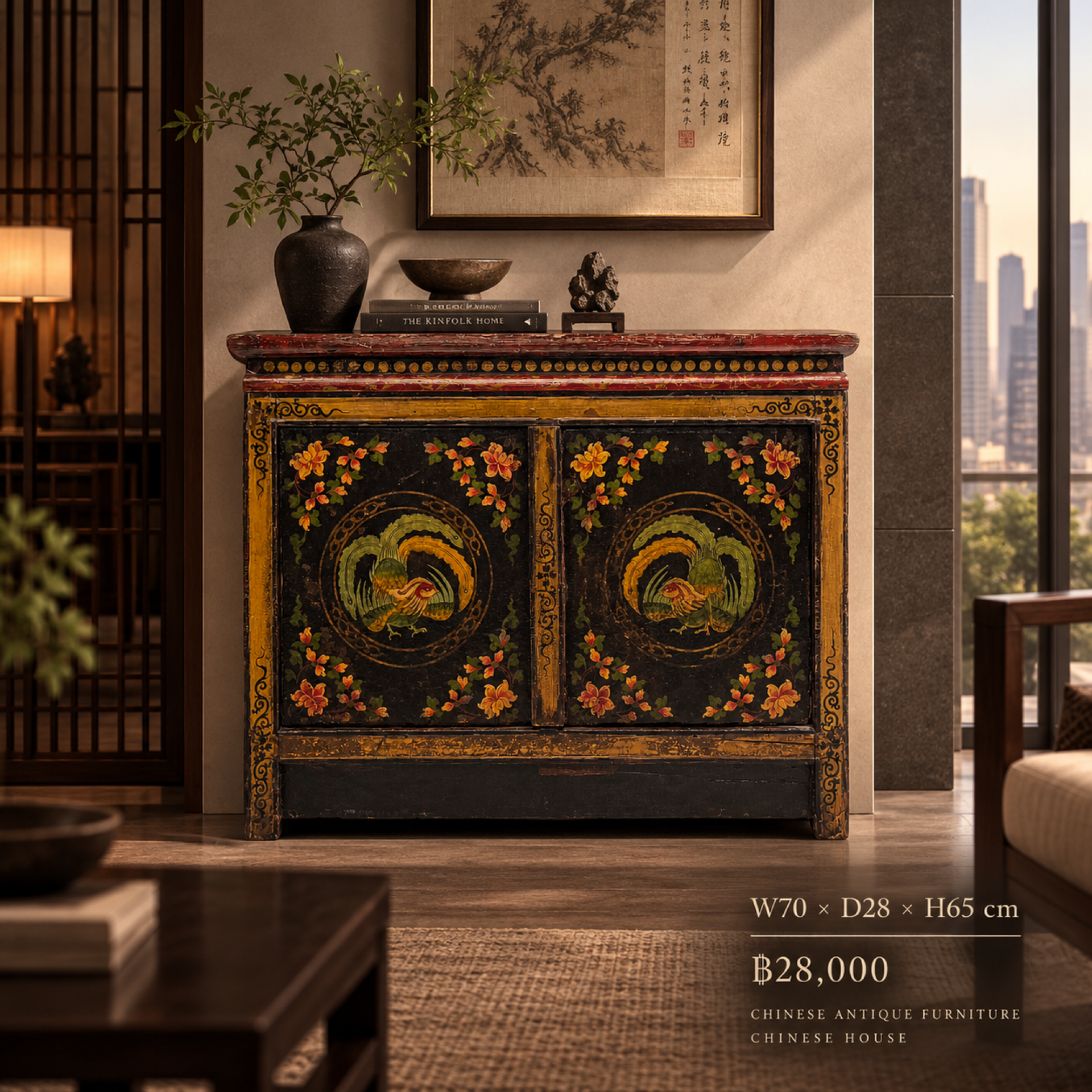
The top of a sideboard offers an opportunity for personal expression, but restraint is usually more effective than abundance.
A small collection of ceramics, books, vessels, artwork or other meaningful objects can create a layered arrangement without obscuring the furniture beneath.
Varying height can give the composition rhythm. A taller object can be balanced by several lower pieces, while an area of empty surface can provide visual breathing room.
The most successful arrangements often leave enough space for the eye to rest.
This is particularly important with Chinese antique furniture. Surface character, hardware, proportions and craftsmanship may already provide considerable visual information. Covering the piece with decorative objects can make the entire composition feel busier rather than richer.
Instead, allow the furniture to remain visible.
A beautiful interior does not need every surface to communicate at once.
Chinese Antique Furniture Within Contemporary Architecture
There is something compelling about placing an antique sideboard within a contemporary architectural setting.
The contrast can come from materials as much as from age or style. Pale stone, glass, timber, plaster and clean architectural lines can provide a calm background against which traditional furniture becomes more visually distinctive.
The relationship works because the two languages do not have to compete.
A contemporary dining room does not need to imitate a historical Chinese interior to accommodate a Chinese antique sideboard. In many cases, the opposite approach is more effective. Keep the architecture clean and allow the furniture to introduce depth, texture and a sense of accumulated character.
In a Bangkok residence, this might mean placing a Chinese antique sideboard against a restrained stone wall, beside a contemporary dining table and beneath modern lighting.
The result can feel collected rather than themed.
This approach also works in larger villas and sophisticated hospitality environments, where individual furniture pieces can help give a generous architectural space a more intimate human scale.
The key is proportion. The furniture should have enough presence to hold its position within the architecture without making the room feel crowded.
Practical Circulation Matters
Luxury is not only visual.
It is also experienced through ease.
Before settling on a permanent position, consider how people enter the room, pull out dining chairs, walk behind seated guests and move between the dining area and kitchen.
A sideboard should not obstruct a natural route through the home. Doors and drawers should be able to open comfortably, and the area immediately in front of the furniture should remain usable.
This becomes particularly important during entertaining, when several people may be moving through the same space at once.
A beautiful arrangement that works only when nobody is using the room is not a successful arrangement.
Good placement anticipates movement without making the planning feel obvious.
Let the Furniture Carry the Character
There is a temptation to make an antique sideboard the centre of an elaborate display.
Often, it needs less than expected.
Its proportions may already create a strong horizontal line. Its surface may introduce texture. Its colour and material may provide contrast against the surrounding architecture. Details in the construction or decoration may reward closer attention.
The role of styling is to make those qualities easier to appreciate, not to compete with them.
This is where restraint becomes particularly useful.
One carefully chosen artwork may have more presence than a crowded gallery of smaller pieces. A few objects with personal meaning may say more about the owner than a collection assembled simply to fill space.
The sideboard becomes part of the story of the home rather than a stage for decoration.
A Dining Room Designed for Real Life
The best entertaining spaces are prepared for both occasions and ordinary days.
On a quiet evening, the sideboard may hold a small arrangement of objects and remain almost architectural in its simplicity. When friends arrive, it can become a practical serving surface. During a larger dinner, its storage can keep essential pieces close at hand without placing everything on the dining table.
This flexibility gives the furniture a lasting role.
It also changes how an antique piece is perceived. Rather than being something preserved behind glass or treated as too precious to use, it becomes part of the rhythm of the household.
That is particularly appealing in contemporary luxury homes, where the most successful interiors tend to combine beauty with genuine livability.
A Chinese antique sideboard can sit comfortably within that philosophy. It can bring a sense of character to a modern dining room while remaining useful for the practical rituals of hosting, serving and gathering.
Styling with Restraint
A well-styled sideboard does not announce every decision that went into its placement.
The furniture feels as though it belongs there.
The proportions work. Circulation feels natural. The surrounding materials provide contrast without overwhelming it. Decorative objects have been chosen with intention, and enough empty space remains for the composition to breathe.
Most importantly, the sideboard participates in the life of the room.
For homeowners, that might mean becoming part of family dinners and weekend gatherings. For designers and architects, it can provide a distinctive material and cultural element within a contemporary scheme.
The result is not a room built around an antique object. It is a room in which the antique furniture has found its proper place.
Bringing History into the Entertaining Space
A Chinese antique sideboard can give a luxury dining room something difficult to achieve through decoration alone: character with purpose.
Its value within an interior comes from the relationship between furniture, architecture and daily life. Position it thoughtfully, give it enough room, use its storage intelligently and keep the surrounding styling restrained.
From a Bangkok penthouse to a spacious private villa, the same principle applies: the furniture should feel considered, useful and naturally connected to the architecture around it.
For those exploring the possibilities of Chinese antique furniture, Chinese House offers a collection of Chinese Antique & Reproduction Sideboards to consider alongside contemporary dining and living environments.
The right piece does not need to dominate a room.
It simply needs to belong there.
Frequently Asked Questions
How should I position a Chinese antique sideboard in a dining room?
A common approach is to place it along a substantial dining-room wall, often behind or near the dining table. The key considerations are wall proportion, sightlines and comfortable circulation around the furniture.
What should I put on top of an antique sideboard?
Choose a small number of objects with varied heights and visual weight, such as ceramics, books, vessels or artwork. Leave some surface visible so the sideboard itself remains part of the composition.
Can a Chinese antique sideboard work in a modern interior?
Yes. Traditional furniture can create a strong contrast with contemporary materials such as stone, glass, timber and clean architectural finishes. Careful proportion and restrained styling help the combination feel intentional rather than themed.
Related Contents.