Why Size Matters: Measuring Before Buying Antique Furniture
78 Views
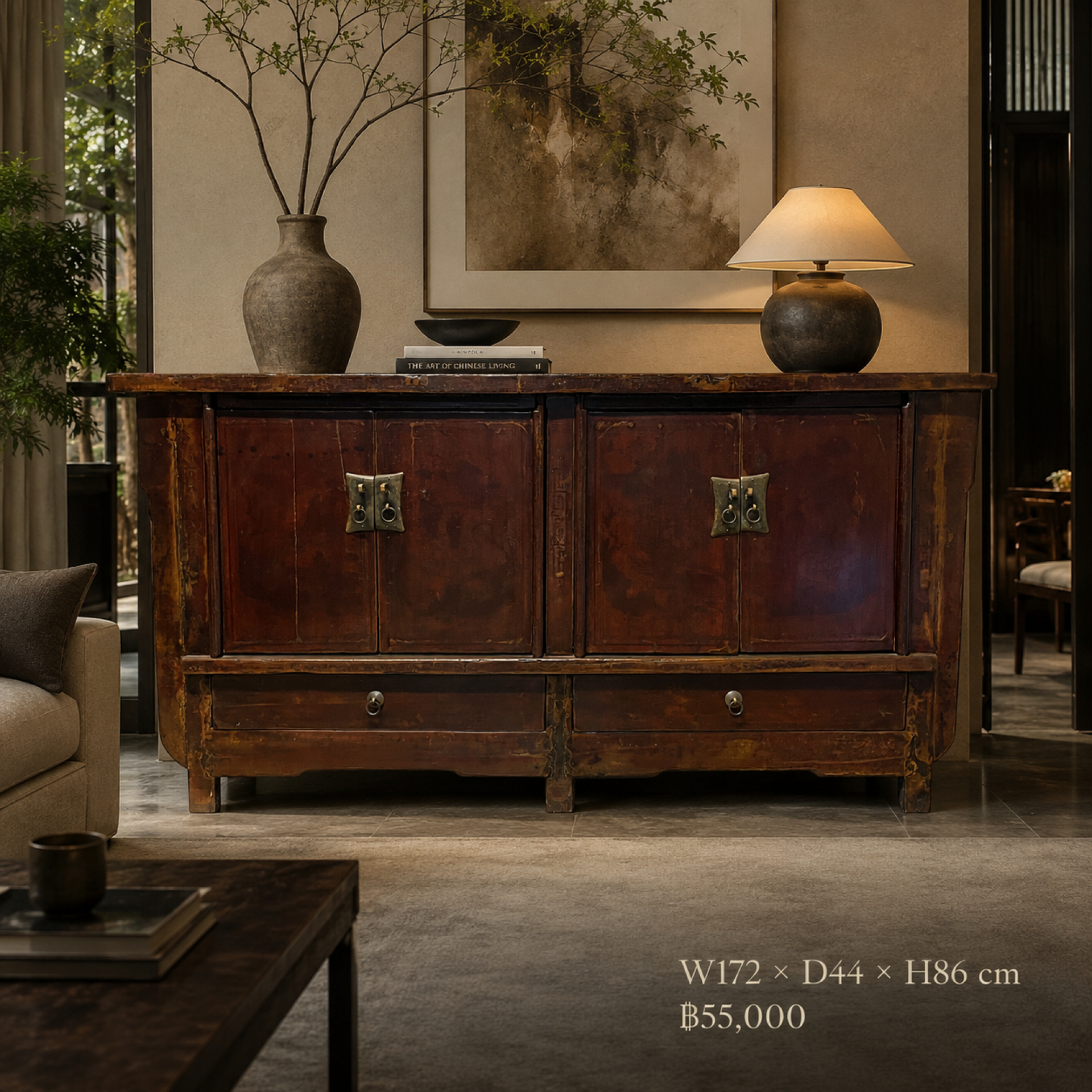
The Beauty of the Right Proportion
Luxury interiors depend on proportion.
A large room can accommodate substantial furniture, but that does not mean every large piece will look appropriate. Likewise, a smaller room does not necessarily require tiny furniture. What matters is the relationship between the furniture, the architecture, and the space left around it.
This is particularly important with Chinese antique furniture because traditional forms can have strong visual character.
A tall cabinet draws the eye upward.
A long altar table creates a strong horizontal line.
A Chinese partition can change how an entire room is perceived.
These qualities make the furniture visually powerful. The surrounding space needs to support them.
Think beyond width, depth, and height.
Ask how much room is required to open doors or drawers. Consider how people will walk around the piece. Look at nearby windows, artwork, lighting, sofas, and architectural openings.
A piece can fit within its allocated rectangle and still feel wrong.
What to Measure Before Choosing Antique Furniture
Start With the Destination
Begin by measuring the exact area where the furniture will stand.
Record:
Available wall width
Available floor depth
Ceiling height
Distance from nearby furniture
Position of doors and windows
Walking paths around the furniture
Take photographs as well.
A simple photograph can make it easier to understand how the proposed furniture will relate to the rest of the room.
For a cabinet, measure not only the wall but also the usable floor area in front of it. If the cabinet has doors that open outward, allow sufficient clearance for them.
For a console or altar table, consider what will sit above it. A large artwork, mirror, or architectural feature can change the visual proportion of the entire composition.
Measure the Furniture Properly
When looking at antique furniture, record the overall:
Width × Depth × Height
But do not stop there.
Look for protruding handles, feet, cornices, carved elements, doors, and other components that may affect the actual footprint.
For cabinets, check the depth of doors and drawers when opened.
For chairs, consider the space required to pull them away from a table.
For partitions, consider both the floor footprint and the visual height.
The objective is to understand how the furniture behaves in the room, not simply how large it is when standing still.
The Journey Into the Home Matters Too
One of the most overlooked measurements is the route from outside the building to the final room.
A piece may fit perfectly against the wall and still fail to enter the home.
Measure the entrance door.
Then consider the corridor.
If the property is in a condominium or penthouse, check the elevator dimensions and door opening. For larger homes, consider staircases, landings, and tight corners.
Pay attention to turning space.
Width alone does not determine whether furniture can be moved through a doorway. A narrow passage followed by a sharp turn can create a more significant problem than the doorway itself.
This is especially relevant when purchasing substantial antique cabinets, sideboards, or other large pieces.
The practical question is simple:
Can the furniture make the entire journey into the room?
Choosing the Right Scale for an Antique Cabinet
An antique cabinet can become one of the strongest visual elements in a room.
Its height gives it presence.
Its timber adds warmth.
Its doors and panels create rhythm.
But that presence needs to correspond with the architecture.
In a room with high ceilings, a taller cabinet can help occupy vertical space and establish balance.
In a more compact condominium, an oversized cabinet may visually compress the room.
This does not mean that small rooms can only use small antique furniture. Instead, consider the relationship between the cabinet and the surrounding negative space.
A cabinet standing alone against a generous wall may feel elegant.
The same cabinet squeezed between a sofa, doorway, and artwork may feel crowded.
Scale is therefore not an isolated measurement.
It is a relationship.
When a Console or Altar Table Is the Better Choice
A long console or antique altar table creates a very different visual effect from a cabinet.
Its lower profile can work beautifully in an entrance, living room, dining space, or behind a sofa.
Because these pieces emphasize horizontal proportion, the length of the wall becomes particularly important.
A long table against a short wall can make the room feel compressed.
A table that is too short may appear disconnected from the architecture.
Consider what will be positioned above it.
If the table sits beneath artwork, the combined height of the table and artwork should feel intentional. If it stands in an entrance, enough circulation space should remain in front of it.
The table should define the wall without consuming it.
Partitions Require More Than Floor Space
A Chinese antique partition can be particularly effective in contemporary interiors because it can create separation without constructing a permanent wall.
But partitions need careful planning.
Consider:
Overall width
Overall height
Base or feet
Distance from furniture
Walking routes
Sightlines
Natural light
Door and passage positions
A partition that is technically within the available floor area can still obstruct the visual flow of an open-plan room.
In a modern Bangkok condominium, for example, the purpose may be to distinguish an entrance from the living area. The partition should create definition while allowing the rest of the room to remain visually open.
Its success depends as much on what remains visible around it as on the partition itself.
Measuring for Luxury Condos and Penthouses
High-rise homes introduce another consideration: access.
A large piece of antique furniture may need to pass through the building's shared spaces before reaching the apartment.
For this reason, measure:
Building entrance
Corridor width
Elevator door opening
Elevator interior dimensions
Apartment entrance
Internal corridors
Final room
If there are turns, measure the available turning area rather than only the straight-line width.
This is particularly important for tall cabinets and long tables.
For a luxury condo, the furniture may be perfect for the room but unsuitable for the building.
Planning ahead avoids that unpleasant discovery.
Measuring for Villas and Larger Residences
A spacious pool villa offers more freedom, but large rooms create a different challenge.
Furniture that is too small can disappear.
A large living room with a very small cabinet positioned against an expansive wall may lack visual weight. A substantial Chinese antique cabinet or long console may establish a stronger relationship with the architecture.
Ceiling height becomes important here.
A tall room can accommodate vertical furniture more comfortably. Large windows, columns, staircases, and open-plan spaces should also be considered.
Do not simply ask:
“Will it fit?”
Ask:
“Will it feel proportionate?”
That is the more useful question.
How to Make Antique Furniture Look Balanced
Once the dimensions are understood, consider the furniture as part of the entire composition.
Leave Breathing Room
Negative space allows distinctive furniture to be appreciated.
A Chinese cabinet does not need to touch surrounding furniture.
A console does not need to occupy every available centimetre of a wall.
A partition does not need to divide a room completely.
Space around a piece gives the eye time to understand its shape.
Consider the Furniture Around It
An antique cabinet with substantial visual weight may require a contemporary sofa or chair arrangement that can balance it.
Conversely, a smaller antique chair or table can disappear beside oversized contemporary furniture.
The objective is visual equilibrium.
Look Up, Not Only Across
Height is easy to overlook.
A tall cabinet placed beneath a low ceiling can feel oppressive. A low table in a room with exceptionally high ceilings can appear insignificant.
Consider the furniture in relation to:
Ceiling height
Windows
Doors
Artwork
Lighting
Architectural features
The entire vertical composition matters.
Measure First, Then Choose With Confidence
Measuring does not remove the romance from buying antique furniture.
It protects it.
The more confident you are about the space, the easier it becomes to appreciate the qualities that actually make a piece special: its wood, proportions, craftsmanship, surface, and character.
Before selecting an antique cabinet, console, altar table, partition, or chair, prepare a simple measurement checklist:
Destination
Wall width
Floor depth
Ceiling height
Surrounding clearance
Furniture
Width
Depth
Height
Opening clearance
Protruding elements
Access
Entrance
Corridor
Elevator
Staircase
Turning points
Then compare these measurements with the furniture dimensions.
For homeowners and designers working with Chinese House, the collection includes antique cabinets, sideboards, partitions, Chinese doors, console tables, beds, chairs, and decorative wooden furniture, alongside masterfully crafted reproductions. Chinese House has specialized in this field since 1990 and also offers professional restoration expertise.
Having accurate dimensions makes conversations with a specialist much more productive.
Instead of simply asking whether you like a particular cabinet, you can ask whether its proportions are suitable for your room.
The Right Furniture Should Feel Natural in the Space
The ultimate goal is not to find the biggest piece that fits.
It is to find the piece that belongs.
A Chinese antique cabinet should have enough room to show its silhouette.
An altar table should have enough wall and floor space for its horizontal proportions to make sense.
A partition should define a space without making movement awkward.
A chair should have enough room to be used comfortably.
When these relationships are right, the furniture feels natural.
It becomes part of the architecture rather than something placed inside it.
That is when antique furniture can have its greatest effect.
The piece stops looking like an object that happens to fit the room.
It begins to look like the room was waiting for it.
Frequently Asked Questions
What measurements should I take before buying antique furniture?
Measure the available width, depth, and height of the destination area, then check clearance around the furniture. Also measure doors, corridors, elevators, staircases, and turning points along the route into the room.
How do I know if an antique cabinet will fit my room?
Compare the cabinet's width, depth, and height with the available space, while allowing room for doors or drawers to open and people to move around it. Also consider the cabinet's visual scale relative to the ceiling, walls, windows, and surrounding furniture.
How do I measure a doorway or elevator for large furniture?
Measure the clear opening rather than simply the overall door size. For elevators, check both the entrance opening and the interior dimensions. If the furniture must turn through a corridor or doorway, measure the available turning space as well.
Luxury interiors depend on proportion.
A large room can accommodate substantial furniture, but that does not mean every large piece will look appropriate. Likewise, a smaller room does not necessarily require tiny furniture. What matters is the relationship between the furniture, the architecture, and the space left around it.
This is particularly important with Chinese antique furniture because traditional forms can have strong visual character.
A tall cabinet draws the eye upward.
A long altar table creates a strong horizontal line.
A Chinese partition can change how an entire room is perceived.
These qualities make the furniture visually powerful. The surrounding space needs to support them.
Think beyond width, depth, and height.
Ask how much room is required to open doors or drawers. Consider how people will walk around the piece. Look at nearby windows, artwork, lighting, sofas, and architectural openings.
A piece can fit within its allocated rectangle and still feel wrong.
What to Measure Before Choosing Antique Furniture
Start With the Destination
Begin by measuring the exact area where the furniture will stand.
Record:
Available wall width
Available floor depth
Ceiling height
Distance from nearby furniture
Position of doors and windows
Walking paths around the furniture
Take photographs as well.
A simple photograph can make it easier to understand how the proposed furniture will relate to the rest of the room.
For a cabinet, measure not only the wall but also the usable floor area in front of it. If the cabinet has doors that open outward, allow sufficient clearance for them.
For a console or altar table, consider what will sit above it. A large artwork, mirror, or architectural feature can change the visual proportion of the entire composition.
Measure the Furniture Properly
When looking at antique furniture, record the overall:
Width × Depth × Height
But do not stop there.
Look for protruding handles, feet, cornices, carved elements, doors, and other components that may affect the actual footprint.
For cabinets, check the depth of doors and drawers when opened.
For chairs, consider the space required to pull them away from a table.
For partitions, consider both the floor footprint and the visual height.
The objective is to understand how the furniture behaves in the room, not simply how large it is when standing still.
The Journey Into the Home Matters Too
One of the most overlooked measurements is the route from outside the building to the final room.
A piece may fit perfectly against the wall and still fail to enter the home.
Measure the entrance door.
Then consider the corridor.
If the property is in a condominium or penthouse, check the elevator dimensions and door opening. For larger homes, consider staircases, landings, and tight corners.
Pay attention to turning space.
Width alone does not determine whether furniture can be moved through a doorway. A narrow passage followed by a sharp turn can create a more significant problem than the doorway itself.
This is especially relevant when purchasing substantial antique cabinets, sideboards, or other large pieces.
The practical question is simple:
Can the furniture make the entire journey into the room?
Choosing the Right Scale for an Antique Cabinet
An antique cabinet can become one of the strongest visual elements in a room.
Its height gives it presence.
Its timber adds warmth.
Its doors and panels create rhythm.
But that presence needs to correspond with the architecture.
In a room with high ceilings, a taller cabinet can help occupy vertical space and establish balance.
In a more compact condominium, an oversized cabinet may visually compress the room.
This does not mean that small rooms can only use small antique furniture. Instead, consider the relationship between the cabinet and the surrounding negative space.
A cabinet standing alone against a generous wall may feel elegant.
The same cabinet squeezed between a sofa, doorway, and artwork may feel crowded.
Scale is therefore not an isolated measurement.
It is a relationship.
When a Console or Altar Table Is the Better Choice
A long console or antique altar table creates a very different visual effect from a cabinet.
Its lower profile can work beautifully in an entrance, living room, dining space, or behind a sofa.
Because these pieces emphasize horizontal proportion, the length of the wall becomes particularly important.
A long table against a short wall can make the room feel compressed.
A table that is too short may appear disconnected from the architecture.
Consider what will be positioned above it.
If the table sits beneath artwork, the combined height of the table and artwork should feel intentional. If it stands in an entrance, enough circulation space should remain in front of it.
The table should define the wall without consuming it.
Partitions Require More Than Floor Space
A Chinese antique partition can be particularly effective in contemporary interiors because it can create separation without constructing a permanent wall.
But partitions need careful planning.
Consider:
Overall width
Overall height
Base or feet
Distance from furniture
Walking routes
Sightlines
Natural light
Door and passage positions
A partition that is technically within the available floor area can still obstruct the visual flow of an open-plan room.
In a modern Bangkok condominium, for example, the purpose may be to distinguish an entrance from the living area. The partition should create definition while allowing the rest of the room to remain visually open.
Its success depends as much on what remains visible around it as on the partition itself.
Measuring for Luxury Condos and Penthouses
High-rise homes introduce another consideration: access.
A large piece of antique furniture may need to pass through the building's shared spaces before reaching the apartment.
For this reason, measure:
Building entrance
Corridor width
Elevator door opening
Elevator interior dimensions
Apartment entrance
Internal corridors
Final room
If there are turns, measure the available turning area rather than only the straight-line width.
This is particularly important for tall cabinets and long tables.
For a luxury condo, the furniture may be perfect for the room but unsuitable for the building.
Planning ahead avoids that unpleasant discovery.
Measuring for Villas and Larger Residences
A spacious pool villa offers more freedom, but large rooms create a different challenge.
Furniture that is too small can disappear.
A large living room with a very small cabinet positioned against an expansive wall may lack visual weight. A substantial Chinese antique cabinet or long console may establish a stronger relationship with the architecture.
Ceiling height becomes important here.
A tall room can accommodate vertical furniture more comfortably. Large windows, columns, staircases, and open-plan spaces should also be considered.
Do not simply ask:
“Will it fit?”
Ask:
“Will it feel proportionate?”
That is the more useful question.
How to Make Antique Furniture Look Balanced
Once the dimensions are understood, consider the furniture as part of the entire composition.
Leave Breathing Room
Negative space allows distinctive furniture to be appreciated.
A Chinese cabinet does not need to touch surrounding furniture.
A console does not need to occupy every available centimetre of a wall.
A partition does not need to divide a room completely.
Space around a piece gives the eye time to understand its shape.
Consider the Furniture Around It
An antique cabinet with substantial visual weight may require a contemporary sofa or chair arrangement that can balance it.
Conversely, a smaller antique chair or table can disappear beside oversized contemporary furniture.
The objective is visual equilibrium.
Look Up, Not Only Across
Height is easy to overlook.
A tall cabinet placed beneath a low ceiling can feel oppressive. A low table in a room with exceptionally high ceilings can appear insignificant.
Consider the furniture in relation to:
Ceiling height
Windows
Doors
Artwork
Lighting
Architectural features
The entire vertical composition matters.
Measure First, Then Choose With Confidence
Measuring does not remove the romance from buying antique furniture.
It protects it.
The more confident you are about the space, the easier it becomes to appreciate the qualities that actually make a piece special: its wood, proportions, craftsmanship, surface, and character.
Before selecting an antique cabinet, console, altar table, partition, or chair, prepare a simple measurement checklist:
Destination
Wall width
Floor depth
Ceiling height
Surrounding clearance
Furniture
Width
Depth
Height
Opening clearance
Protruding elements
Access
Entrance
Corridor
Elevator
Staircase
Turning points
Then compare these measurements with the furniture dimensions.
For homeowners and designers working with Chinese House, the collection includes antique cabinets, sideboards, partitions, Chinese doors, console tables, beds, chairs, and decorative wooden furniture, alongside masterfully crafted reproductions. Chinese House has specialized in this field since 1990 and also offers professional restoration expertise.
Having accurate dimensions makes conversations with a specialist much more productive.
Instead of simply asking whether you like a particular cabinet, you can ask whether its proportions are suitable for your room.
The Right Furniture Should Feel Natural in the Space
The ultimate goal is not to find the biggest piece that fits.
It is to find the piece that belongs.
A Chinese antique cabinet should have enough room to show its silhouette.
An altar table should have enough wall and floor space for its horizontal proportions to make sense.
A partition should define a space without making movement awkward.
A chair should have enough room to be used comfortably.
When these relationships are right, the furniture feels natural.
It becomes part of the architecture rather than something placed inside it.
That is when antique furniture can have its greatest effect.
The piece stops looking like an object that happens to fit the room.
It begins to look like the room was waiting for it.
Frequently Asked Questions
What measurements should I take before buying antique furniture?
Measure the available width, depth, and height of the destination area, then check clearance around the furniture. Also measure doors, corridors, elevators, staircases, and turning points along the route into the room.
How do I know if an antique cabinet will fit my room?
Compare the cabinet's width, depth, and height with the available space, while allowing room for doors or drawers to open and people to move around it. Also consider the cabinet's visual scale relative to the ceiling, walls, windows, and surrounding furniture.
How do I measure a doorway or elevator for large furniture?
Measure the clear opening rather than simply the overall door size. For elevators, check both the entrance opening and the interior dimensions. If the furniture must turn through a corridor or doorway, measure the available turning space as well.
Related Content
Traditional Chinese interiors were designed with intention. Every element within a residence—from architectural layout to decorative objects—contributed to a carefully considered environment that reflected personal values and cultural beliefs.
Sourcing authentic Chinese Antique Furniture in Southeast Asia is an exhilarating endeavor for interior designers, affluent expats, and discerning collectors. The right historical piece does not just fill a room; it anchors your entire living space with dynastic elegance, profound cultural history, and unparalleled craftsmanship. However, for those cultivating a truly luxurious environment, the experience of acquiring these heritage assets should be as refined and effortless as the pieces themselves.
Welcome to Chinese House, your exclusive gateway to the most breathtaking historical masterworks in the region. We believe that elevating your home with ancient artistry should be a seamless, inspiring gallery experience. Let us guide you through the premier destination for discovering world-class heritage design in the heart of the Land of Smiles
The story of Chinese antique furniture begins long before the furniture forms we recognize today. During the Tang Dynasty (618–907), elevated seating and tables gradually replaced floor-based living arrangements, setting the foundation for the furniture traditions that would flourish in later centuries.
