Why Size Matters: Measuring Before Buying Antique Furniture
11 Views
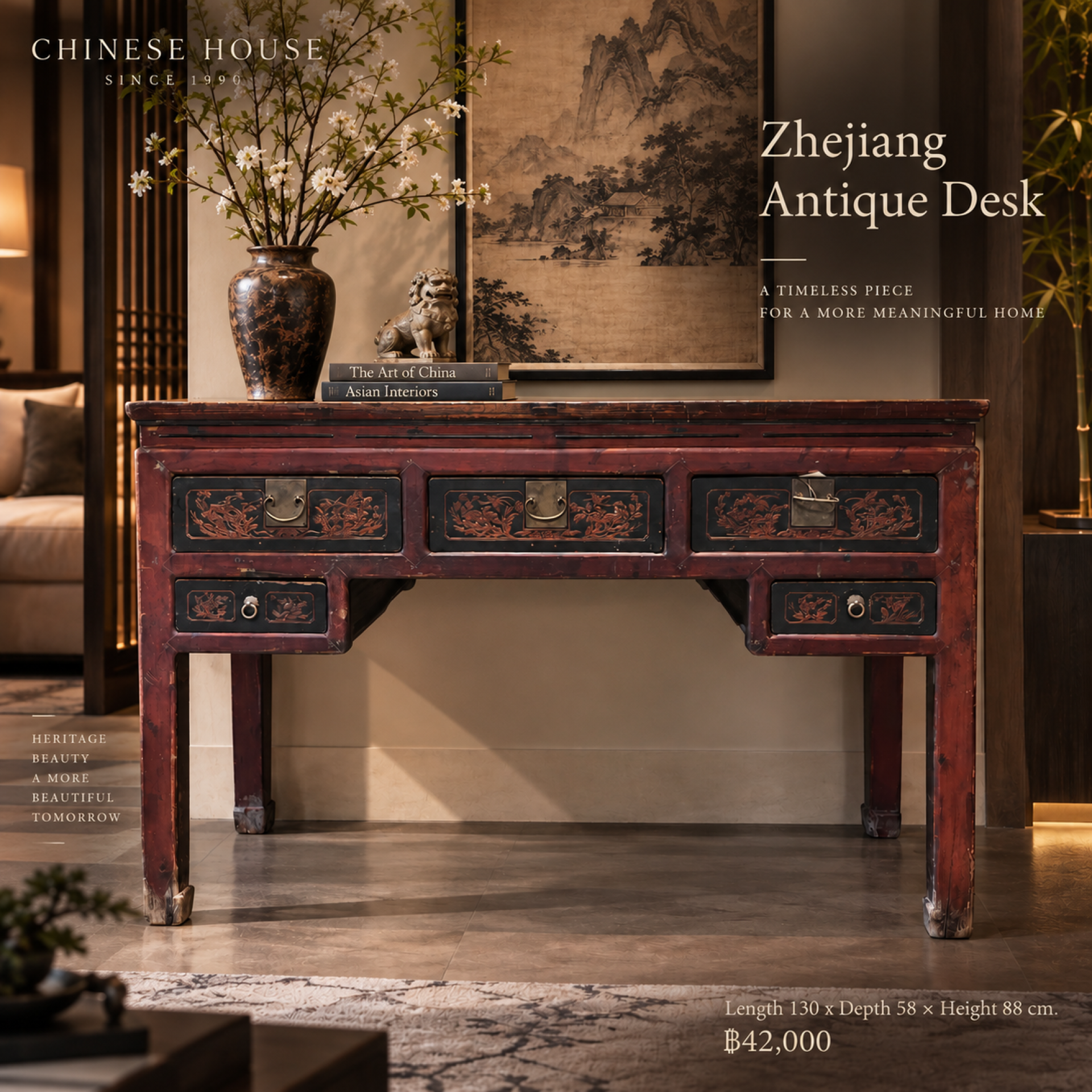
A beautiful piece of Chinese antique furniture can transform a room—but only when its proportions feel right within the space.
An antique cabinet that looks elegant in a showroom may feel surprisingly dominant in a compact Bangkok condominium. A beautifully carved console may appear lost against the wall of a large villa. The difference is rarely the quality of the furniture. It is scale.
Buying antique furniture is therefore about more than falling in love with a particular cabinet, table, or partition. Before choosing a piece, it is worth understanding how its width, depth, and height will relate to the architecture around it.
For homeowners, interior designers, and collectors searching for Antique Furniture Bangkok, careful measurement can make the difference between a room that simply contains beautiful furniture and one where every element feels deliberately placed.
1. Why Furniture Proportion Changes the Character of a Room
Scale is more than width and height
When considering antique furniture, dimensions are the starting point—but proportion is the larger idea.
A piece of furniture interacts visually with everything around it. A tall cabinet draws the eye upward. A wide sideboard can visually anchor a dining room. A narrow console can create a refined transition along an otherwise empty wall.
Traditional Chinese furniture provides an interesting historical reference because classical pieces were designed according to practical and visual relationships between their components. Furniture from the Ming and Qing periods includes a wide range of forms, from cabinets and tables to chairs and storage furniture, each developed for particular uses and environments.
Traditional Chinese craftsmanship also placed considerable attention on construction. Mortise-and-tenon joinery, for example, allowed wooden components to be assembled without relying on modern metal fasteners as the primary structural method. The resulting furniture could have a strong architectural presence while maintaining a relatively restrained visual language.
This relationship between structure and proportion remains relevant today.
A Chinese antique cabinet should not be viewed as an isolated object. Its height can relate to the ceiling, its width to the wall, and its depth to the circulation around it.
The difference between a statement piece and an obstruction
Large furniture is not automatically more luxurious.
In a spacious home, a substantial antique cabinet can become an impressive focal point. Give it enough breathing room, and its form, wood grain, patina, or traditional detailing can be appreciated from across the room.
Place the same cabinet too close to a doorway, however, and its presence becomes functional rather than decorative. People begin walking around it instead of naturally moving through the space.
Luxury interiors often depend on this sense of restraint. Negative space gives important furniture room to be seen.
The goal is not to fill every available wall. It is to create a relationship between furniture and architecture in which both remain visible.
2. What to Measure Before Buying Antique Furniture
Measure the room, not just the empty wall
One of the most common mistakes when choosing furniture is measuring only the space where the piece will stand.
A wall may be 200 centimetres wide, but that does not necessarily mean a 190-centimetre cabinet is appropriate.
Consider the complete setting.
Measure the wall width, ceiling height, nearby doors, windows, columns, electrical outlets, skirting boards, and existing furniture. Then consider how much space people need to move comfortably around the piece.
This is particularly important with antique cabinets and sideboards. Their physical footprint is only one part of the calculation.
For example, a cabinet placed along a dining-room wall should leave sufficient room for people to pull out chairs and walk behind them. A console positioned near an entrance should enhance the arrival experience rather than narrow the passage.
The most useful measurements are therefore not simply:
Width × Depth × Height
They are:
Furniture dimensions + surrounding clearance + human movement.
Remember the journey into the home
A piece can fit perfectly inside a room and still fail to reach it.
This matters particularly in Bangkok, where many luxury residences are located in condominiums and high-rise buildings.
Before purchasing a large piece of Chinese vintage furniture, consider the route from the building entrance to its final position.
Measure:
Main entrance doors
Lift doors and internal lift dimensions
Corridors
Staircases
Doorways between rooms
Tight corners
Balcony or service entrances where relevant
The depth of a cabinet may seem manageable when viewed against a wall, but its dimensions can become much more significant when the piece has to turn through a narrow corridor.
For large residences, the same principle applies to gates, entrance doors, staircases, and transitional spaces.
Good planning prevents the unfortunate situation where the furniture fits the destination but not the journey.
3. The Measurements That Matter Most for Chinese Antique Furniture
Width, depth, and height
Each measurement tells you something different about how a piece will behave in a room.
Width determines horizontal presence. A broad sideboard can establish a strong visual base beneath artwork or a large mirror. A narrower piece may work better in a hallway or beside a doorway.
Depth affects circulation. This is especially important in condos and apartments, where every centimetre of floor space can influence how comfortably a room functions.
Height changes the visual relationship with the architecture. A tall Chinese cabinet can emphasise a high ceiling, while a lower console may work beautifully beneath artwork or along a long architectural wall.
A useful approach is to imagine the furniture as part of the room's vertical and horizontal composition rather than treating its measurements as technical specifications alone.
Measure the opening, not only the footprint
Different furniture forms require different amounts of usable space.
An antique cabinet with hinged doors needs room for those doors to open. A cabinet with drawers needs clearance in front. A Chinese partition needs sufficient surrounding space for its decorative character to remain visible.
The same applies to chairs.
A chair may occupy relatively little floor area when empty, but the space required to sit down, stand up, and move around it is considerably greater.
For an antique partition, placement also deserves special attention. A partition can define a visual boundary without creating a complete physical wall, but it needs enough surrounding space for its form to remain legible.
These practical considerations are easy to overlook when shopping based on photographs alone.
Consider the furniture's usable space
Dimensions should therefore be understood as an envelope rather than a single rectangle.
Think about:
Physical footprint → Opening clearance → Walking clearance → Visual breathing room
That sequence gives a much more realistic picture of whether a piece belongs in a particular room.
4. Choosing the Right Size for Different Luxury Interiors
Chinese antique furniture in a Bangkok luxury condo
A sophisticated condominium does not require large furniture to create character.
In fact, a carefully selected smaller piece can sometimes have greater impact.
A narrow Chinese console along an entrance wall can establish a sense of arrival without interfering with circulation. A compact antique cabinet can introduce warm wood against contemporary stone, glass, or neutral upholstery.
The key is proportion.
If the room already contains a large sofa, substantial coffee table, and strong architectural features, an enormous cabinet may create unnecessary visual weight. A more restrained piece can provide contrast while allowing the architecture to remain part of the composition.
This is one reason Antique Furniture Thailand can work particularly well in contemporary interiors: the furniture does not have to dictate the entire design language.
Penthouses and larger residences
Larger rooms create more freedom, but they also create a different challenge.
A small cabinet against a very large wall can appear disconnected from the surrounding architecture. In this situation, a larger sideboard, substantial cabinet, or carefully positioned pair of pieces may establish better visual balance.
However, spaciousness should not become an excuse to overcrowd.
A large room benefits from deliberate empty space. Allowing distance around an antique piece can make it feel more important.
The furniture becomes an object to appreciate rather than another item competing for attention.
Pool villas and spacious homes
Pool villas often combine generous interior volumes with large windows, open-plan living areas, and strong connections to outdoor spaces.
Here, depth becomes particularly important.
A substantial piece may look appropriate against a long wall but interfere with the visual openness of the room if it projects too far into the circulation zone.
Low sideboards and consoles can sometimes work particularly well because they establish visual weight without interrupting sightlines.
The best choice depends on the architecture rather than simply the size of the house.
Boutique hospitality spaces
Hotels, restaurants, and boutique hospitality environments have another consideration: movement.
Guests should be able to navigate naturally without having to negotiate around furniture.
An antique cabinet placed at the end of a corridor, for example, can create a memorable visual destination. A partition can define zones within an open interior. A traditional Chinese chair can add character to a carefully composed seating arrangement.
In these settings, measurements support both aesthetics and experience.
5. How to Make Antique Furniture Complement Modern Design
One substantial piece can be enough
A modern home does not need to become a traditional Chinese interior simply because it contains Chinese antique furniture.
One carefully selected piece can be enough.
Imagine a contemporary living room with clean-lined upholstery, natural stone, restrained lighting, and a single Chinese antique cabinet positioned against a quiet wall.
The contrast creates interest.
The cabinet introduces age, craftsmanship, texture, and visual history while the contemporary surroundings prevent the room from feeling overly formal.
The same principle can apply to an altar table used as a console, an antique sideboard in a dining area, or a traditional wooden table placed within an otherwise modern setting.
Mix periods and styles with intention
The most successful combinations are rarely accidental.
A contemporary sofa can sit comfortably beside an older wooden cabinet. Modern lighting can highlight traditional furniture without competing with it. Minimal architecture can provide a calm background for carved wood or traditional lacquer craftsmanship.
Materials can create another connection.
The warmth of elm wood, for example, can soften an interior dominated by stone and glass. More refined historic woods such as huanghuali and zitan are associated with important traditions of Chinese furniture-making and demonstrate how material itself can become part of the visual language of a room.
The objective is not to recreate a historical interior.
It is to allow an older object to have a meaningful relationship with a contemporary environment.
Let proportion create harmony
Style can create contrast.
Proportion creates harmony.
A room may successfully combine modern and antique furniture when the scale of each piece feels considered. This is why measuring should happen before choosing the final position, rather than after the furniture arrives.
A beautiful antique piece should feel as though it belongs there—even if it is clearly from another period.
That sense of belonging comes from relationships: scale, spacing, material, colour, architecture, and personal taste.
6. A Practical Measuring Checklist Before You Buy
Before selecting an Antique Cabinet, Antique Partition, sideboard, console, or other piece of Chinese antique furniture, take a few minutes to answer five questions.
1. Does the furniture physically fit?
Measure the available width, depth, and height.
Do not rely on visual estimation.
2. Can it enter the property?
Measure the route from the entrance to the intended room, including doors, lifts, corridors, staircases, and corners.
3. Can doors, drawers, or panels open properly?
Remember that functional clearance is different from the furniture's closed dimensions.
4. Is there enough circulation space?
Stand in the room and imagine people walking around the furniture during everyday use.
A beautiful piece should not make normal movement feel restricted.
5. Does its scale work with the surrounding architecture?
Look at the furniture in relation to ceiling height, wall length, windows, doors, artwork, lighting, and neighbouring furniture.
This final question is where practical measurement becomes interior design.
Measure twice, choose once
Before visiting a showroom or deciding on a particular piece, write down the available dimensions.
For example:
Available space: W 180 × D 45 × H 220 cm
Then compare those measurements with the actual furniture:
Furniture: W 150 × D 38 × H 95 cm
The numbers immediately provide a more realistic starting point for judging suitability.
Photographs are useful for understanding style and atmosphere. Dimensions tell you whether that atmosphere can realistically exist in your own space.
For customers exploring Chinese antique furniture in Bangkok, this preparation can make the showroom experience much more productive. Chinese House, established in 1990 on Phaholyothin 32 Road in Bangkok, specialises in Chinese antique furniture and crafted reproductions, with restoration expertise as part of its service.
The Right Antique Furniture Should Feel at Home
Choosing antique furniture is ultimately an exercise in proportion.
The most beautiful cabinet is not necessarily the largest. The most impressive table is not necessarily the most elaborate. A piece becomes successful when its presence feels appropriate to the room around it.
That may mean a tall cabinet standing confidently beneath a high ceiling, a slim console creating elegance along a narrow wall, or a traditional Chinese piece providing a quiet counterpoint to contemporary architecture.
For modern Bangkok interiors, the possibilities are particularly rich. Luxury condos, penthouses, pool villas, and boutique hospitality spaces can all accommodate Chinese antique furniture when scale and placement are considered from the beginning.
At Chinese House, the selection includes antique cabinets, sideboards, partitions, Chinese doors, console tables, beds, chairs, and decorative wooden furniture, alongside carefully crafted reproductions.
Before choosing a piece, measure the room. Measure the doorway. Measure the route inside.
Then consider the most important measurement of all: how the furniture will make the room feel once everything around it is in place.
The right piece should not simply fit your home.
It should feel as though the space was waiting for it.
FAQ
How do I measure for antique furniture?
Start with the available width, depth, and height of the intended location. Then measure doorways, corridors, lifts, staircases, and other access points. Finally, allow additional space for walking and for doors or drawers to open.
What dimensions should I check before buying an antique cabinet?
Check the cabinet's width, depth, and height, together with the clearance required for its doors or drawers. Compare these measurements with both the installation area and the route into your home.
Can Chinese antique furniture work in a modern home?
Yes. Chinese antique furniture can provide contrast within contemporary interiors without requiring the entire room to follow a traditional style. The most important considerations are proportion, placement, surrounding space, and the relationship between materials and architecture.
An antique cabinet that looks elegant in a showroom may feel surprisingly dominant in a compact Bangkok condominium. A beautifully carved console may appear lost against the wall of a large villa. The difference is rarely the quality of the furniture. It is scale.
Buying antique furniture is therefore about more than falling in love with a particular cabinet, table, or partition. Before choosing a piece, it is worth understanding how its width, depth, and height will relate to the architecture around it.
For homeowners, interior designers, and collectors searching for Antique Furniture Bangkok, careful measurement can make the difference between a room that simply contains beautiful furniture and one where every element feels deliberately placed.
1. Why Furniture Proportion Changes the Character of a Room
Scale is more than width and height
When considering antique furniture, dimensions are the starting point—but proportion is the larger idea.
A piece of furniture interacts visually with everything around it. A tall cabinet draws the eye upward. A wide sideboard can visually anchor a dining room. A narrow console can create a refined transition along an otherwise empty wall.
Traditional Chinese furniture provides an interesting historical reference because classical pieces were designed according to practical and visual relationships between their components. Furniture from the Ming and Qing periods includes a wide range of forms, from cabinets and tables to chairs and storage furniture, each developed for particular uses and environments.
Traditional Chinese craftsmanship also placed considerable attention on construction. Mortise-and-tenon joinery, for example, allowed wooden components to be assembled without relying on modern metal fasteners as the primary structural method. The resulting furniture could have a strong architectural presence while maintaining a relatively restrained visual language.
This relationship between structure and proportion remains relevant today.
A Chinese antique cabinet should not be viewed as an isolated object. Its height can relate to the ceiling, its width to the wall, and its depth to the circulation around it.
The difference between a statement piece and an obstruction
Large furniture is not automatically more luxurious.
In a spacious home, a substantial antique cabinet can become an impressive focal point. Give it enough breathing room, and its form, wood grain, patina, or traditional detailing can be appreciated from across the room.
Place the same cabinet too close to a doorway, however, and its presence becomes functional rather than decorative. People begin walking around it instead of naturally moving through the space.
Luxury interiors often depend on this sense of restraint. Negative space gives important furniture room to be seen.
The goal is not to fill every available wall. It is to create a relationship between furniture and architecture in which both remain visible.
2. What to Measure Before Buying Antique Furniture
Measure the room, not just the empty wall
One of the most common mistakes when choosing furniture is measuring only the space where the piece will stand.
A wall may be 200 centimetres wide, but that does not necessarily mean a 190-centimetre cabinet is appropriate.
Consider the complete setting.
Measure the wall width, ceiling height, nearby doors, windows, columns, electrical outlets, skirting boards, and existing furniture. Then consider how much space people need to move comfortably around the piece.
This is particularly important with antique cabinets and sideboards. Their physical footprint is only one part of the calculation.
For example, a cabinet placed along a dining-room wall should leave sufficient room for people to pull out chairs and walk behind them. A console positioned near an entrance should enhance the arrival experience rather than narrow the passage.
The most useful measurements are therefore not simply:
Width × Depth × Height
They are:
Furniture dimensions + surrounding clearance + human movement.
Remember the journey into the home
A piece can fit perfectly inside a room and still fail to reach it.
This matters particularly in Bangkok, where many luxury residences are located in condominiums and high-rise buildings.
Before purchasing a large piece of Chinese vintage furniture, consider the route from the building entrance to its final position.
Measure:
Main entrance doors
Lift doors and internal lift dimensions
Corridors
Staircases
Doorways between rooms
Tight corners
Balcony or service entrances where relevant
The depth of a cabinet may seem manageable when viewed against a wall, but its dimensions can become much more significant when the piece has to turn through a narrow corridor.
For large residences, the same principle applies to gates, entrance doors, staircases, and transitional spaces.
Good planning prevents the unfortunate situation where the furniture fits the destination but not the journey.
3. The Measurements That Matter Most for Chinese Antique Furniture
Width, depth, and height
Each measurement tells you something different about how a piece will behave in a room.
Width determines horizontal presence. A broad sideboard can establish a strong visual base beneath artwork or a large mirror. A narrower piece may work better in a hallway or beside a doorway.
Depth affects circulation. This is especially important in condos and apartments, where every centimetre of floor space can influence how comfortably a room functions.
Height changes the visual relationship with the architecture. A tall Chinese cabinet can emphasise a high ceiling, while a lower console may work beautifully beneath artwork or along a long architectural wall.
A useful approach is to imagine the furniture as part of the room's vertical and horizontal composition rather than treating its measurements as technical specifications alone.
Measure the opening, not only the footprint
Different furniture forms require different amounts of usable space.
An antique cabinet with hinged doors needs room for those doors to open. A cabinet with drawers needs clearance in front. A Chinese partition needs sufficient surrounding space for its decorative character to remain visible.
The same applies to chairs.
A chair may occupy relatively little floor area when empty, but the space required to sit down, stand up, and move around it is considerably greater.
For an antique partition, placement also deserves special attention. A partition can define a visual boundary without creating a complete physical wall, but it needs enough surrounding space for its form to remain legible.
These practical considerations are easy to overlook when shopping based on photographs alone.
Consider the furniture's usable space
Dimensions should therefore be understood as an envelope rather than a single rectangle.
Think about:
Physical footprint → Opening clearance → Walking clearance → Visual breathing room
That sequence gives a much more realistic picture of whether a piece belongs in a particular room.
4. Choosing the Right Size for Different Luxury Interiors
Chinese antique furniture in a Bangkok luxury condo
A sophisticated condominium does not require large furniture to create character.
In fact, a carefully selected smaller piece can sometimes have greater impact.
A narrow Chinese console along an entrance wall can establish a sense of arrival without interfering with circulation. A compact antique cabinet can introduce warm wood against contemporary stone, glass, or neutral upholstery.
The key is proportion.
If the room already contains a large sofa, substantial coffee table, and strong architectural features, an enormous cabinet may create unnecessary visual weight. A more restrained piece can provide contrast while allowing the architecture to remain part of the composition.
This is one reason Antique Furniture Thailand can work particularly well in contemporary interiors: the furniture does not have to dictate the entire design language.
Penthouses and larger residences
Larger rooms create more freedom, but they also create a different challenge.
A small cabinet against a very large wall can appear disconnected from the surrounding architecture. In this situation, a larger sideboard, substantial cabinet, or carefully positioned pair of pieces may establish better visual balance.
However, spaciousness should not become an excuse to overcrowd.
A large room benefits from deliberate empty space. Allowing distance around an antique piece can make it feel more important.
The furniture becomes an object to appreciate rather than another item competing for attention.
Pool villas and spacious homes
Pool villas often combine generous interior volumes with large windows, open-plan living areas, and strong connections to outdoor spaces.
Here, depth becomes particularly important.
A substantial piece may look appropriate against a long wall but interfere with the visual openness of the room if it projects too far into the circulation zone.
Low sideboards and consoles can sometimes work particularly well because they establish visual weight without interrupting sightlines.
The best choice depends on the architecture rather than simply the size of the house.
Boutique hospitality spaces
Hotels, restaurants, and boutique hospitality environments have another consideration: movement.
Guests should be able to navigate naturally without having to negotiate around furniture.
An antique cabinet placed at the end of a corridor, for example, can create a memorable visual destination. A partition can define zones within an open interior. A traditional Chinese chair can add character to a carefully composed seating arrangement.
In these settings, measurements support both aesthetics and experience.
5. How to Make Antique Furniture Complement Modern Design
One substantial piece can be enough
A modern home does not need to become a traditional Chinese interior simply because it contains Chinese antique furniture.
One carefully selected piece can be enough.
Imagine a contemporary living room with clean-lined upholstery, natural stone, restrained lighting, and a single Chinese antique cabinet positioned against a quiet wall.
The contrast creates interest.
The cabinet introduces age, craftsmanship, texture, and visual history while the contemporary surroundings prevent the room from feeling overly formal.
The same principle can apply to an altar table used as a console, an antique sideboard in a dining area, or a traditional wooden table placed within an otherwise modern setting.
Mix periods and styles with intention
The most successful combinations are rarely accidental.
A contemporary sofa can sit comfortably beside an older wooden cabinet. Modern lighting can highlight traditional furniture without competing with it. Minimal architecture can provide a calm background for carved wood or traditional lacquer craftsmanship.
Materials can create another connection.
The warmth of elm wood, for example, can soften an interior dominated by stone and glass. More refined historic woods such as huanghuali and zitan are associated with important traditions of Chinese furniture-making and demonstrate how material itself can become part of the visual language of a room.
The objective is not to recreate a historical interior.
It is to allow an older object to have a meaningful relationship with a contemporary environment.
Let proportion create harmony
Style can create contrast.
Proportion creates harmony.
A room may successfully combine modern and antique furniture when the scale of each piece feels considered. This is why measuring should happen before choosing the final position, rather than after the furniture arrives.
A beautiful antique piece should feel as though it belongs there—even if it is clearly from another period.
That sense of belonging comes from relationships: scale, spacing, material, colour, architecture, and personal taste.
6. A Practical Measuring Checklist Before You Buy
Before selecting an Antique Cabinet, Antique Partition, sideboard, console, or other piece of Chinese antique furniture, take a few minutes to answer five questions.
1. Does the furniture physically fit?
Measure the available width, depth, and height.
Do not rely on visual estimation.
2. Can it enter the property?
Measure the route from the entrance to the intended room, including doors, lifts, corridors, staircases, and corners.
3. Can doors, drawers, or panels open properly?
Remember that functional clearance is different from the furniture's closed dimensions.
4. Is there enough circulation space?
Stand in the room and imagine people walking around the furniture during everyday use.
A beautiful piece should not make normal movement feel restricted.
5. Does its scale work with the surrounding architecture?
Look at the furniture in relation to ceiling height, wall length, windows, doors, artwork, lighting, and neighbouring furniture.
This final question is where practical measurement becomes interior design.
Measure twice, choose once
Before visiting a showroom or deciding on a particular piece, write down the available dimensions.
For example:
Available space: W 180 × D 45 × H 220 cm
Then compare those measurements with the actual furniture:
Furniture: W 150 × D 38 × H 95 cm
The numbers immediately provide a more realistic starting point for judging suitability.
Photographs are useful for understanding style and atmosphere. Dimensions tell you whether that atmosphere can realistically exist in your own space.
For customers exploring Chinese antique furniture in Bangkok, this preparation can make the showroom experience much more productive. Chinese House, established in 1990 on Phaholyothin 32 Road in Bangkok, specialises in Chinese antique furniture and crafted reproductions, with restoration expertise as part of its service.
The Right Antique Furniture Should Feel at Home
Choosing antique furniture is ultimately an exercise in proportion.
The most beautiful cabinet is not necessarily the largest. The most impressive table is not necessarily the most elaborate. A piece becomes successful when its presence feels appropriate to the room around it.
That may mean a tall cabinet standing confidently beneath a high ceiling, a slim console creating elegance along a narrow wall, or a traditional Chinese piece providing a quiet counterpoint to contemporary architecture.
For modern Bangkok interiors, the possibilities are particularly rich. Luxury condos, penthouses, pool villas, and boutique hospitality spaces can all accommodate Chinese antique furniture when scale and placement are considered from the beginning.
At Chinese House, the selection includes antique cabinets, sideboards, partitions, Chinese doors, console tables, beds, chairs, and decorative wooden furniture, alongside carefully crafted reproductions.
Before choosing a piece, measure the room. Measure the doorway. Measure the route inside.
Then consider the most important measurement of all: how the furniture will make the room feel once everything around it is in place.
The right piece should not simply fit your home.
It should feel as though the space was waiting for it.
FAQ
How do I measure for antique furniture?
Start with the available width, depth, and height of the intended location. Then measure doorways, corridors, lifts, staircases, and other access points. Finally, allow additional space for walking and for doors or drawers to open.
What dimensions should I check before buying an antique cabinet?
Check the cabinet's width, depth, and height, together with the clearance required for its doors or drawers. Compare these measurements with both the installation area and the route into your home.
Can Chinese antique furniture work in a modern home?
Yes. Chinese antique furniture can provide contrast within contemporary interiors without requiring the entire room to follow a traditional style. The most important considerations are proportion, placement, surrounding space, and the relationship between materials and architecture.
Tags :
Related Content

Bringing Chinese Antique Furniture into a contemporary living space is the ultimate expression of sophisticated interior design. The goal is never to recreate a museum; rather, it is to thoughtfully curate an environment where the profound history of dynastic craftsmanship naturally elevates your modern lifestyle. Integrating these commanding pieces requires a delicate balance of proportion, texture, and purposeful placement.
Welcome to Chinese House, your dedicated partner in crafting spaces of unparalleled luxury. We believe that true elegance is found in the juxtaposition of eras. Whether you are aiming for a minimalist Zen retreat or an eclectic, layered penthouse, understanding how to strategically position high-end heritage pieces will transform your house into a culturally rich, highly curated home.
Relocating to Southeast Asia or styling a luxury penthouse often sparks a thrilling design quest. If you are searching for the perfect centerpiece to anchor your space, your pursuit of the finest Chinese Antique Furniture in the region finally ends in the vibrant heart of Thailand.
Bangkok has rapidly evolved into a premier global hub for luxury interior design, making the quest to discover authentic Chinese Antique Furniture an exhilarating journey for expatriates and affluent homeowners.
