How to Choose Chinese Antique Tables & Chairs
0 Views
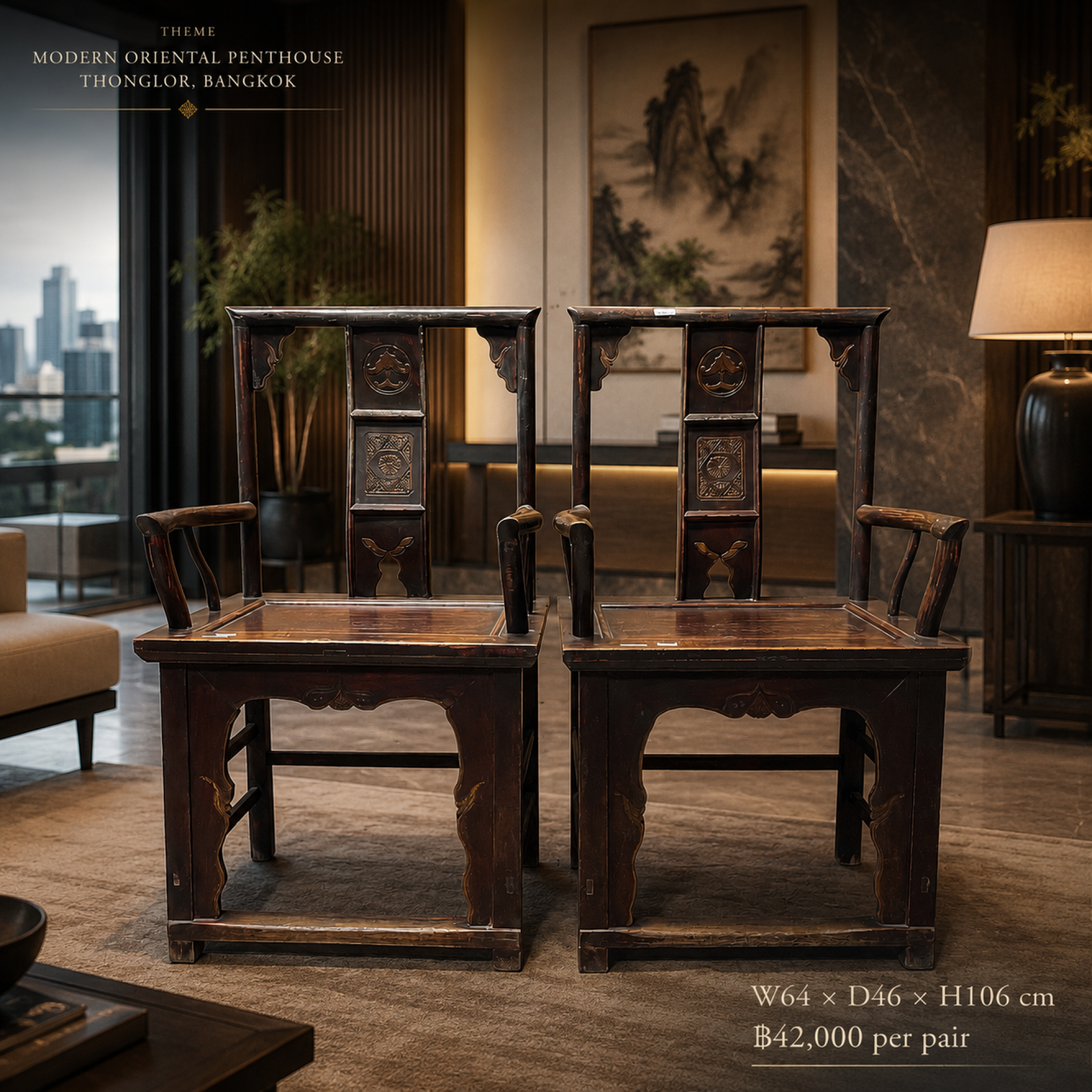
Start With the Role the Furniture Will Play
Dining, Working, Display or Conversation
Begin with function.
A dining table needs to accommodate people comfortably and allow sufficient circulation around it. A writing or work table requires a different relationship between height, surface area and seating. A smaller occasional table may instead be intended for books, objects or conversation.
Historical Chinese furniture demonstrates how varied these functions could be. The Metropolitan Museum of Art, for example, records a Chinese side table from the 16th century that was used for books, small objects or a Chinese zither. Another 17th-century couch table was designed at a low height for teacups or reading material.
This is an important reminder when choosing antique furniture today: the most beautiful piece is not necessarily the most appropriate one. Its intended role should make sense within the room.
Think About the Room Before the Individual Piece
Look at the room as a whole.
Consider the available floor area, circulation routes, ceiling height and the furniture already present. A substantial table may have considerable visual authority, while a smaller table can create a more delicate point of focus.
In a Bangkok condominium or penthouse, for example, an antique table can provide warmth and individuality within a contemporary architectural setting. In a larger villa, it may become part of a more layered composition involving cabinets, screens, seating and artwork.
The objective is not to fill every available space. It is to create enough room for the furniture to be appreciated.
Look Carefully at Proportion and Scale
Table Height, Width and Visual Weight
Dimensions are important, but numbers alone do not tell the whole story.
Two tables with similar measurements can appear completely different because of their leg structure, tabletop thickness, apron, surface treatment or overall visual weight. A long, slender table may feel surprisingly light, while a compact piece with substantial construction can command considerably more attention.
Historical examples illustrate this variety. The Metropolitan Museum records a late-16th- to early-17th-century Chinese painting table measuring approximately 186 cm wide and 80 cm high, while another 17th-century side table measures more than 285 cm in length.
These pieces demonstrate why scale should be considered in relation to purpose and architecture rather than treated as an isolated specification.
Matching Tables and Chairs Without Making the Room Too Formal
Tables and chairs should work together, but they do not necessarily need to form a perfectly matched set.
Pay attention to the practical relationship between seat height and tabletop height first. Then consider visual relationships: wood tone, silhouette, proportion and the degree of ornament.
A restrained table can sit beautifully with more sculptural chairs. Conversely, an elaborate chair may need a quieter table to prevent the composition from becoming visually heavy.
The aim is harmony rather than uniformity.
Examine Form, Craftsmanship and Surface
Construction and Joinery
Craftsmanship becomes particularly meaningful when looking at antique furniture closely.
Traditional Chinese furniture is associated with sophisticated woodworking techniques, including mortise-and-tenon construction. The Metropolitan Museum has documented how hardwood furniture could employ complex mortise-and-tenon systems, while its research on Chinese architecture describes how such joints allowed wooden components to accommodate changes in temperature and humidity.
The mortise-and-tenon joint itself is a straightforward principle: one wooden component is shaped with a projecting tenon that fits into a corresponding mortise in another component. The technique can create strong structural connections without relying solely on modern visible fasteners.
When examining a piece, look closely at how its components relate to one another. Construction details can tell you much more about craftsmanship than surface decoration alone.
Surface, Patina, Carving and Hardware
The surface is where much of an antique's visual personality resides.
Look at the way the wood has aged, the variation of its grain, the character of the finish and the relationship between polished and more subdued areas. Examine carving, hardware, edges and structural details rather than focusing only on the overall silhouette.
Historically documented Chinese hardwood furniture includes examples made from materials such as huanghuali and zitan. The Met's collection, for instance, includes Ming and Qing-period tables and chairs made from these woods.
However, appearance should not be used to assign an exact dynasty, age or provenance. Those are matters requiring appropriate evidence. For a buyer, observable craftsmanship, proportion, condition and character provide a more reliable starting point for appreciating the object itself.
Choose a Style That Belongs to the Interior
Traditional Chinese Interiors
In a more traditionally composed interior, Chinese antique tables and chairs can establish continuity.
A room might repeat similar wood tones or introduce related forms through a cabinet, screen or sideboard. The result does not need to be overly decorated. Often, the restraint of the furniture allows proportion and craftsmanship to carry the visual language.
A table placed against an architectural wall, beneath artwork or beside a screen can become part of the room's structure rather than simply another decorative object.
Contemporary Bangkok Interiors
Chinese antique furniture can also work remarkably well against contemporary architecture.
Clean stone surfaces, restrained lighting, large windows and modern architectural lines create a useful contrast with the warmth and individuality of antique wood furniture.
The contrast is particularly effective when the antique piece is given enough visual space. A single table in a refined living area can have greater impact than several pieces competing for attention.
For luxury residences in Bangkok, this approach can allow traditional furniture to feel current without forcing the entire interior into a historical style.
Antique Furniture as Part of a Larger Composition
Pairing Tables With Cabinets, Screens and Sideboards
A table rarely exists in complete isolation.
Its relationship with surrounding furniture influences how it is perceived. A Chinese antique table can sit naturally alongside a cabinet, sideboard or screen, provided the composition has enough variation in scale and enough negative space.
A screen, for instance, can establish a backdrop. A cabinet can provide vertical emphasis. A table can then become the horizontal element that brings the composition back toward the human scale.
This is where interior design becomes more interesting than simple furniture matching.
Choosing Individual Pieces Rather Than Matching Everything
A sophisticated interior often feels collected rather than assembled from a single catalogue.
Instead of searching for identical forms throughout a room, consider how different pieces can share a common visual language. Similar wood character, restrained colour, balanced proportions or complementary silhouettes may be enough to create cohesion.
This approach gives each piece room to retain its own personality.
It also allows an interior to evolve naturally over time.
A Practical Checklist Before Choosing
Questions to Ask
Before choosing a Chinese antique table or chair, consider:
Does the scale suit the room?
Does the furniture serve the intended function?
Is the table comfortable and practical with the proposed seating?
Do the proportions feel balanced?
What construction and craftsmanship details can be observed?
What character does the surface contribute to the room?
Does the piece complement the surrounding architecture?
Is its classification clearly understood as Antique rather than Reproduction?
These questions shift the decision away from appearance alone and toward the complete relationship between furniture and interior.
When to Choose Character Over Perfection
Antique furniture is not expected to look like newly manufactured furniture.
Natural variation, surface wear and changes in colour can contribute to its visual character. The important question is whether those qualities work with the piece and the intended interior.
For some rooms, a quiet surface and restrained silhouette may be most appropriate. For others, stronger grain, carving or visible character may provide the focal point the space needs.
There is no single aesthetic formula.
Building a Refined Collection Over Time
There is also no requirement to complete a room in one decision.
A considered collection can develop gradually. One table may establish the direction of a room, followed later by chairs, a cabinet or a screen that complements rather than duplicates it.
This slower approach can produce an interior that feels personal and layered.
The furniture becomes part of the story of the home rather than simply a collection of matching objects.
Bringing Chinese Antique Tables & Chairs Into a Refined Interior
Choosing Chinese antique tables and chairs ultimately comes down to five connected considerations:
Function → Proportion → Craftsmanship → Interior relationship → Personal character
Start with how the furniture will be used. Consider the architecture and scale of the room. Examine the construction and surface carefully. Then step back and ask whether the piece contributes something distinctive to the overall composition.
For a contemporary Bangkok residence, the answer may be a restrained antique table that introduces warmth into a clean architectural setting. For a more traditional interior, it may be a group of tables and chairs whose proportions and materials create a stronger sense of continuity.
At Chinese House, the Chinese Antique Tables & Chairs collection can be considered as part of a broader approach to refined Chinese interiors, where furniture is selected for its relationship to space as much as for its individual beauty.
For those furnishing a private residence, villa, hospitality project or carefully curated interior, visiting the Chinese House showroom in Bangkok offers an opportunity to consider proportion, surface and presence in person.
The right piece does not need to dominate a room. Often, its greatest strength is the quiet confidence with which it belongs there.
FAQ
What should I look for when choosing Chinese antique tables and chairs?
Begin with function, proportion, construction, surface character and how the piece relates to the surrounding interior. Dimensions are important, but visual weight and proportion should also be considered.
How can Chinese antique tables work in modern interiors?
Contrast can be highly effective. A Chinese antique table can introduce warmth, texture and historical character into contemporary architecture, particularly when it is given sufficient space around it.
Should Chinese antique tables and chairs always match?
No. Coordinated proportions, materials and visual character can create harmony without requiring identical pieces. A carefully curated combination can feel more sophisticated and individual than a completely matched set.
Dining, Working, Display or Conversation
Begin with function.
A dining table needs to accommodate people comfortably and allow sufficient circulation around it. A writing or work table requires a different relationship between height, surface area and seating. A smaller occasional table may instead be intended for books, objects or conversation.
Historical Chinese furniture demonstrates how varied these functions could be. The Metropolitan Museum of Art, for example, records a Chinese side table from the 16th century that was used for books, small objects or a Chinese zither. Another 17th-century couch table was designed at a low height for teacups or reading material.
This is an important reminder when choosing antique furniture today: the most beautiful piece is not necessarily the most appropriate one. Its intended role should make sense within the room.
Think About the Room Before the Individual Piece
Look at the room as a whole.
Consider the available floor area, circulation routes, ceiling height and the furniture already present. A substantial table may have considerable visual authority, while a smaller table can create a more delicate point of focus.
In a Bangkok condominium or penthouse, for example, an antique table can provide warmth and individuality within a contemporary architectural setting. In a larger villa, it may become part of a more layered composition involving cabinets, screens, seating and artwork.
The objective is not to fill every available space. It is to create enough room for the furniture to be appreciated.
Look Carefully at Proportion and Scale
Table Height, Width and Visual Weight
Dimensions are important, but numbers alone do not tell the whole story.
Two tables with similar measurements can appear completely different because of their leg structure, tabletop thickness, apron, surface treatment or overall visual weight. A long, slender table may feel surprisingly light, while a compact piece with substantial construction can command considerably more attention.
Historical examples illustrate this variety. The Metropolitan Museum records a late-16th- to early-17th-century Chinese painting table measuring approximately 186 cm wide and 80 cm high, while another 17th-century side table measures more than 285 cm in length.
These pieces demonstrate why scale should be considered in relation to purpose and architecture rather than treated as an isolated specification.
Matching Tables and Chairs Without Making the Room Too Formal
Tables and chairs should work together, but they do not necessarily need to form a perfectly matched set.
Pay attention to the practical relationship between seat height and tabletop height first. Then consider visual relationships: wood tone, silhouette, proportion and the degree of ornament.
A restrained table can sit beautifully with more sculptural chairs. Conversely, an elaborate chair may need a quieter table to prevent the composition from becoming visually heavy.
The aim is harmony rather than uniformity.
Examine Form, Craftsmanship and Surface
Construction and Joinery
Craftsmanship becomes particularly meaningful when looking at antique furniture closely.
Traditional Chinese furniture is associated with sophisticated woodworking techniques, including mortise-and-tenon construction. The Metropolitan Museum has documented how hardwood furniture could employ complex mortise-and-tenon systems, while its research on Chinese architecture describes how such joints allowed wooden components to accommodate changes in temperature and humidity.
The mortise-and-tenon joint itself is a straightforward principle: one wooden component is shaped with a projecting tenon that fits into a corresponding mortise in another component. The technique can create strong structural connections without relying solely on modern visible fasteners.
When examining a piece, look closely at how its components relate to one another. Construction details can tell you much more about craftsmanship than surface decoration alone.
Surface, Patina, Carving and Hardware
The surface is where much of an antique's visual personality resides.
Look at the way the wood has aged, the variation of its grain, the character of the finish and the relationship between polished and more subdued areas. Examine carving, hardware, edges and structural details rather than focusing only on the overall silhouette.
Historically documented Chinese hardwood furniture includes examples made from materials such as huanghuali and zitan. The Met's collection, for instance, includes Ming and Qing-period tables and chairs made from these woods.
However, appearance should not be used to assign an exact dynasty, age or provenance. Those are matters requiring appropriate evidence. For a buyer, observable craftsmanship, proportion, condition and character provide a more reliable starting point for appreciating the object itself.
Choose a Style That Belongs to the Interior
Traditional Chinese Interiors
In a more traditionally composed interior, Chinese antique tables and chairs can establish continuity.
A room might repeat similar wood tones or introduce related forms through a cabinet, screen or sideboard. The result does not need to be overly decorated. Often, the restraint of the furniture allows proportion and craftsmanship to carry the visual language.
A table placed against an architectural wall, beneath artwork or beside a screen can become part of the room's structure rather than simply another decorative object.
Contemporary Bangkok Interiors
Chinese antique furniture can also work remarkably well against contemporary architecture.
Clean stone surfaces, restrained lighting, large windows and modern architectural lines create a useful contrast with the warmth and individuality of antique wood furniture.
The contrast is particularly effective when the antique piece is given enough visual space. A single table in a refined living area can have greater impact than several pieces competing for attention.
For luxury residences in Bangkok, this approach can allow traditional furniture to feel current without forcing the entire interior into a historical style.
Antique Furniture as Part of a Larger Composition
Pairing Tables With Cabinets, Screens and Sideboards
A table rarely exists in complete isolation.
Its relationship with surrounding furniture influences how it is perceived. A Chinese antique table can sit naturally alongside a cabinet, sideboard or screen, provided the composition has enough variation in scale and enough negative space.
A screen, for instance, can establish a backdrop. A cabinet can provide vertical emphasis. A table can then become the horizontal element that brings the composition back toward the human scale.
This is where interior design becomes more interesting than simple furniture matching.
Choosing Individual Pieces Rather Than Matching Everything
A sophisticated interior often feels collected rather than assembled from a single catalogue.
Instead of searching for identical forms throughout a room, consider how different pieces can share a common visual language. Similar wood character, restrained colour, balanced proportions or complementary silhouettes may be enough to create cohesion.
This approach gives each piece room to retain its own personality.
It also allows an interior to evolve naturally over time.
A Practical Checklist Before Choosing
Questions to Ask
Before choosing a Chinese antique table or chair, consider:
Does the scale suit the room?
Does the furniture serve the intended function?
Is the table comfortable and practical with the proposed seating?
Do the proportions feel balanced?
What construction and craftsmanship details can be observed?
What character does the surface contribute to the room?
Does the piece complement the surrounding architecture?
Is its classification clearly understood as Antique rather than Reproduction?
These questions shift the decision away from appearance alone and toward the complete relationship between furniture and interior.
When to Choose Character Over Perfection
Antique furniture is not expected to look like newly manufactured furniture.
Natural variation, surface wear and changes in colour can contribute to its visual character. The important question is whether those qualities work with the piece and the intended interior.
For some rooms, a quiet surface and restrained silhouette may be most appropriate. For others, stronger grain, carving or visible character may provide the focal point the space needs.
There is no single aesthetic formula.
Building a Refined Collection Over Time
There is also no requirement to complete a room in one decision.
A considered collection can develop gradually. One table may establish the direction of a room, followed later by chairs, a cabinet or a screen that complements rather than duplicates it.
This slower approach can produce an interior that feels personal and layered.
The furniture becomes part of the story of the home rather than simply a collection of matching objects.
Bringing Chinese Antique Tables & Chairs Into a Refined Interior
Choosing Chinese antique tables and chairs ultimately comes down to five connected considerations:
Function → Proportion → Craftsmanship → Interior relationship → Personal character
Start with how the furniture will be used. Consider the architecture and scale of the room. Examine the construction and surface carefully. Then step back and ask whether the piece contributes something distinctive to the overall composition.
For a contemporary Bangkok residence, the answer may be a restrained antique table that introduces warmth into a clean architectural setting. For a more traditional interior, it may be a group of tables and chairs whose proportions and materials create a stronger sense of continuity.
At Chinese House, the Chinese Antique Tables & Chairs collection can be considered as part of a broader approach to refined Chinese interiors, where furniture is selected for its relationship to space as much as for its individual beauty.
For those furnishing a private residence, villa, hospitality project or carefully curated interior, visiting the Chinese House showroom in Bangkok offers an opportunity to consider proportion, surface and presence in person.
The right piece does not need to dominate a room. Often, its greatest strength is the quiet confidence with which it belongs there.
FAQ
What should I look for when choosing Chinese antique tables and chairs?
Begin with function, proportion, construction, surface character and how the piece relates to the surrounding interior. Dimensions are important, but visual weight and proportion should also be considered.
How can Chinese antique tables work in modern interiors?
Contrast can be highly effective. A Chinese antique table can introduce warmth, texture and historical character into contemporary architecture, particularly when it is given sufficient space around it.
Should Chinese antique tables and chairs always match?
No. Coordinated proportions, materials and visual character can create harmony without requiring identical pieces. A carefully curated combination can feel more sophisticated and individual than a completely matched set.
Related Content
Sourcing authentic Chinese Antique Furniture in Southeast Asia is an exhilarating endeavor for interior designers, affluent expats, and discerning collectors. The right historical piece does not just fill a room; it anchors your entire living space with dynastic elegance, profound cultural history, and unparalleled craftsmanship. However, for those cultivating a truly luxurious environment, the experience of acquiring these heritage assets should be as refined and effortless as the pieces themselves.
Welcome to Chinese House, your exclusive gateway to the most breathtaking historical masterworks in the region. We believe that elevating your home with ancient artistry should be a seamless, inspiring gallery experience. Let us guide you through the premier destination for discovering world-class heritage design in the heart of the Land of Smiles
A Chinese antique sideboard can change the character of a room without demanding attention. Its proportions, surface, craftsmanship and quiet presence can bring depth to a contemporary interior while providing practical storage.
Choosing the right Chinese antique sideboard, however, is less about finding the most elaborate piece and more about understanding how furniture, architecture and daily life should relate to one another.
Chinese Antique Furniture possesses a rare ability to transform a home beyond its physical function. More than decorative objects, these pieces embody centuries of craftsmanship, cultural philosophy, and refined living. In today's luxury residences—from Bangkok penthouses and riverside condominiums to expansive pool villas—Chinese antique furniture introduces a sense of permanence and authenticity that contemporary furnishings often struggle to achieve.
