
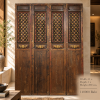
Chinese Antique Lattice Screen ( 4 panels )
Quantity
Short Description
A screen can do more than divide a space. It can establish a visual rhythm, introduce intricate detail and change the relationship between different areas of an interior without requiring a permanent wall.
Dimension: Width 53 x Depth 5 x Height 253 cm.
Price: 152000 Baht
A Decorative Screen That Shapes the Room
A screen can do more than divide a space. It can establish a visual rhythm, introduce intricate detail and change the relationship between different areas of an interior without requiring a permanent wall.
This four-panel Chinese antique lattice screen brings together reddish-brown timber, gold-toned geometric latticework, carved decorative bands and recessed wooden panels. The combination creates a distinctive composition: the lattice provides repetition and visual structure, the carved details introduce ornament, and the broad lower panels give the overall design a sense of balance.
Its appeal lies in how these elements work together. Rather than relying on one elaborate motif, the screen builds its character through the repetition of a geometric pattern and the contrast between decorated and relatively plain surfaces.
Geometry, Ornament and Material Character
The lattice panels are the most immediately noticeable feature. Their repeating interlocking pattern creates a dense decorative surface, with gold-toned details standing out against the darker background. The effect is intricate without depending on large, isolated motifs.
Around the latticework, the reddish-brown frames define each panel clearly. Carved decorative bands provide a horizontal transition between the upper and lower sections, while the recessed wooden panels introduce a quieter surface that balances the more elaborate pattern above.
The screen's colour also contributes to its visual presence. Variations across the reddish-brown finish and visible surface wear prevent the timber from appearing completely uniform. These details contrast with the repeated precision of the latticework, creating a relationship between geometric order and surface variation.
This combination gives the piece interest from a distance while rewarding closer inspection. It can be appreciated as part of the room's overall composition, yet its decorative details remain meaningful when viewed nearby.
Defining Space Without Closing It Off
One of the most useful applications of a screen is creating a sense of separation while maintaining a visual connection between adjoining areas.
In an open-plan residence, this piece can help distinguish a living area from a dining space or establish a more defined setting within a larger room. Unlike a solid wall, the patterned panels introduce a decorative boundary rather than an uninterrupted visual barrier. The degree of openness will depend on the viewing angle, lighting and placement.
It can also serve as a backdrop for a carefully arranged seating area or provide a distinctive architectural feature in an entrance or reception space. In each case, the screen contributes more than decoration: it helps establish how the surrounding space is perceived.
Before installation, consider whether the intended role is primarily decorative or functional. Confirm the stability, mounting requirements and suitability of the panels for the planned arrangement.
A Chinese Antique Screen in a Contemporary Interior
The screen's reddish-brown timber and gold-toned pattern offer a strong contrast against warm ivory walls, beige plaster and pale stone flooring. These quieter finishes allow the intricate latticework to remain the focal point without competing with excessive ornament.
For a refined Bangkok residence, natural materials and restrained furnishings can create a balanced setting. Stone, neutral upholstery and simple timber furniture provide a contemporary backdrop, while carefully selected artwork or darker accents can connect the screen with the rest of the interior.
Lighting is equally important. Soft natural light from the side can reveal the depth of the frames, the relief of the carved bands and the tonal variations of the wood. A considered lighting arrangement allows the screen to remain visually expressive without making the room feel overly formal.
The objective is not to reproduce an entirely traditional interior. Instead, the screen can create a dialogue between traditional Chinese decorative design and contemporary architectural simplicity.
Choosing a Piece with Lasting Visual Relevance
For homeowners, collectors and interior designers, the appeal of a distinctive screen often lies in its ability to contribute to several aspects of a room at once. It can help define space, provide a backdrop, introduce pattern and connect contrasting materials.
This four-panel screen brings these qualities together through its geometric latticework, carved decorative bands and varied timber surface. Its character comes from the visible design rather than an unsupported historical narrative or a claim of rarity.
The result is an expressive architectural element for an interior that values thoughtful selection over excessive decoration. Whether used to distinguish adjoining areas or to anchor a carefully curated room, it offers a way to make traditional Chinese design part of contemporary living.
Explore the Chinese Antique & Reproduction Screens category at Chinese House to consider how screens can contribute to interior planning, decorative balance and the relationship between traditional furniture and modern architecture.


 MakeWebEasy