
Chinese Antique Lattice Screen ( 4 panels )
Quantity
Short Description
Not every interior needs another wall. Sometimes, a carefully chosen screen provides a more interesting way to distinguish areas, introduce a focal point and bring greater character to a room.
Dimension: Width 57 x Depth 5 x Height 272 cm.
Price: 108000 Baht
A Screen That Defines Space Through Design
Not every interior needs another wall. Sometimes, a carefully chosen screen provides a more interesting way to distinguish areas, introduce a focal point and bring greater character to a room.
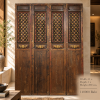
This four-panel Chinese antique screen combines closely spaced vertical latticework, carved ornamental bands and broad solid lower panels in a deep reddish-brown finish. Its repeated geometry creates a strong architectural rhythm, while variations in colour and visible surface wear give the timber a distinctive appearance. Together, these elements create a composition that feels structured without appearing overly formal.
As part of a contemporary interior, the screen offers a meeting point between traditional Chinese design and modern spatial planning. It can help establish a visual boundary while allowing the surrounding room to remain connected.
The Balance Between Openness and Definition
The lattice panels are central to the screen's character. Repeated vertical bars create a measured rhythm, interrupted by horizontal crosspieces that add structure to the pattern. Above the latticework, rectangular inset panels establish a clear upper boundary. Beneath it, carved ornamental bands introduce a more intricate decorative element, followed by broad solid panels that visually ground the composition.
This arrangement gives the screen two complementary qualities. Its overall outline creates a sense of separation, while the repeated openings retain visual depth. Unlike an uninterrupted solid surface, the lattice allows the eye to register layers and details beyond the immediate plane, depending on the placement and lighting.
That distinction can be valuable in an open-plan residence. A living area and dining space may benefit from a clearer visual relationship without being completely isolated from one another. A screen can help establish that relationship through form rather than requiring an entirely enclosed partition.
Surface Character and Traditional Detail
The deep reddish-brown finish gives the piece a strong presence. The timber displays variations in tone, visible grain and areas of wear, while the carved bands introduce flowing ornamental lines beneath the more disciplined lattice pattern.
The contrast between these details is part of the screen's appeal. The latticework provides repetition and order; the carved sections offer a more decorative counterpoint; and the weathered surface prevents the overall composition from feeling visually uniform.
Rather than relying on elaborate accessories to create interest, the screen has enough visible detail to contribute to a room's character on its own. This makes it particularly suitable for interiors where materials and architectural elements are chosen deliberately.
Its beauty does not depend on recreating an entirely traditional setting. In fact, the screen can become more distinctive when surrounded by simpler contemporary materials.
Bringing a Chinese Antique Screen into a Contemporary Home
In a modern villa or Bangkok residence, consider placing the screen against a warm neutral wall, beside pale stone flooring or near natural timber furniture. A restrained palette allows the darker finish and carved details to remain prominent without competing with too many decorative elements.
For a living and dining area, the screen can help suggest separate zones while maintaining a visual connection between them. In a larger entrance or reception space, it can provide a backdrop that gives the interior greater depth. It may also suit a carefully curated hospitality environment where architectural character contributes to the overall atmosphere.
The key is to consider the screen as part of the room's composition rather than an isolated decorative object. Its visual rhythm can relate to repeated architectural lines, while its darker tones can balance lighter walls and flooring.
Natural side lighting can reveal variations in the surface and emphasize the relief of the carved panels. Simple surrounding furnishings allow those details to remain legible and help the space feel considered rather than crowded.
Choosing a Screen for Long-Term Interior Relevance
A distinctive screen offers flexibility in how an interior is perceived. It can help organize an open space, provide a visual backdrop or introduce traditional design into a contemporary setting. Its usefulness depends on the room, the intended placement and the relationship between the screen and the surrounding architecture.
Before installation, consider circulation routes, stability, mounting requirements and whether the intended use is decorative or functional. The dimensions listed above should be checked against the actual space and installation requirements.
For homeowners, collectors and interior designers who appreciate Chinese antique furniture, this screen offers a way to bring together traditional latticework, carved ornament and expressive surface character. It creates definition without relying solely on solid mass, giving a carefully planned interior another layer of visual interest.
Explore Chinese Antique Screens at Chinese House and consider how this four-panel piece could contribute to the balance, character and spatial composition of your interior.


 MakeWebEasy