
Chinese Antique Lattice Doors
Quantity
Short Description
Some architectural elements make an impression through ornament. Others rely on proportion, repetition and the relationship between light and shadow. These Chinese antique doors bring both qualities together, combining an orderly lattice pattern with carved decoration and a visibly weathered surface.
Dimension: Width 55 x Depth 5 x Height 270 cm.
Price: 54000 Baht
Where Geometry Meets Character
Some architectural elements make an impression through ornament. Others rely on proportion, repetition and the relationship between light and shadow. These Chinese antique doors bring both qualities together, combining an orderly lattice pattern with carved decoration and a visibly weathered surface.
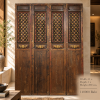
The pair features deep reddish-brown tones, tall rectangular lattice openings, horizontal crosspieces and carved ornamental panels beneath the latticework. Solid lower panels balance the more intricate upper sections, giving the overall design a clear visual hierarchy. The result is an architectural composition that feels structured without appearing plain.
For a contemporary home, this combination offers an appealing alternative to interiors in which every surface is smooth, uniform and carefully matched. The doors introduce variation and individuality while retaining the strong geometry needed to sit comfortably within a considered interior scheme.
The Appeal of the Latticework
The vertical bars are among the most distinctive features of this pair. Repeated at regular intervals, they create a rhythm that naturally draws the eye upward. Horizontal crosspieces interrupt the vertical lines at measured intervals, adding structure and visual balance.
Above the lattice openings, elongated inset panels soften the rectangular geometry. Below, carved decorative motifs provide a more intricate counterpoint to the regular bars. These contrasting elements allow the doors to hold attention at different distances: their overall proportions read clearly across a room, while the carved details invite closer inspection.
This is a useful quality in interior design. A strong architectural feature should contribute to the composition from afar without losing interest when viewed nearby.
Surface, Colour and Individuality
The reddish-brown finish gives the doors a deep, warm presence. Across the frames and solid panels, visible grain, uneven tonal variations and signs of wear create a surface that is not entirely uniform. Darker areas contrast with lighter patches, allowing the texture of the timber to remain visually apparent.
Rather than treating the surface as a background for the design, it forms part of the design itself. The regularity of the latticework is balanced by the irregularity of the finish, creating a relationship between controlled geometry and natural variation.
This contrast is particularly appealing to homeowners who prefer collected interiors to spaces that feel newly coordinated from floor to ceiling. The doors do not need elaborate surrounding decoration to establish their identity; their own pattern, colour and surface provide sufficient visual interest.
No particular wood species, historical period or provenance is assumed. Their appeal can be understood through the visible details of the piece itself.
A Natural Counterpoint to Contemporary Architecture
In a contemporary villa, these doors can provide a focal point against warm limestone, pale plaster or softly textured neutral walls. Their darker tones establish contrast, while the vertical latticework introduces a strong architectural rhythm.
The surrounding interior can remain relatively restrained. Stone flooring, natural textiles and simple furniture allow the doors to retain visual prominence. Alternatively, carefully selected dark timber furniture or artwork can echo their deeper tones, creating a more connected composition without making every element match.
Natural side lighting is especially effective for this type of design. As light moves across the frames and carved sections, differences in depth and surface texture become more apparent. The resulting shadows can reinforce the architectural character of the latticework.
For Bangkok residences and other contemporary homes in Thailand, this approach offers a way to incorporate Chinese antique furniture into modern interiors without attempting to recreate an entirely traditional setting. The goal is a thoughtful dialogue between design traditions rather than a uniform historical theme.
Choosing the Right Architectural Role
Before selecting a position, consider what the doors should contribute to the room. They may serve as a focal point within an entrance, reinforce a traditional design element elsewhere in the home, or provide visual contrast within a minimalist interior.
Practical suitability matters as much as appearance. Confirm whether the doors are intended for an operational doorway or decorative use, and assess the actual opening, mounting requirements, hardware and surrounding structure before installation. The dimensions above are product information and should be checked against the intended application.
A Considered Addition to a Collected Interior
Chinese antique furniture can contribute to a home in ways that extend beyond decoration. Its value to an interior lies in how its form, material presence and visual character interact with the surrounding architecture.
These doors offer a distinctive combination of geometric order, carved detail and surface variation. For homeowners, collectors and interior designers who appreciate traditional Chinese design, they provide an opportunity to give a contemporary space a more individual architectural identity.
Explore Chinese Antique Doors at Chinese House and consider how their latticework, warm colour and ornamental details could relate to your own interior.


 MakeWebEasy