Antique & Reproduction Furniture: Understanding the Difference
Why the Difference Between Antique and Reproduction Furniture Matters
Chinese furniture can carry very different meanings depending on its classification. At Chinese House, the distinction between Antique and Reproduction is fundamental to understanding the collection.
The difference is not simply about whether a piece looks old or traditional. It concerns what the furniture is, how it was made, and what can appropriately be said about its history.
For homeowners, collectors and interior designers, understanding this distinction makes it easier to choose furniture according to the character of a space rather than relying on appearance alone.
What Is Antique Furniture?
An Antique is furniture classified as antique when its status is supported by appropriate information about the individual piece.
Its appeal may come from the combination of form, craftsmanship, surface, proportion and the visible character that develops through time. Subtle variations in colour, texture and surface can contribute to the individuality of an antique piece.
However, appearance alone should not be used to determine a dynasty, exact age, provenance or historical significance. A richly aged surface may be visually compelling, but it does not by itself establish a precise historical period.
For this reason, the most useful approach is to consider the information that can actually be verified about the furniture.
An antique Chinese cabinet, sideboard, console table or screen can therefore be appreciated on two levels: as a functional piece of furniture and as an object with an individual history.
What Is Reproduction Furniture?
Reproduction refers to newly made furniture based on traditional or classical Chinese designs.
The term describes how the furniture is classified, rather than suggesting that it is antique. A reproduction may draw on established Chinese furniture forms, proportions, decorative details and traditional visual language while being made for contemporary use.
This makes Reproduction particularly relevant to interiors where the designer wants the character of Chinese furniture without requiring the piece itself to be historically old.
A reproduction cabinet, console table, sideboard or screen can sit comfortably within a contemporary Bangkok residence, luxury condominium or villa, where traditional forms are considered alongside modern architecture, lighting and materials.
Importantly, Reproduction should not automatically be described as Vintage, Antique or historical furniture. Its value lies in its design, craftsmanship, proportion, finish and ability to work within the intended interior.
Antique vs Reproduction: What Actually Changes?
The clearest distinction is historical status.
Antique
Authentic antique furniture when appropriately supported
Historically old
May reflect its individual history and accumulated surface
Individual surface, texture and signs of use may be important
Can provide a strong sense of individuality and historical character
Reproduction
Newly made furniture based on traditional or classical Chinese designs
Newly made
Expresses traditional design through contemporary production
Appearance is created through design, materials, craftsmanship and finish
Can introduce traditional Chinese design into contemporary spaces
Neither classification needs to be treated as a ranking of quality.
The more useful question is whether the individual piece suits the interior, the owner's preferences and the information that matters to the intended purchase.
Choosing Antique or Reproduction for a Luxury Interior
In a sophisticated interior, furniture works best when it relates to the architecture around it.
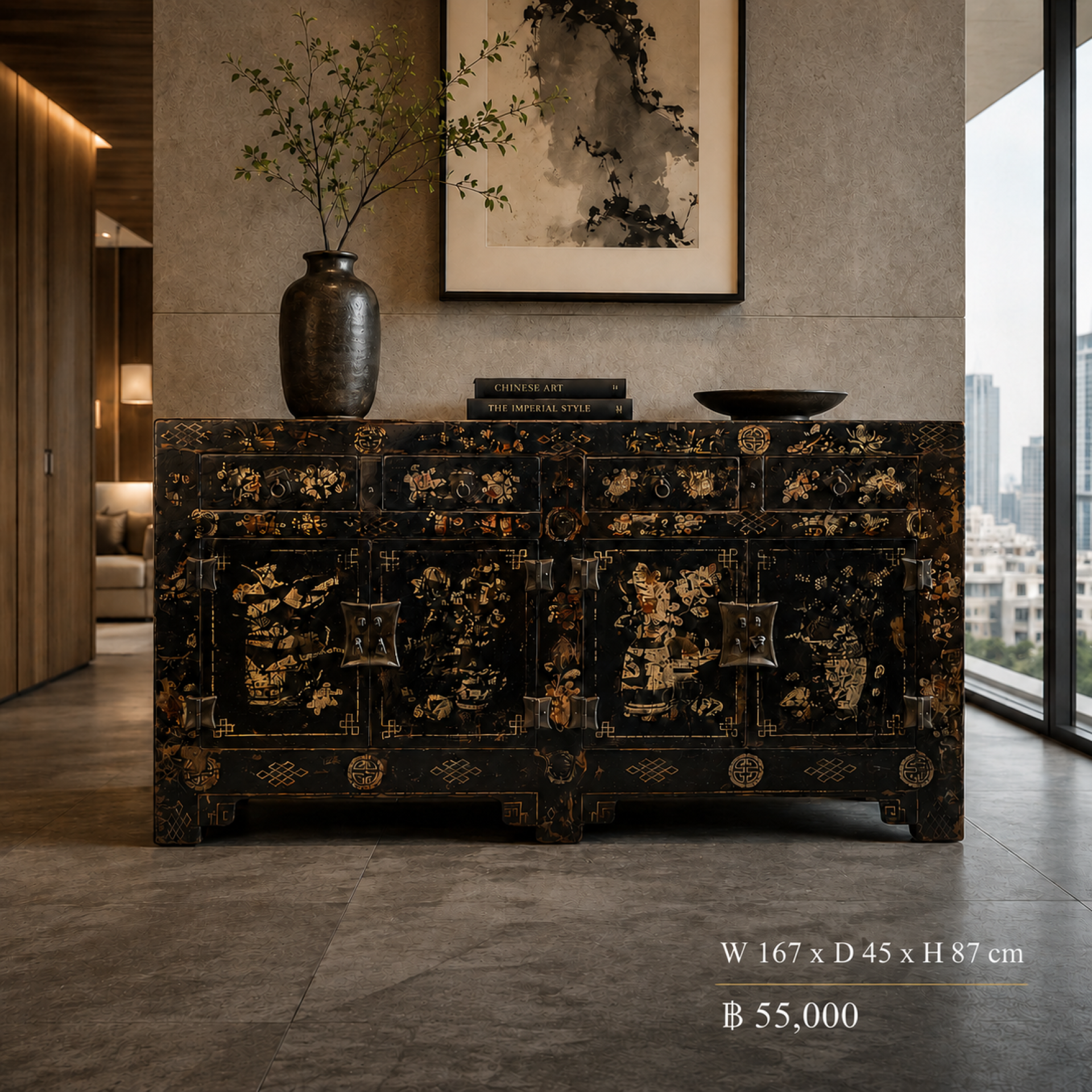
An antique Chinese cabinet can become a quiet focal point against restrained contemporary walls. A sideboard can introduce warmth into a formal dining area. A traditional screen can create visual separation without requiring a permanent architectural division.
Reproduction furniture offers another route. Its traditional design can provide structure and cultural character within a modern setting, particularly when paired with contemporary upholstery, stone, timber, lighting and architectural finishes.
For Bangkok homes, the same principle applies across different scales. A carefully proportioned piece can work within a condominium living room, a spacious penthouse, a private villa or a boutique hospitality setting.
For interior designers and architects, the distinction can also help clarify the brief. Is the project seeking an individual antique object with its own character, or a traditional Chinese design that can be selected primarily for its form and relationship to the architecture?
Look Beyond the Label
The word Antique or Reproduction is only the beginning of the conversation.
Consider the furniture itself: its proportion, construction, surface, colour, decorative details, hardware and relationship to the room. Then consider what information about the individual piece is actually known and verified.
This approach allows furniture to be selected with greater confidence and greater sensitivity to the interior.
At Chinese House, Antique and Reproduction represent two distinct ways of bringing Chinese furniture into contemporary living spaces. The choice ultimately depends on the character you want the room to express—and on how the individual piece works within the architecture around it.
For those considering Chinese antique furniture in Bangkok, seeing the furniture in person can reveal details that photographs cannot fully communicate: scale, surface, proportion and the way a piece occupies space.
Chinese House welcomes homeowners, designers, architects and collectors to explore its Antique and Reproduction furniture showroom in Bangkok.
FAQ Section
What is the difference between Antique and Reproduction furniture?
Antique furniture is classified as authentic antique furniture when the classification is appropriately supported. Reproduction furniture is newly made based on traditional or classical Chinese designs.
Is Reproduction furniture the same as Vintage furniture?
No. Reproduction and Vintage are different terms. Reproduction refers to newly made furniture based on traditional designs and should not automatically be described as Vintage or Antique.
How should I choose between Antique and Reproduction furniture?
Consider the character of the interior, the furniture's proportions and craftsmanship, your preferred aesthetic, and the verified information available about the individual piece.