Harmonize Your Home with Chinese Antique Furniture
Harmonize Your Home with Chinese Antique Furniture
Introduction
Chinese Antique Furniture brings a rare sense of balance, refinement, and character to contemporary interiors. While modern homes often emphasize clean lines and open spaces, antique furnishings introduce depth, craftsmanship, and a connection to centuries of artistic tradition.
Across Bangkok’s luxury condominiums, penthouses, pool villas, and boutique hospitality spaces, discerning homeowners and designers are increasingly incorporating Chinese Antique Furniture as focal points that enrich modern living environments. Whether through an elegant cabinet, a sculptural chair, or a hand-finished partition, these pieces create interiors that feel collected rather than simply decorated.
The enduring appeal of Chinese furniture lies not only in its beauty but also in the remarkable craftsmanship developed during the Ming and Qing Dynasties. Today, these historical influences continue to inspire sophisticated interiors around the world.
The Philosophy of Harmony in Classical Chinese Interiors
One of the defining characteristics of traditional Chinese interiors is harmony. Furniture was never viewed as an isolated object but as part of a carefully considered environment where architecture, proportion, and daily living existed in balance.
During the Ming Dynasty (1368–1644), furniture design evolved toward elegant simplicity. Craftsmen favored graceful proportions, restrained ornamentation, and refined silhouettes that complemented the surrounding space rather than overwhelming it. This philosophy remains surprisingly relevant in modern homes.
Unlike many heavily decorative historical furniture traditions, classical Chinese furniture often emphasizes visual lightness. Open frameworks, balanced proportions, and thoughtful spacing create a sense of calm that feels remarkably contemporary.
This approach makes Chinese Vintage Furniture particularly effective in luxury Bangkok residences. A carefully positioned antique cabinet can become a striking centerpiece while still preserving the openness and tranquility that modern homeowners desire.
Traditional Chinese courtyard homes further reinforced this concept. Furniture placement encouraged circulation, conversation, and visual balance, creating interiors that felt orderly yet welcoming. These principles continue to offer valuable inspiration for contemporary interior design.
Craftsmanship That Brings Lasting Beauty
The extraordinary longevity of Chinese Antique Furniture is rooted in exceptional craftsmanship.
One of the most celebrated techniques is mortise-and-tenon joinery, a sophisticated woodworking method that connects components without relying on nails or screws. This construction technique has been used in China for centuries and remains one of the hallmarks of traditional furniture making.
The precision required for mortise-and-tenon joinery allowed furniture to remain structurally sound through generations of use. Many antique pieces continue to function beautifully despite being over a century old.
Materials also played a significant role in the furniture's enduring appeal.
Huanghuali wood, highly prized during the Ming Dynasty, is renowned for its distinctive grain patterns and warm golden-brown tones. Today, it remains one of the most admired woods in Chinese furniture history.
Zitan wood, known for its dense structure and deep coloration, was historically associated with imperial and elite households. Its subtle elegance reflects the refined tastes of China's most prestigious interiors.
Elm wood became widely appreciated for its durability, practicality, and natural character. Many antique cabinets and household furnishings were crafted from elm, allowing beauty and functionality to coexist.
Unlike contemporary mass-produced furniture, antique pieces display evidence of human craftsmanship. Subtle variations in carving, joinery, and finishing create authenticity that cannot be replicated by automated manufacturing.
Bringing Chinese Antique Furniture into Contemporary Spaces
Many homeowners assume antique furniture belongs exclusively in traditional interiors. In reality, some of the most successful modern spaces achieve their character through thoughtful contrasts.
Luxury Condominiums
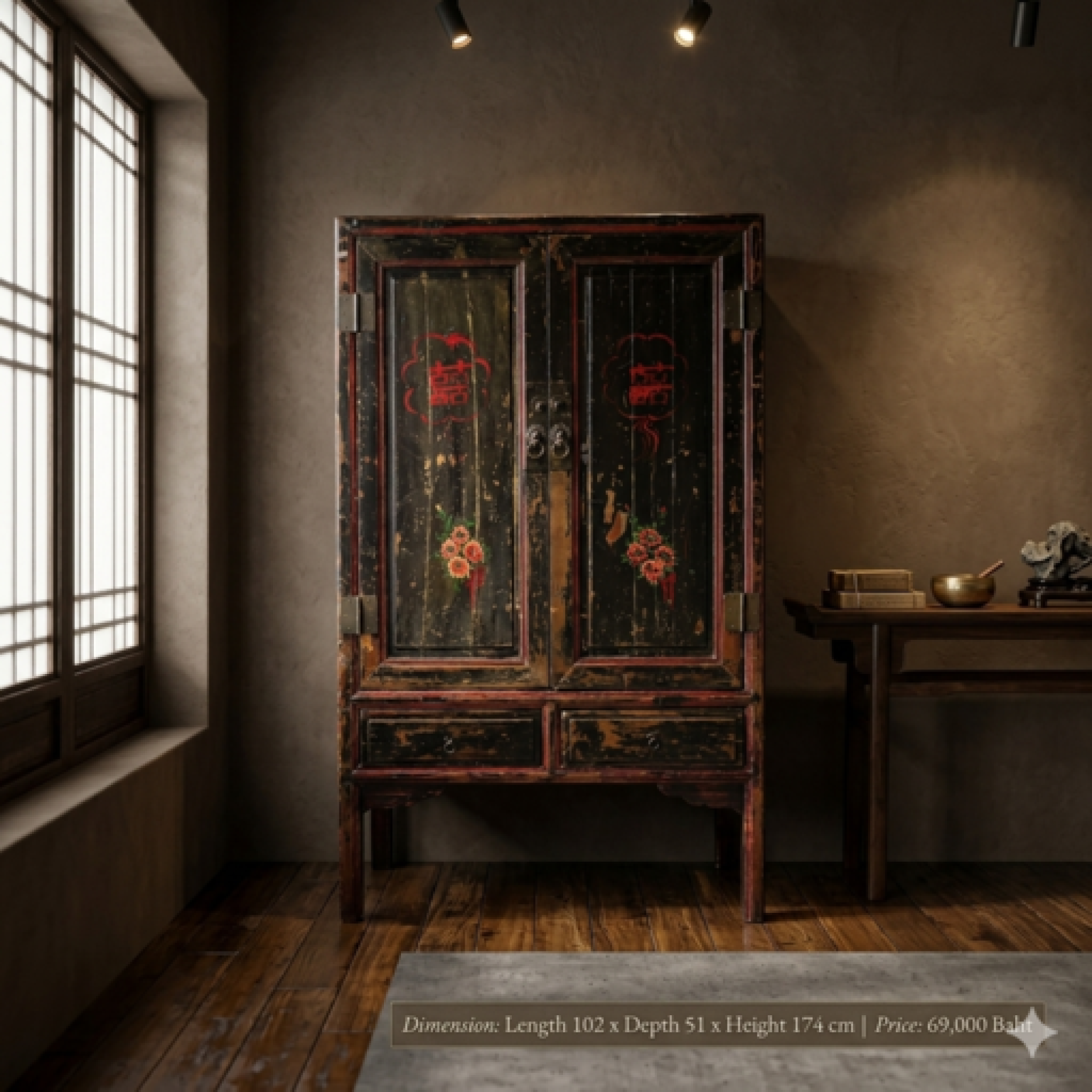
In a contemporary condominium, an Antique Cabinet can become an architectural statement. Positioned against minimalist walls and complemented by soft lighting, an antique piece introduces texture and visual depth without creating clutter.
Dark wood cabinetry pairs beautifully with marble surfaces, brushed metals, and contemporary artwork, creating an environment that feels both modern and timeless.
Pool Villas and Private Residences
Large villas provide opportunities to showcase statement furnishings on a grander scale.
A vintage sideboard in a dining area or a scholar cabinet in a foyer can anchor an entire room. Natural materials such as linen, stone, and handcrafted textiles enhance the warmth of aged wood while maintaining a sophisticated atmosphere.
The result is a home that feels layered, personal, and deeply connected to craftsmanship.
Boutique Hospitality Spaces
Many luxury hotels and boutique hospitality projects now incorporate Asian Furniture to create memorable guest experiences.
Antique partitions, decorative cabinets, and traditional Chinese doors introduce cultural richness without overwhelming contemporary architectural concepts. These furnishings help establish a sense of place that resonates with travelers seeking authenticity and refinement.
Selecting the Right Pieces for a Harmonious Interior
Achieving harmony is not about filling a room with antiques. Often, a single carefully selected piece creates greater impact than an extensive collection.
Antique Cabinets
Chinese cabinets remain among the most versatile furnishings available. Their architectural presence allows them to function equally well in living rooms, dining spaces, entry halls, and private studies.
A beautifully aged cabinet can provide both storage and visual interest while serving as the focal point of an interior composition.
Antique Partitions and Chinese Doors
Open-plan living has become increasingly popular in modern homes. Antique partitions offer an elegant way to define spaces without constructing permanent walls.
Similarly, traditional Chinese doors can be displayed as decorative architectural elements, introducing texture, craftsmanship, and historical character.
Antique Chairs and Accent Pieces
Smaller furnishings often create the most intimate moments within a home.
An antique chair positioned beside a bookshelf, a decorative side table in a reading corner, or a handcrafted stool placed near contemporary artwork can introduce subtle layers of personality and sophistication.
When styling with antiques, scale is essential. Each piece should have enough visual space to be appreciated. Restraint often creates the most luxurious result.
The Beauty of Patina and Traditional Finishes
One of the most captivating aspects of Chinese Antique Furniture is patina.
Over decades—and sometimes centuries—wood surfaces develop character through natural aging. Subtle variations in color, texture, and sheen tell a story that new furniture cannot replicate.
Traditional lacquer craftsmanship further enhanced many historical furnishings. Skilled artisans applied multiple layers of lacquer to create surfaces that were both protective and visually refined.
During the Qing Dynasty (1644–1912), lacquer techniques became increasingly sophisticated, producing furnishings that balanced durability with artistic expression.
Today, these aged finishes contribute to the unique atmosphere of antique interiors. Rather than appearing worn, they communicate authenticity, craftsmanship, and continuity.
In an age dominated by disposable products and rapidly changing trends, the quiet beauty of patina offers something increasingly rare: permanence.
A Harmonious Home Rooted in History
Chinese Antique Furniture offers far more than decoration. It introduces craftsmanship, history, and artistic integrity into contemporary living environments.
From the elegant proportions established during the Ming Dynasty to the masterful mortise-and-tenon joinery that continues to impress furniture specialists today, these furnishings embody centuries of design wisdom.
Whether placed within a luxury Bangkok condominium, a contemporary pool villa, or a boutique hospitality project, antique pieces bring warmth, depth, and individuality that modern furnishings often struggle to achieve.
For homeowners seeking interiors that feel sophisticated, personal, and enduring, Chinese Antique Furniture remains one of the most compelling design choices available.
Established in 1990, Chinese House has become a trusted destination for Chinese Antique Furniture in Bangkok, offering carefully curated antique cabinets, partitions, doors, chairs, decorative furnishings, and professional restoration expertise. Through a commitment to traditional craftsmanship and historical appreciation, Chinese House continues to help homeowners create interiors that harmonize heritage with modern living.
Frequently Asked Questions
Why is Chinese Antique Furniture popular in modern interiors?
Chinese Antique Furniture combines clean architectural forms, exceptional craftsmanship, and historical character. These qualities allow antique pieces to integrate naturally into contemporary homes while adding warmth and individuality.
What makes Ming Dynasty furniture significant?
Ming Dynasty furniture is celebrated for its elegant proportions, restrained ornamentation, and refined craftsmanship. Many modern designers consider it among the most sophisticated furniture traditions in world history.
How can I decorate a modern condo with Chinese Antique Furniture?
Start with one statement piece such as an Antique Cabinet or Antique Partition. Pair it with neutral finishes, contemporary lighting, and uncluttered layouts to create balance between historical character and modern design.