Chinese Antique Doors: Architectural Beauty and Interior Design
32 Views
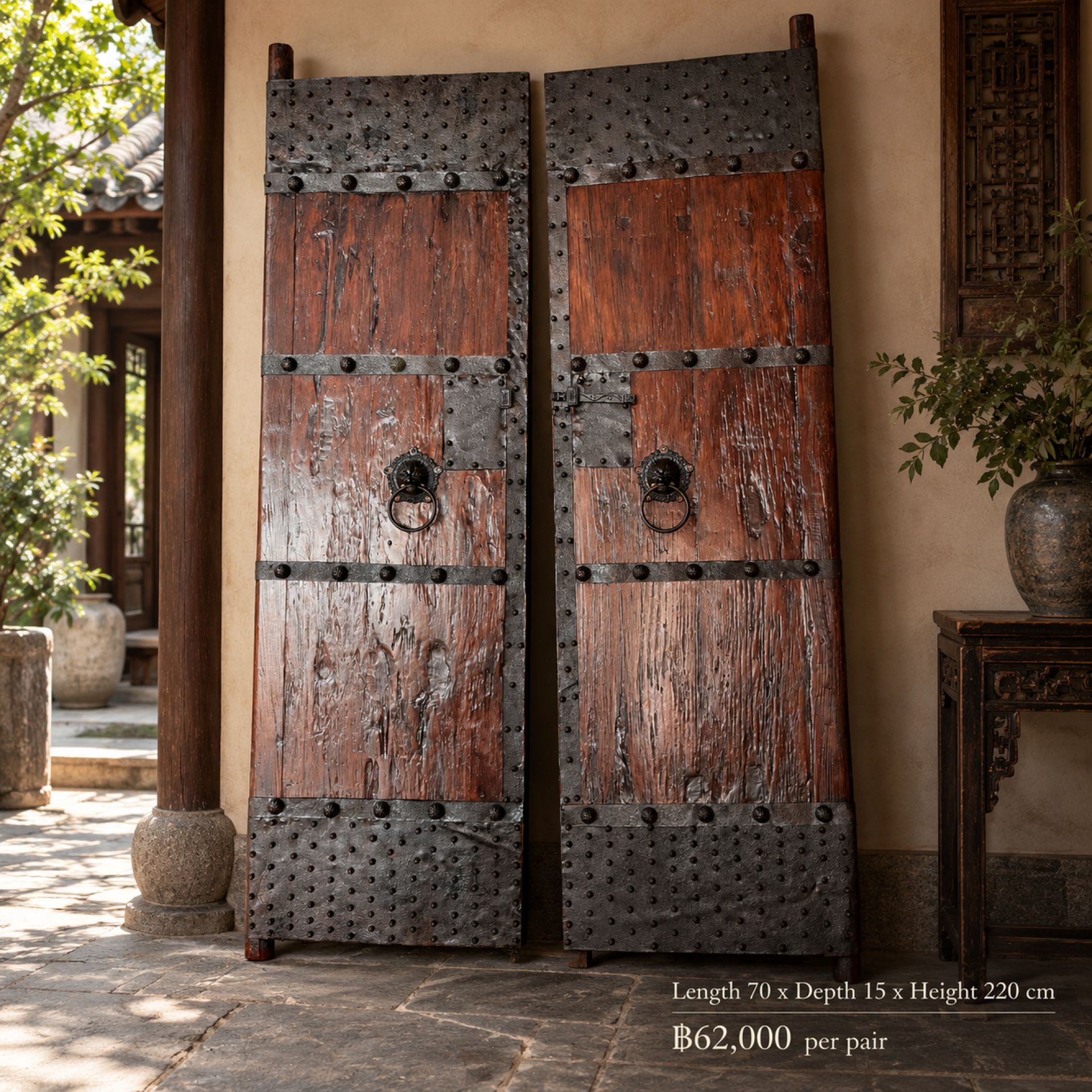
1. Beyond the Doorway: Understanding the Architectural Character of Chinese Antique Doors
A door is often treated as a practical boundary: something to open, close and pass through. In traditional Chinese architecture, however, gates and doors could carry a much broader architectural and social significance. They marked transitions between public and private spaces, separated different areas of a residence and helped establish the character of an entrance.
Historian Liu Tseng-kuei, in his study Gates and Ancient Chinese Society, examines how gates in early Chinese society represented boundaries between families, communities and the state. They were connected with distinctions between public and private life, as well as social relationships and political authority. This perspective offers a useful starting point for appreciating why a traditional Chinese entrance could receive such careful architectural attention. Source: Academia Sinica
The physical design of a door contributes to this presence. Its height, width, panel arrangement, frame and hardware establish a visual relationship with the surrounding architecture. A substantial wooden door may communicate solidity and enclosure, while a lattice-panel design can create a more open transition between rooms or between an interior and a garden.
For contemporary interiors, these qualities make Chinese Antique Doors particularly interesting. Their character is architectural rather than merely decorative. Even when displayed as a standalone feature, a well-proportioned door can suggest the presence of a threshold and give a room a stronger sense of structure.
2. The Language of Traditional Chinese Wooden Door Design
Proportion, Panels and Structural Composition
One of the most compelling aspects of traditional Chinese wooden door design is its attention to composition. The overall frame establishes the boundary, while the panels create rhythm within it. Depending on the design, the surface may be divided into a series of solid sections, framed panels or openwork lattice patterns.
These arrangements influence how a door is perceived. Broad, solid panels tend to create a more substantial visual impression. Smaller divisions introduce rhythm and detail, while open latticework allows light and views to pass through. The relationship between solid and open areas can give a door a character that is formal, restrained or intricately decorative.
Proportion is equally important. A tall, narrow door creates a different impression from a wide, double-leaf entrance. The surrounding frame, wall and ceiling height all influence whether the object feels balanced within a space.
When appreciating an antique door, it is worth looking at the whole composition before focusing on individual ornaments. The relationship between its parts is often what gives the design its coherence.
Decorative Details and Surface Expression
Traditional doors can include a variety of visible details: carved panels, lattice patterns, moulded frames, metal knockers, handles and other fittings. These elements should be understood in relation to the door's overall design rather than treated as isolated decoration.
Hardware, for example, can change the visual character of a wooden surface. A simple metal fitting may provide a restrained contrast, while a more elaborate knocker or plate can become a focal detail. The finish of the timber also matters. A surface with a subdued patina can create a different atmosphere from one with a more pronounced decorative finish.
The meaning of individual motifs should be considered carefully. Some patterns and fittings have documented cultural associations, but these meanings are not universal across every region, period or object. It is better to appreciate an observable design feature than to assign a symbolic interpretation without reliable evidence.
Materials and Traditional Craftsmanship
Woodworking is central to the character of traditional Chinese architecture. The Metropolitan Museum of Art's publication on the Astor Court describes mortise-and-tenon joinery as an important technique in Chinese wood construction. In this method, a projecting tenon fits into a corresponding mortise, allowing wooden components to connect through carefully shaped joints. The publication also describes the use of wooden pins and the limited use of glue and nails in the architectural construction discussed. Source: The Metropolitan Museum of Art
This provides useful context for understanding traditional timber craftsmanship, although it should not be assumed that every antique door uses the same construction method. Individual objects vary according to their region, purpose, period and subsequent history.
The natural character of wood is another part of the appeal. Grain, tone, surface wear and finish contribute to the visual identity of an antique door. These characteristics are best appreciated individually, without assuming a particular wood species or age from appearance alone.
3. Chinese Doors in the Context of Traditional Architecture
The Relationship Between Doors and Architectural Space
Traditional Chinese architecture often uses a sequence of spaces rather than presenting every part of a residence immediately upon arrival. Courtyard houses provide a particularly clear example. Their entrances, walls, gates and internal buildings work together to shape movement through the property.
The traditional Beijing siheyuan, or courtyard residence, illustrates this relationship. A central courtyard is surrounded by buildings, with gates and walls defining the transition from the street into the private residential environment. A visitor may pass through an entrance and encounter a screen wall before reaching the courtyard itself. The entrance therefore participates in the composition of the whole residence rather than functioning as an isolated opening. Source: Beijing Municipal Government publication, Beijing 2024
This spatial sequence is particularly relevant when considering antique doors today. Their character is closely connected to the idea of transition: between one room and another, between an enclosed area and an open one, or between the private interior and the outside world.
Privacy, Separation and Spatial Rhythm
Doors also help establish degrees of privacy. A solid door creates a clear visual and physical boundary. A lattice door can introduce separation while allowing light, air or partial views to pass through, depending on its construction and placement.
The Metropolitan Museum's study of the Garden of the Master of the Fishing Nets in Suzhou describes tall lattice doors that can be opened to connect the interior room with the garden. This illustrates how a door can participate in the relationship between indoor and outdoor space, rather than simply divide two enclosed rooms. Source: The Metropolitan Museum of Art
For interior designers, this is an important distinction. The visual appeal of a traditional door is not limited to its surface. Its form can suggest openness, enclosure, movement and the possibility of connection between spaces.
Historical References and Architectural Continuity
Chinese architectural traditions developed across different regions and historical periods. It is therefore important not to treat all traditional Chinese doors as belonging to one uniform style.
Beijing courtyard architecture, for example, offers a documented illustration of how entrance design could reflect social distinctions. A 2024 publication by the Beijing Municipal Government describes Qing Dynasty regulations under which the main entrance of a prince's residence could span five bays, while the residence of a Prince of Prefecture could have three. Ordinary courtyard houses generally had a main gate one bay wide. These regulations relate specifically to historical Beijing residential architecture; they should not be applied to Chinese doors in general. Source: Beijing Municipal Government publication
The same publication describes the main entrance as an important expression of a household's identity, with details such as thresholds, knockers, gate columns and piers contributing to its architectural presence.
Such historical examples help explain why traditional Chinese doors deserve consideration as architectural objects. Their proportions and details were often connected to the building and its social context, rather than chosen as decoration alone.
4. Bringing Chinese Antique Doors into Contemporary Interiors
From Architectural Element to Interior Focal Point
In a contemporary home, an antique door does not necessarily need to function as a conventional entrance. It can be displayed as a distinctive architectural feature, allowing its proportions, timber surface and panel composition to become part of the interior.
A single door can bring visual weight to an otherwise restrained wall. Its surface introduces texture and a sense of history, while its frame establishes a strong vertical or horizontal composition. When positioned thoughtfully, it can become a focal point without overwhelming the room.
The key is to give the piece enough space. An elaborate antique door placed among too many competing decorative objects may lose its impact. A simpler setting often allows its craftsmanship and surface character to become more apparent.
Integrating Chinese Doors into Modern Luxury Homes
Chinese Antique Doors can be considered in a variety of contemporary residential settings.
In a Bangkok luxury condominium or penthouse, a door displayed against a calm architectural wall can introduce warmth and character into an otherwise modern interior. Its timber surface can create contrast with stone flooring, glass, plaster and contemporary furnishings.
In a pool villa or larger private residence, an antique door may be incorporated into an entrance hall, a private study or a transitional area between living spaces. Larger rooms can provide the visual breathing space needed for a substantial architectural object.
Boutique hospitality interiors can also benefit from this approach. A carefully selected door may establish a distinctive sense of arrival or contribute to the identity of a private lounge, suite or reception area.
In each setting, the intention should be integration rather than imitation. A contemporary interior does not need to reproduce a traditional Chinese house to accommodate a Chinese antique. The contrast between old and new can be the source of its appeal.
Creating Contrast Through Materials and Proportion
The combination of materials is central to successful placement. Dark or richly toned timber can sit comfortably against pale stone, warm plaster or understated wall finishes. Glass and metal may introduce a more contemporary contrast, while natural fabrics and carefully selected furniture can soften the overall composition.
Lighting deserves equal attention. Soft directional lighting can reveal the depth of a carved panel, the texture of the wood and the detail of its fittings. Strong, direct lighting may flatten these qualities or create unwanted glare on the surface.
Scale should guide the arrangement. A large door needs a wall and surrounding furniture that can accommodate its visual presence. Smaller pieces may work better as part of a layered composition, provided that the surrounding elements do not compete with the door's character.
5. Styling Chinese Antique Doors with Elegance and Restraint
Statement Placement and Architectural Balance
The most effective placement often begins with identifying the door's natural role in the room. Is it intended to define an entrance, create a visual pause, or act as an artwork-like focal point?
An entrance hall can provide an appropriate setting for a substantial door, particularly where ceiling height and wall proportions allow it to be appreciated from a distance. In a living room, it may work as a feature against a relatively uncluttered wall. In a study or reading room, its traditional character can contribute to a quieter, more contemplative atmosphere.
The relationship between the door and surrounding architecture should remain balanced. Avoid placing a visually elaborate piece in a position where it competes with prominent artwork, oversized furniture or complex wall treatments.
Creating a Cohesive Interior
Chinese Antique Doors can be paired with selected Chinese furniture, including cabinets, consoles, tables and screens. The aim is not to assemble a room filled with objects of the same style, but to create a coherent relationship between their materials, proportions and visual character.
For example, a door with a strong timber presence may be complemented by a restrained console or a carefully chosen antique cabinet. A more decorative door may require simpler furnishings nearby to preserve a sense of balance.
Colour also plays an important role. Neutral walls, natural stone and subdued fabrics can provide a calm setting for an antique wooden surface. A limited palette allows the door to remain visually distinctive while helping the overall interior feel considered.
Adapting Antique Character to Contemporary Living
A successful contemporary interior often benefits from contrast. Traditional craftsmanship can bring depth to modern architectural lines, while contemporary materials can give an antique object a fresh context.
This approach works particularly well when the door is treated as an individual design element. It can sit comfortably alongside modern lighting, contemporary seating and minimal architectural finishes without requiring other objects to follow the same historical style.
For homeowners and designers, the objective is to preserve the individuality of the antique while allowing it to participate naturally in everyday life.
6. Preserving Architectural Character and Appreciating Chinese Antique Doors
Understanding the Individual Character of an Antique Door
Every antique door should be considered on its own characteristics. Proportions, panel construction, joinery, surface finish, hardware and visible wear all contribute to its appearance.
These features can help an observer understand the design and condition of a piece, but they do not independently establish its exact age, origin or provenance. Such claims require appropriate supporting evidence.
For interior planning, practical considerations matter as well. A door intended for decorative display may have different requirements from one intended to operate as a functional architectural element. Its dimensions, weight, condition and construction should be considered in relation to the intended installation.
Display, Placement and Environmental Considerations
Thailand's warm and humid climate makes environmental planning particularly important for antique wooden objects. Changes in temperature and humidity can affect timber, potentially contributing to movement, surface changes or stress in joints over time.
A suitable location should avoid prolonged direct sunlight, excessive moisture and poorly ventilated areas. Air-conditioning and dehumidification can also influence indoor conditions, so abrupt environmental changes should be avoided where possible.
Before installing an antique door as a working entrance or partition, its structural condition and suitability should be assessed by an experienced professional. Decorative display and functional architectural installation are not interchangeable uses.
Careful placement protects the object while allowing its character to be appreciated.
A Distinctive Architectural Presence in the Home
Chinese Antique Doors offer an opportunity to introduce architectural history, craftsmanship and material depth into contemporary interiors. Their appeal comes from the relationship between structure and detail: the rhythm of the panels, the character of the timber, the proportion of the frame and the way the door defines a transition between spaces.
For a modern residence, the most compelling approach is often a restrained one. Rather than recreating a historical setting, allow the antique door to stand confidently within contemporary architecture. Give it space, use complementary materials and let its individual character shape the atmosphere of the room.
At Chinese House, Chinese Antique Doors can be explored as distinctive architectural pieces for considered residential and interior-design projects. We invite homeowners, collectors and design professionals to discover the collection in Bangkok and consider how the character of a traditional door might enrich a contemporary space.
FAQ Section
1. What makes Chinese antique doors distinctive in traditional architecture?
Chinese antique doors are distinguished by their proportions, wooden panel arrangements, frames, latticework and decorative hardware. In traditional architecture, doors could also define transitions between public and private spaces and contribute to the identity of a residence. Their design varies across regions and historical periods.
2. How can Chinese antique doors be incorporated into contemporary interiors?
They can be used as architectural focal points in entrance halls, living rooms, studies and transitional spaces. Pairing an antique door with restrained finishes such as stone, plaster, glass and contemporary furniture helps create a balanced relationship between traditional character and modern design.
3. Can Chinese antique doors be used as decorative features in modern luxury homes?
Yes. An antique door can be displayed as a standalone architectural feature, even when it is not used as a functional entrance. Its dimensions, weight, condition and installation requirements should be considered carefully, particularly when planning a wall-mounted or freestanding display.
Related Content
Chinese Antique Furniture possesses a rare ability to transform a home beyond its physical function. More than decorative objects, these pieces embody centuries of craftsmanship, cultural philosophy, and refined living. In today's luxury residences—from Bangkok penthouses and riverside condominiums to expansive pool villas—Chinese antique furniture introduces a sense of permanence and authenticity that contemporary furnishings often struggle to achieve.
Chinese antique furniture is best cared for with a light touch. Cleaning antique furniture is rarely about making an old piece look new; it is about removing ordinary dust, protecting the existing surface and knowing when further intervention is unnecessary.
A well-designed home workspace does not have to look like an office. Chinese antique furniture can give a study a sense of character, proportion and quiet distinction, particularly when set against contemporary architecture and restrained materials.
