
Chinese Antique Lattice Screen [ 8 panels ]
Quantity
Short Description
Some furnishings are chosen to complement a room. Others help establish the room's visual identity. This seven-panel Chinese antique screen belongs to the latter category: a substantial decorative element whose repeated vertical structure can influence how an interior feels and functions.
Dimension: Width 56 x Depth 5 x Height 260 cm.
Price: 216000 Baht
When Traditional Timber Becomes Part of the Architecture
Some furnishings are chosen to complement a room. Others help establish the room's visual identity. This seven-panel Chinese antique screen belongs to the latter category: a substantial decorative element whose repeated vertical structure can influence how an interior feels and functions.
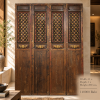
The screen combines warm golden-brown timber, closely spaced vertical latticework, carved ornamental bands and broad solid lower panels. Each section follows a similar arrangement, creating continuity across the composition. Yet the visible grain, knots, tonal variations and worn areas give the individual panels their own character.
The result is a balance between repetition and individuality. The overall structure feels ordered, while the natural variation of the timber prevents the surface from appearing uniform. This relationship is central to the screen's appeal and makes it particularly interesting for interiors that value natural materials, architectural detail and carefully selected furnishings.
The Appeal of Repetition and Proportion
The first impression comes from the rhythm of the seven panels. Their repeated vertical lines create a strong visual structure, while the framed upper sections and carved bands introduce changes in scale and detail.
The latticework is especially important. Its closely spaced vertical bars are interrupted by horizontal crosspieces, creating a geometric pattern that offers more visual interest than a plain wooden surface. Light passing through the openings can produce subtle changes in shadow, depending on the screen's position and the direction of illumination.
Above the latticework, small inset panels provide a quieter visual element. Beneath it, carved ornamental bands introduce flowing decorative motifs. The broad lower sections then return the composition to a simpler surface, balancing the more detailed areas above.
This progression from plain panel to lattice and ornament gives the screen an internal rhythm. It is decorative, but its appeal does not depend on every part competing for attention. The repeated structure allows the screen to read as one coherent architectural element.
A Natural Contrast for Contemporary Architecture
The warm golden-brown timber offers an effective counterpoint to the cooler, more restrained materials often used in contemporary interiors. Against pale limestone, beige plaster or warm ivory walls, the wood can become a focal point without requiring a heavily decorated setting.
In a contemporary luxury villa, this contrast can make a room feel more layered. Modern architecture often relies on clean lines, open space and a limited material palette. The screen introduces another visual language through its traditional latticework and carved details, giving the interior depth without changing its overall architectural direction.
The most successful arrangement is likely to be a restrained one. Simple seating, natural fabrics and a limited selection of decorative objects allow the screen's timber and repeated geometry to remain prominent. Too many competing patterns could reduce the clarity of its design.
The objective is not to make the room entirely traditional. Instead, the screen can create a dialogue between Chinese antique furniture and contemporary architecture, allowing both to retain their individual character.
Using the Screen to Define Space
A screen can offer an alternative to a solid partition when the intention is to distinguish areas while preserving a sense of visual connection.
Within an open-plan residence, it may help establish a boundary between a living area and an adjoining space. It can also provide a decorative backdrop for a seating arrangement or contribute a distinctive architectural feature to a larger room.
Its repeated panels create a clear visual boundary, while the lattice openings introduce detail rather than an uninterrupted solid surface. The precise effect will depend on the layout, viewing angle, lighting and placement.
For interior designers, the important question is how the screen relates to the surrounding architecture. It should be positioned with consideration for circulation, furniture arrangement and the visual balance of the room. If it is intended to function as a practical partition, its stability, mounting requirements and suitability for the proposed installation should be assessed separately.
Used thoughtfully, the screen can help organize space while making that organization part of the interior's design.
Appreciating the Character of the Timber
The visible wood grain, knots and variations in colour give the screen a material presence that differs from a uniformly finished contemporary surface. The golden-brown tones vary across the panels, with darker areas around some frames and visible signs of wear.
These details are important because they create contrast with the regular lattice pattern. The structure is repeated, but the timber is not visually identical from one area to another. This gives the composition a more individual character.
For interiors influenced by natural materials or Wabi-Sabi principles, the screen can sit comfortably alongside textured plaster, stone, linen and understated ceramics. Its surface adds complexity without requiring additional ornament.
The visible condition should be appreciated on its own terms. Surface wear and tonal variation can be described as characteristics of the piece, but they do not independently establish a specific historical date, provenance or authentication. Its appeal can be understood through the design and material details that are actually present.
Styling a Chinese Antique Screen in Bangkok
In a Bangkok residence, the screen can provide a warm visual counterpoint to contemporary stone flooring, neutral walls and modern furnishings. Natural daylight from the side can reveal the lattice structure and the depth of the carved bands, while softer evening lighting can emphasize the warmer tones of the timber.
The surrounding palette should support rather than compete with the screen. Warm ivory, beige and pale stone are useful starting points. Upholstery in natural fabrics and furniture with restrained silhouettes can maintain a calm atmosphere, while darker accents may connect the screen with other elements in the room.
The same approach can work in a villa or a carefully curated hospitality interior. In each setting, the screen's role should be considered in relation to the space rather than as an isolated decorative object.
A Distinctive Choice for a Considered Interior
The value of this Chinese antique screen within an interior comes from the combination of its repeated structure, natural timber character and carved details. It offers a way to define space, introduce traditional Chinese design and create contrast within a contemporary architectural setting.
For homeowners, collectors and interior designers, it is an opportunity to choose a furnishing that contributes to the room's composition rather than simply filling an available area. The seven panels establish rhythm; the latticework adds intricacy; and the variations in the timber give the overall design individuality.
Chinese House presents Chinese antique furniture for interiors where material character and thoughtful selection matter. Explore the Chinese Antique & Reproduction Screens category to consider how screens can contribute to room planning and how traditional forms can work alongside contemporary architecture.


 MakeWebEasy