
Chinese Antique Carved Lattice Screen ( 4 panels )
Quantity
Short Description
The most memorable interiors are not always the ones with the most decoration. Often, their character comes from the contrast between a few carefully chosen elements. This four-panel Chinese antique screen offers that kind of contrast: traditional latticework and carved woodwork set against the clean lines and restrained materials of contemporary architecture.
Dimension: Width 52 x Depth 5 x Height 282 cm.
Price: 168000 Baht
Traditional Detail, Contemporary Architecture
The most memorable interiors are not always the ones with the most decoration. Often, their character comes from the contrast between a few carefully chosen elements. This four-panel Chinese antique screen offers that kind of contrast: traditional latticework and carved woodwork set against the clean lines and restrained materials of contemporary architecture.
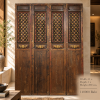
The reddish-brown timber establishes a warm visual presence. Closely spaced vertical bars create a repeating geometric rhythm, while the raised panels and carved ornamental bands introduce changes in depth and detail. Together, these elements form a composition that feels structured without appearing uniform.
Visible variations in the finish and areas of surface wear add further character. Rather than presenting a completely even surface, the wood shows differences in tone and texture that can be appreciated alongside the regularity of the latticework.
The result is a screen that can contribute to a room as both a decorative object and an architectural element.
A Composition of Lines, Panels and Carved Details
The upper lattice sections are the most prominent feature of the design. Their closely spaced vertical bars are interrupted by horizontal crosspieces, creating a pattern that changes in appearance with the viewing angle and surrounding light.
The frames provide a strong outline for each lattice section. Above them, recessed rectangular panels create a quieter visual pause. Beneath the latticework, carved ornamental bands introduce flowing motifs that contrast with the more disciplined vertical lines. Additional raised and recessed panels continue this layered composition through the lower sections.
This variation matters because the design is not dependent on a single decorative feature. The latticework establishes rhythm, the carving adds intricacy, and the larger wooden panels provide visual balance.
When the four panels are considered together, their repeated structure creates continuity. At the same time, the surface variations prevent the composition from feeling mechanically identical throughout.
Defining Space Without Building Another Wall
A screen can help organize an interior while maintaining a different relationship with the surrounding space than a solid partition. It establishes a visual boundary, but its lattice openings allow the composition to remain more visually detailed and open than an uninterrupted wall.
In a contemporary villa, the screen can distinguish a living area from an adjoining dining space, create a backdrop behind seating or give a larger room a more deliberate arrangement. It can also be considered for an entrance or reception area where a decorative architectural element would help establish the atmosphere.
Its effectiveness depends on placement. Against a relatively quiet wall, the screen can become a focal point. Between two functional areas, it can suggest separation while preserving some visual connection.
For practical use as a partition, the installation should be assessed independently. Stability, mounting requirements, circulation and the suitability of the arrangement should all be considered before installation.
Styling the Screen in a Contemporary Luxury Villa
The reddish-brown timber works particularly well against a restrained palette. Warm ivory, beige plaster and pale stone allow the darker wood and intricate latticework to remain visually prominent.
Furniture with simple silhouettes can reinforce this balance. Neutral upholstery, natural fabrics and a limited selection of decorative objects provide a calm setting without competing with the screen's carved details. Where additional contrast is desired, darker accents can connect the screen with other elements in the room.
Lighting also changes how the piece is perceived. Soft natural light from the side can reveal the depth of the frames and carved bands, while gentle shadows across the latticework emphasize its structure. A considered lighting arrangement helps the screen become part of the room's architecture rather than an isolated display.
For a residence in Bangkok, this approach offers a way to incorporate Chinese antique furniture into a contemporary interior without recreating an entirely traditional setting. The objective is to allow the screen and modern architecture to complement one another through contrast.
Appreciating the Character of the Wood
The screen's appeal lies partly in the relationship between its formal structure and its visible surface character. The latticework follows a repeated pattern, while the timber shows variations in colour and signs of wear.
This combination gives the piece a different visual quality from a uniformly finished contemporary furnishing. It can suit interiors that value material presence, tactile surfaces and objects with distinctive decorative details.
The visible finish should be understood on its own terms. Surface wear and colour variation are observable characteristics, but they do not independently establish a specific historical date, origin or provenance. The design can be appreciated through its form, woodwork and overall composition without relying on unsupported historical claims.
A Considered Choice for the Interior
For homeowners, collectors and interior designers, a screen can offer more than a decorative backdrop. It can influence how a room is organized, introduce a distinctive pattern and connect traditional furniture with contemporary materials.
This four-panel piece brings together vertical latticework, carved ornamental bands, raised panels and reddish-brown timber in a design with a clear architectural presence. Its value within an interior comes from these visible qualities and the role it can play in shaping the surrounding space.
Chinese House presents Chinese antique furniture for interiors where thoughtful selection and material character matter. Explore the Chinese Antique & Reproduction Screens category to consider how screens can help define rooms and connect traditional Chinese design with contemporary living.


 MakeWebEasy