
Chinese Geometric Lattice Screen
Quantity
Short Description
Rather than requiring an entire room to follow one historical or decorative style, the screen offers a way to introduce Chinese design language into a broader interior scheme.
Dimension: Width 55.5 x Depth 5.5 x Height 251 cm.
Price: 60000 Baht
A Study in Pattern, Wood and Architectural Presence
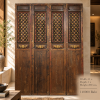
Some decorative elements attract attention through colour or ornament. Others hold the eye through the relationship between their details and the space around them. The Chinese Geometric Lattice Screen belongs to the latter. Its character comes from the interplay of intricate openwork, carved wooden panels and the warm, varied tones of its timber surface.
The screen is a Reproduction piece, drawing on traditional Chinese decorative design. Its visual language is defined by repetition and structure rather than excessive ornament. The geometric lattice forms an intricate network across the central panels, while the solid sections above and below introduce a more substantial visual frame. Together, these elements create a balanced composition that feels detailed without losing its overall order.
The Appeal of the Lattice
The central latticework is the defining feature. Interlocking angular lines create a repeating pattern that changes subtly as the eye moves across the surface. The dark recesses between the wooden elements give the design depth, while the raised structure catches the light along its edges.
This relationship between open and solid surfaces is important to the screen's interior application. A fully solid panel can read as a wall-like object. Here, the patterned openings create a more layered impression. The screen establishes a visual boundary while allowing the surrounding interior to retain a sense of openness.
The upper and lower panels provide a counterpoint to the intricate centre. Their carved decorative motifs introduce softer, flowing forms within the more regular geometric framework. This contrast gives the piece its visual rhythm: intricate but structured, decorative but composed.
The warm brown wood tones further support this balance. Differences in light and shade across the frame and carved surfaces make the details legible without relying on bright colour or elaborate surroundings.
Using the Screen in a Contemporary Interior
In an Asian-inspired villa, the screen can become a defining element within an entrance, living area or transitional space. Against stone flooring and softly textured walls, its patterned surface introduces detail that feels integrated with the architecture rather than added as an afterthought.
In a contemporary home, the most effective approach is often restraint. Allow the screen to occupy a considered position, then support it with a limited palette of natural materials, neutral textiles and simple furniture silhouettes. Dark timber can echo its deeper tones, while pale stone and warm plaster create contrast.
The screen may also help distinguish functional zones within a larger room. Depending on the layout and how it is installed, it can mark the transition between an entrance and a living area or establish a decorative backdrop within a carefully composed interior. Its openwork makes this approach visually lighter than relying entirely on a solid partition.
For interior designers, the key consideration is the relationship between pattern and surrounding detail. Where the room already contains strong veining, elaborate wall finishes or heavily patterned textiles, a simpler setting can give the latticework greater clarity. In a quieter interior, the screen can provide the detail that brings the composition together.
Choosing It for the Right Space
The screen is particularly suited to interiors where a decorative element needs to do more than occupy a wall. Its repeating geometry can introduce order, while the carved panels provide a more expressive counterpoint. This makes it relevant to both traditional Chinese-inspired rooms and contemporary spaces that benefit from a deliberate contrast in design language.
Before positioning the piece, consider the viewing distance, surrounding furniture and available circulation space. The lattice is intricate, so a position with a clear view of the central panels will allow the pattern to be appreciated. Adequate clearance around the screen also helps prevent nearby furniture and decorative objects from competing with its detail.
The listed dimensions and price are provided for practical planning and purchasing decisions. They should be considered alongside the room layout and intended application when determining whether the piece is suitable for a particular interior.
A Considered Expression of Chinese Decorative Design
The appeal of the Chinese Geometric Lattice Screen lies in the relationship between its individual details and its overall form. The geometric openwork provides repetition, the carved panels introduce decorative contrast, and the warm wood tones connect the composition to natural materials commonly used in interior design.
Rather than requiring an entire room to follow one historical or decorative style, the screen offers a way to introduce Chinese design language into a broader interior scheme. It can sit alongside contemporary architecture, natural finishes and restrained furnishings, allowing contrast to become part of the room's identity.
For homeowners and designers seeking a distinctive decorative focal point, the result is an element that contributes pattern, depth and spatial definition while remaining visually connected to the surrounding architecture.
Explore Chinese House's collection of Chinese Reproduction Screens and other Chinese furniture to consider how traditional design forms can work within a contemporary home.


 MakeWebEasy