How to Clean and Care for Chinese Antique Furniture
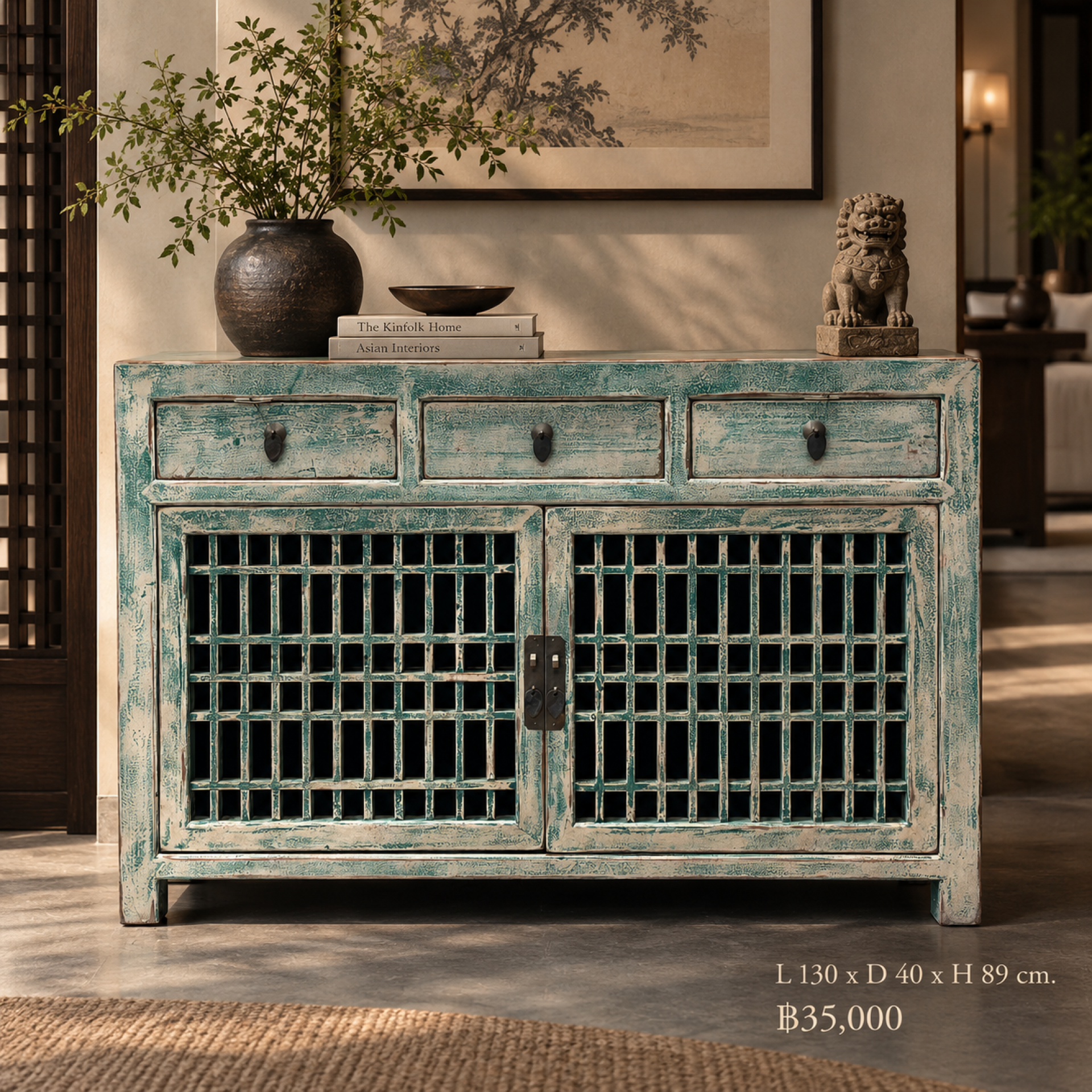
A cabinet, sideboard, table or chair may carry a surface shaped by years of use, handling and exposure. Its character often lies in the subtle relationship between wood, finish, colour, texture and wear. Good care preserves that character rather than trying to erase it.
For this reason, everyday maintenance should be simple: clean gently, inspect carefully and stop when the surface is clean.
Start with Gentle Dusting
The safest place to begin when caring for Chinese antique furniture is usually dry, gentle dusting.
A soft, clean cloth can be used to remove ordinary surface dust. Work lightly rather than rubbing with pressure, particularly around areas where the finish appears delicate or worn.
For carved details, recessed panels and other difficult-to-reach areas, a soft brush can help loosen dust without requiring vigorous rubbing. This is especially useful on furniture with decorative carving, where forcing a cloth into every recess may create unnecessary friction.
Regular dusting is preferable to allowing a thick layer of dust to accumulate. The objective is simply to keep the surface clean without turning routine maintenance into a treatment.
A useful principle is:
Clean gently → inspect → stop.
There is rarely a benefit in continuing to polish or work a surface simply because you have already started cleaning it.
Before Using Any Liquid
Water should not automatically be considered safe for every piece of Chinese antique furniture.
Antique furniture can have different surfaces, finishes, painted decoration and hardware treatments. Without knowing exactly how a particular surface was made or subsequently treated, applying moisture introduces an element of uncertainty.
Avoid soaking timber or allowing moisture to remain on the surface. A damp or wet cloth should never become an excuse for prolonged rubbing or repeated passes over the same area.
If a cleaning approach involving moisture is considered appropriate, it should be approached cautiously and, where suitable, tested first in an inconspicuous area. Even then, a test does not necessarily establish that a treatment is appropriate for the entire piece.
Particular caution is warranted when the surface appears:
Delicate or worn
Damaged or lifting
Highly finished
Painted or decorated
Unfamiliar
Previously repaired
Affected by cracking, water damage or other deterioration
In such circumstances, professional advice is generally preferable to experimentation.
The important distinction is between removing ordinary surface dirt and altering the finish. The first is routine care. The second may become conservation or restoration.
What to Avoid When Cleaning Antique Furniture
Many problems begin when routine cleaning becomes too aggressive.
Harsh household products may be designed for modern, durable surfaces rather than older furniture with an uncertain finish. Abrasive materials can also create damage that is far more difficult to reverse than ordinary dust or dirt.
When caring for Chinese antique furniture, avoid:
Harsh household cleaners
Abrasive sponges
Rough cleaning cloths
Strong solvents
Excessive water
Unverified furniture-polishing products
Aggressive scrubbing
Excessive waxing or oiling
DIY refinishing
Sanding antique surfaces
The temptation to polish an old surface until it looks uniformly clean can be particularly misleading. Uneven colour, gentle wear and changes in sheen may be part of the furniture's existing visual character.
An antique surface should not be treated as a defect simply because it does not resemble a newly finished piece.
A useful rule is:
Do not remove or alter a surface simply because it looks old.
This approach is especially important when the nature of the original finish is uncertain.
Caring for Different Antique Furniture Surfaces
Not every Chinese antique furniture piece should be treated in exactly the same way. The visible surface can provide useful clues, but appearance alone does not always establish the exact finish or material.
Care should therefore remain observational and conservative.
Lacquered Surfaces
Lacquered furniture benefits from gentle handling and minimal moisture.
Avoid vigorous rubbing, abrasive materials and unnecessary polishing. If the surface is already clean, there is little reason to continue working it.
Because lacquered surfaces can vary considerably in condition and construction, an unfamiliar or deteriorating finish should be approached cautiously rather than treated according to a universal cleaning formula.
Painted Surfaces
Painted furniture requires particular care around decorative areas.
Aggressive rubbing can disturb or wear the visible finish, especially where decoration appears delicate or already shows signs of deterioration.
Routine dust removal should therefore remain light. If cleaning appears to require pressure, repeated rubbing or a stronger substance, it is worth stopping and assessing the surface before continuing.
Timber Surfaces
Visible timber does not automatically mean that a piece should be treated with oil, polish or another conditioning product.
For everyday cleaning antique wood furniture, gentle dust removal and careful handling are usually the more conservative approach.
Avoid prolonged moisture and do not assume that a product suitable for one wooden surface will be suitable for another. Timber species, finishes and previous treatments can differ.
The existing surface should be observed before deciding that it needs additional treatment.
Metal Hardware
Handles, hinges, locks and other hardware should be dusted carefully.
Aggressive polishing can change the appearance of metal, remove surface character or affect surrounding finishes if the wrong treatment is used.
Unless the appropriate treatment is known, routine dust removal is preferable to attempting to make hardware look newly polished.
The broader principle remains the same: do not assume that every Chinese antique uses the same finish, timber or hardware treatment.
Everyday Placement Is Part of Care
Cleaning is only one part of caring for Chinese antique furniture. Where a piece is placed and how it is used can have just as much practical importance.
Direct sunlight can affect furniture surfaces over time, while nearby heat sources can create an unsuitable environment for delicate materials. Damp locations and condensation should also be avoided where possible.
Pay attention to everyday contact points. A frequently handled drawer, cabinet top or table surface may experience more wear than a less-used area. This does not necessarily mean that such wear should be removed; it means that the furniture should be handled thoughtfully.
Stable placement matters as well. Furniture should sit securely rather than being repeatedly shifted, rocked or dragged.
For a more detailed discussion of environmental conditions, particularly in Thailand's climate, see Caring for Antique Furniture in a Tropical Climate. That article addresses the broader relationship between antique furniture and its surrounding environment rather than routine cleaning.
Small Habits That Protect Chinese Antique Furniture
The most effective maintenance habits are often remarkably simple.
When moving furniture, lift rather than drag whenever the piece and circumstances allow. Dragging can place unnecessary stress on legs, joints and connections.
Take care when placing objects on delicate surfaces. Where appropriate, use suitable protection beneath decorative objects rather than allowing hard, rough or potentially damp items to sit directly against the furniture.
Hot or wet objects should never be placed directly on a delicate antique surface.
Decorative objects should also be stable. An unstable ornament that repeatedly shifts across a cabinet, table or sideboard can gradually create unnecessary marks.
Drawers and cabinets should not be overloaded. A piece of furniture should be used according to its practical capacity rather than treated as storage simply because space is available.
It is also useful to inspect hardware and moving components periodically. A loose handle, hinge or fitting can often be noticed during ordinary use. Identifying a developing problem early is preferable to continuing to operate a component that is becoming difficult or unstable.
These habits are not complicated. Their value comes from consistency.
When Cleaning Becomes Restoration
One of the most important distinctions in antique furniture care is knowing when routine maintenance ends and restoration begins.
Routine Care
Routine care includes activities such as:
Gentle dusting
Conservative surface cleaning
Careful handling
Sensible placement
Periodic inspection
These are everyday actions intended to maintain the condition in which the furniture is already found.
Restoration and Conservation
Restoration or conservation can involve substantially different work, including:
Structural repairs
Loose joints
Significant cracking
Damaged finishes
Pest damage
Water damage
Repairs to deteriorated components
Other substantial intervention
These problems should not automatically be treated as cleaning tasks.
If a surface is lifting, a joint is loose, timber has suffered significant damage or the finish has been seriously affected, attempting to solve the problem with household cleaning products may make the situation worse.
This is the point at which professional assessment becomes appropriate.
For a deeper discussion of intervention and preserving the character of a cabinet, see Restoring the Character of a Chinese Antique Cabinet.
The distinction is simple:
Care maintains. Restoration intervenes.
Knowing the difference protects the furniture from unnecessary treatment.
A Simple Care Checklist
For everyday reference, keep the following principles close at hand.
Do
Dust gently with suitable soft materials
Use a soft brush around carved or recessed details
Handle furniture carefully
Keep surfaces free from prolonged moisture
Place furniture thoughtfully
Protect delicate surfaces where appropriate
Inspect furniture periodically
Seek professional advice when the condition or finish is uncertain
Avoid
Abrasive cleaning
Excessive moisture
Harsh household chemicals
Aggressive polishing
Strong solvents
Excessive waxing or oiling
Sanding
DIY refinishing
Attempting substantial repairs without appropriate knowledge
When in doubt, the more conservative approach is usually the safer starting point.
Let the Original Surface Remain
Good antique furniture care is often less about doing more and more about knowing when to leave the surface alone.
Dust can be removed. Everyday dirt can be addressed carefully. Furniture can be handled thoughtfully and placed in a suitable environment. But not every mark, variation in colour or change in sheen needs to be corrected.
Chinese antique furniture gains much of its visual presence from the relationship between form and surface. A restrained approach allows that relationship to remain visible.
For homeowners, collectors, designers and architects, this philosophy is particularly useful: care should support the furniture rather than compete with it.
At Chinese House, we believe the most satisfying interiors are often shaped by thoughtful selection and quiet attention to character. Whether furnishing a Bangkok residence, a contemporary condominium, a private villa or a hospitality interior, Chinese antique furniture can sit naturally within a considered space when its existing qualities are respected.
The best care is often simple: clean gently, handle thoughtfully, inspect regularly—and know when to stop.
Frequently Asked Questions
How often should Chinese antique furniture be dusted?
Dusting can be part of a regular household routine, depending on the environment and how quickly dust accumulates. The important point is not a fixed schedule but using gentle methods and avoiding unnecessary rubbing.
Can I use water to clean Chinese antique furniture?
Do not assume that water is safe for every antique surface. Avoid soaking or leaving moisture on furniture, and use particular caution when the finish is delicate, painted, damaged or unfamiliar. When uncertain, professional advice is preferable.
Should I polish or oil antique wooden furniture?
Do not automatically apply polish or oil simply because a piece is made from wood. Different furniture can have different surfaces and previous treatments. Unverified products may alter the appearance or finish, so conservative cleaning is preferable unless the appropriate treatment is known.
Related Articles:
Caring for Antique Furniture in a Tropical Climate